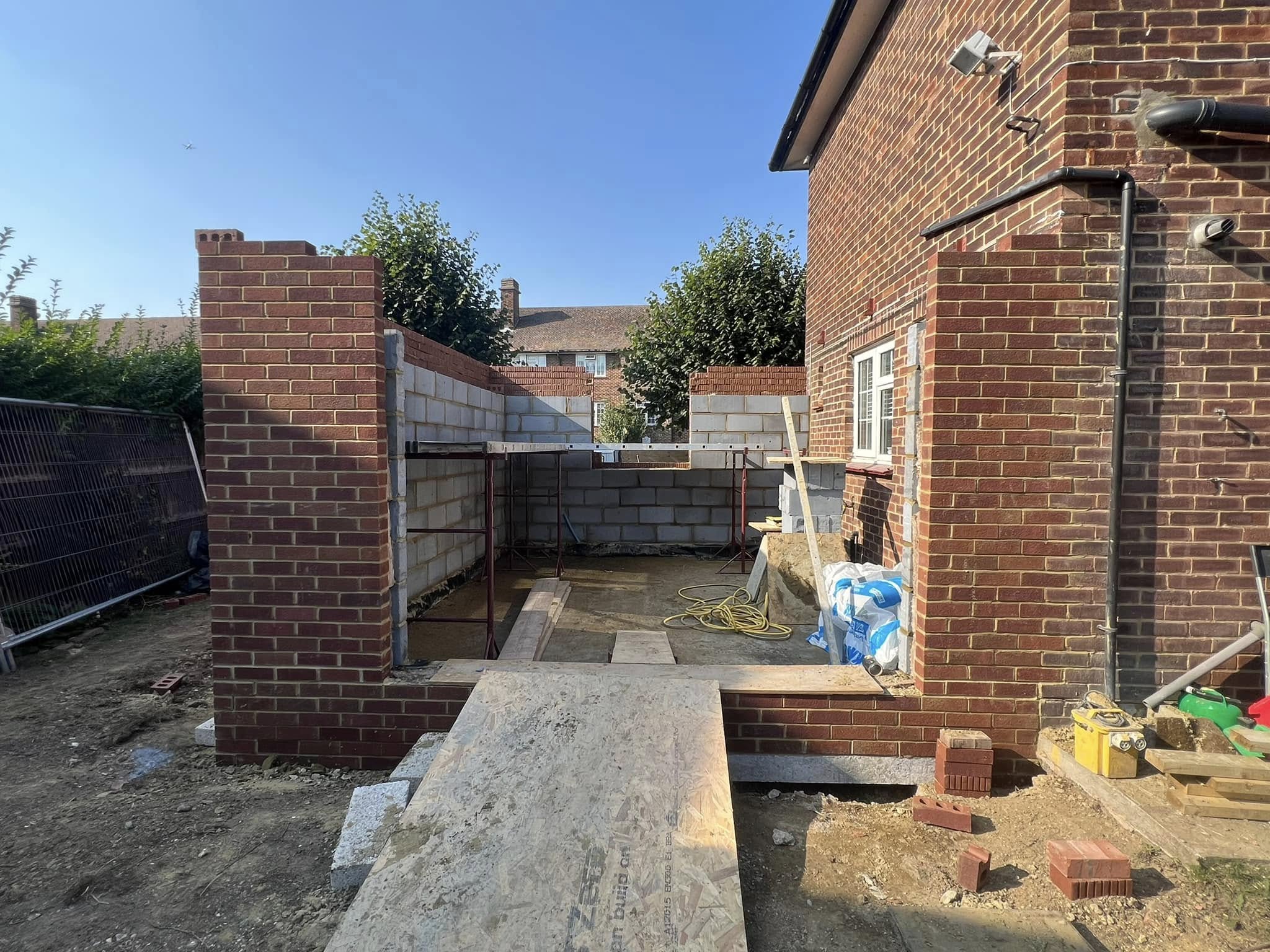
Brick repair in Kent — the complete 2026 guide from Marshall Brickwork & Construction. Spalling, cracking, efflorescence, mortar failure — diagnosed and fixed correctly.
Brick repair in Kent is one of the most frequently needed and most frequently mishandled construction services in the county. Kent's Victorian and Edwardian housing stock — the dominant property type across Rochester, Chatham, Sittingbourne, Maidstone, Faversham, Canterbury, and dozens of towns and villages across the county — is now between 100 and 150 years old. The brickwork has weathered a century of Kent winters. The mortar has reached, or passed, the end of its service life. And the decisions made by previous contractors — particularly the widespread use of Portland cement mortar on soft period brickwork through the 1970s, 1980s, and 1990s — have created a legacy of brick damage that correct repair can address and incorrect repair makes permanently worse.
This guide covers brick repair in Kent from first principles. What causes brick damage. How to diagnose correctly. What the correct repair specification looks like for every type of brick damage. And why Marshall Brickwork & Construction — Marshall Construction Kent's specialist outdoor construction team — produces brick repair results that last decades rather than creating the repeat visit cycle that incorrect specification always generates.
MB Construction Group — Marshall Brickwork & Construction has been delivering brick repair in Kent for over fifteen years. The diagnostic knowledge, the material sourcing relationships, and the craft execution standards that fifteen years of period property brickwork develop are the foundation of every Marshall Brickwork commission across the county.
Why Brick Repair in Kent Is Different From Anywhere Else
The scale and character of Kent's period housing stock makes brick repair Kent a more specific discipline here than in most UK regions. Three factors combine to create the specific demands that any contractor claiming expertise in brick repair in Kent must genuinely address.
The Predominance of Soft Period Brick
The bricks used in Kent's Victorian and Edwardian housing were manufactured from local clays — primarily the brickearth deposits of north Kent, fired at relatively low temperatures in kilns that produced bricks of variable but generally soft character. These bricks have a higher porosity and lower compressive strength than modern machine-made bricks. They are more susceptible to frost damage when saturated. They are more vulnerable to the aggressive action of Portland cement mortar. And they are more challenging to match for repair work because their colour, texture, and size varies in ways that modern production brick does not.
Marshall Brickwork's fifteen years of brick repair in Kent across period properties has produced an accumulated knowledge of the specific brick types across different parts of the county — the warm reds of Medway, the buff stocks of east Kent, the multi-coloured handmades of the High Weald — that informs every brick sourcing decision and every repair specification Marshall Construction makes.
The Lime Mortar Legacy and the Cement Damage Problem
Kent's period brickwork was built with lime mortar. For most of the twentieth century, maintenance and repair work on these buildings was carried out with Portland cement — partly from ignorance of the damage cement causes on soft brick, partly from the convenience and speed advantages that cement offers over lime.
The result, across the county's period housing stock, is a widespread pattern of spalling — brick faces detaching and breaking away where cement mortar has forced movement stress into the brick rather than through the sacrificial joint. Brick repair in Kent on period properties is therefore inseparable from the lime mortar question: the correct repair of cement-induced spalling requires removing the damaging cement, replacing damaged bricks, and repointing in lime mortar that allows the wall to function as designed.
Marshall Brickwork & Construction applies lime mortar as the standard specification for all pre-1930 brickwork repair and repointing across Kent — in Rochester and Medway, in Sittingbourne, in Faversham, in Canterbury, in Chatham and Gillingham, and across every other Kent location where period housing exists. This is the non-negotiable technical standard that the expert brickwork guide covers in full detail.
Kent's Ground Conditions and Their Effect on Brickwork
The London Clay that underlies most of the Medway towns and much of north and mid-Kent is a seasonally active soil — it expands when wet and contracts when dry. This volumetric change transmits movement to the buildings above it, creating the cracking patterns that are among the most common presentations of brickwork damage across the county.
Understanding whether a crack in a Kent period property reflects foundation movement on London Clay, thermal movement in the wall itself, or historic settled movement that is now stable — requires the site assessment knowledge that Marshall Construction brings to every brick repair Kent commission. The groundworks guide covers the Kent ground conditions in depth.
The Six Types of Brick Damage: Diagnosis and Correct Treatment
1. Spalling — The Most Common Brick Repair in Kent
What it looks like: The face of the brick — the smooth, weather-resistant outer surface — has detached or is detaching. In early stages, fine cracks appear parallel to the brick face. In advanced stages, the face has fallen away entirely, exposing the softer, more porous interior of the brick.
What causes it: In the vast majority of brick repair Kent cases, spalling is caused by one of two mechanisms:
Freeze-thaw damage: Water has penetrated the brick through a failed mortar joint or through the brick face itself. When that water freezes, it expands by approximately 9%, creating internal pressure that forces the brick face away from the body. Repeated freeze-thaw cycling through Kent winters progressively worsens the damage.
Cement mortar damage: Portland cement repointing harder than the surrounding brick has eliminated the sacrificial movement at the joint, forcing stress into the brick face. This is the most common cause of spalling across Kent's Victorian housing stock.
The correct Marshall Brickwork repair: First, identify and close the water entry point — failed pointing, blocked gutters directing water onto the wall face, failed flashing at a roof or window junction. Then assess which bricks can be retained (those with minor surface damage only) and which must be replaced (those with significant face loss or structural compromise). Replace damaged bricks with compatible material — reclaimed brick of the correct type and colour where new production cannot match. Repoint the repaired area in lime mortar matched in colour and profile to the surrounding joints.
2. Mortar Joint Failure — The Foundational Brick Repair
What it looks like: The mortar between the bricks is crumbling, recessed significantly below the brick face, cracked, or absent in sections. The scratch test — dragging a key along the joint — produces powder rather than meeting resistance.
What causes it: Mortar has a finite service life. Correctly specified lime mortar on a sheltered elevation: 30–40 years. Lime mortar on an exposed north or west-facing Kent elevation: 20–25 years. Incorrectly specified cement mortar on period brick: may fail within 10 years as the mismatch between cement strength and brick flexibility causes progressive cracking. Biological growth — moss and algae roots penetrating the joint — also accelerates mortar failure.
The correct Marshall Construction repair: Repointing — raking out failed mortar to a minimum 15–20mm depth and replacing with correctly specified new mortar. For period properties, this means lime mortar. For modern brickwork, a correctly specified cement:lime:sand mix. Colour matching tested on a sample section before full application. Joint profile finished to shed water appropriately.
The complete repointing guide covers every aspect of this process in technical depth.
3. Structural Cracking — The Diagnostic Challenge
What it looks like: Cracks running through the brickwork — either through the mortar joints, through the bricks themselves, or through both. The pattern and orientation of the crack is diagnostic.
Diagonal cracking from corners of openings — windows, doors, arches — indicates foundation movement. The crack runs diagonally upward from the corner of the opening toward the nearest free edge of the wall.
Stepped cracking following mortar joints in a horizontal-vertical staircase pattern indicates differential settlement — one section of the building settling more than an adjacent section.
Horizontal cracking at a consistent height across an elevation can indicate movement at a structural element — a lintel that has moved, a floor joist that has rotted and lost its bearing, or a structural beam that has deflected.
Random hairline cracking through mortar joints without a consistent pattern is typically thermal movement — the normal expansion and contraction of masonry under temperature change.
The correct Marshall Brickwork approach: Monitor before repairing. Mark the ends of cracks with a pencil line and date. Return after three months. If the crack has extended, the movement is active and must be investigated and addressed before repair. If the crack has not moved, it is historic and stable — and repointing is the appropriate intervention.
Marshall Construction will not repoint structural cracks without first understanding whether they are moving. Repointing a live crack produces a repair that cracks again on the same timeline.
4. Efflorescence — The Moisture Signal
What it looks like: White powdery or crystalline deposits on the brick surface. May appear in patches or across entire sections of elevation. In severe cases, the deposits can be thick enough to obscure the brick colour.
What causes it: Soluble salts within the brick or the mortar — calcium carbonate from the cement binder, sulphates from the brick clay — are dissolved by water moving through the masonry and deposited on the surface as the water evaporates.
In new construction: normal and self-resolving over the first two to three years as the building dries out.
In established construction: new or increasing efflorescence indicates changed moisture dynamics — a new water entry point, a failed drainage element, rising damp from a failed or absent DPC, or in coastal positions like Whitstable, salt deposition from marine aerosol.
The correct Marshall Construction approach: Dry brush (do not wet wash — this can drive salts back into the brick) to remove surface deposits. Investigate the moisture source — the efflorescence is a symptom, and treating the surface without addressing the cause produces a temporary result.
5. Blown Render Over Brickwork — Hidden Brick Damage
What it looks like: External render that is bubbling, cracking, or detaching from the brickwork beneath it. Tapping the render surface produces a hollow sound where the bond has failed.
What it reveals: Failed render almost always conceals a moisture problem — typically rising damp from ground level, penetrating damp through the render itself (render that has cracked allows water in but is slow to allow it out), or condensation accumulating within the render/brick interface.
The correct Marshall Brickwork repair: Remove all failed render — partial removal and overcoating conceals rather than solves the problem. Assess the brickwork beneath for damage caused by the trapped moisture. Address the moisture source. Allow the brickwork to dry fully before any new render is applied — typically months rather than weeks for saturated brickwork in a Kent climate. Specify the correct render system for the substrate and exposure conditions.
6. Lintel and Arch Failure — The Structural Element
What it looks like: Cracking above window or door openings, often in an inverted V pattern above the centre of the opening. In severe cases, brickwork above the opening may have dropped slightly — visible as a step in the mortar joints or a visible sag in the arch.
What causes it: The lintel — the structural element that carries the brickwork above an opening — has either failed structurally (corroded steel lintel, decayed timber lintel, under-specified concrete lintel) or has moved at its bearing (the section of brickwork on either side of the opening that supports the lintel ends).
The correct Marshall Construction approach: This is a structural assessment before it is a repair. The cause of lintel failure — whether the lintel itself has failed or the bearing brickwork has moved — determines whether a temporary prop is required before repair begins, whether building control notification is appropriate, and what the correct repair sequence is. Marshall Brickwork addresses lintel and arch failure with the structural assessment it requires, not as a simple repointing task.
Brick Repair in Kent: Location by Location
Marshall Construction delivers brick repair across the full Kent coverage area. Here is the specific character of brick repair demand in the major areas:
Rochester — The largest concentration of Victorian period brickwork in the Medway area. Lime mortar repointing and spalling repair from cement damage are the most frequent brick repair Kent commissions in the city. The conservation area around the Cathedral and Castle creates additional material sensitivity for any brickwork work on properties within the designated zone.
Chatham and Gillingham — Dense Victorian residential stock with the same lime mortar requirements as Rochester. The industrial heritage of the dockyard area brings some specific brick types — engineering blue bricks, Staffordshire blue perforated bricks used in factory and yard construction — that require specific knowledge for matching and repair.
Sittingbourne — Victorian and Edwardian housing on London Clay, with the same cement repointing legacy and spalling patterns as the Medway towns. The east Kent stock brick tradition begins to appear in Sittingbourne — the buff and cream palette that characterises Faversham and Canterbury becomes more evident as you move east.
Maidstone — The county town's varied housing stock creates varied brick repair demands — from the soft Victorian brick of the town centre's established streets to the harder modern brick of the post-war residential areas.
Gravesend — The Thames-side position creates enhanced exposure conditions for brickwork. The combination of moisture from the river, London Clay ground movement, and the industrial legacy of the town's dockside areas means brickwork damage in Gravesend is often more advanced than in more sheltered inland positions.
Tonbridge, Tunbridge Wells and Sevenoaks — The premium residential market of west Kent brings a specific demand for invisible, heritage-quality brick repair — the conservation area sensitivity and the premium property values make the quality of repair more visible and more consequential. Reclaimed brick matching for Wealden brick traditions, correctly specified lime mortar, and the craft execution standard that makes repairs invisible at normal viewing distances.
How Marshall Brickwork Quotes Brick Repair in Kent
Every brick repair in Kent quote from Marshall Construction follows the same structure — specific, honest, and founded on the site assessment rather than a standard formula.
The site assessment identifies the type and extent of damage, the probable cause, the mortar specification appropriate for the brick type and property age, the brick sourcing requirements for replacement work, and any planning or Listed Building Consent implications for the property's designation status.
The written quote specifies the scope of work — which bricks are to be replaced, which mortar is to be used and why, the joint profile to be applied, the programme, and the workmanship guarantee. Nothing vague. No line items that say "brick repair as discussed" without specifying what that means.
The guarantee covers the workmanship — if a repaired section fails within the guarantee period, Marshall Brickwork returns and remedies it at no charge.
For the full picture on what to look for in any brick repair quote, the guide to choosing a builder in Kent covers the complete evaluation framework.
Frequently Asked Questions About Brick Repair in Kent
How much does brick repair cost in Kent? The cost varies with the extent of damage, the number of bricks requiring replacement, the sourcing complexity of compatible replacement brick, and the scaffold requirements for elevated work. Marshall Construction provides a free site assessment and a specific written quote for every brick repair commission. There is no standard price — the quote reflects the actual work required at the actual site.
How long does brick repair take? A small-scale brick repair — a section of spalling on a ground floor elevation, replacement of ten to twenty bricks — typically takes one to two days. A larger repair programme covering multiple elevations or significant structural cracking investigation can take a week or more. Marshall Brickwork specifies the programme in the written quote.
Can brick repair be done in winter in Kent? Mortar work cannot be carried out in freezing conditions — new mortar that freezes before curing fails. Marshall Construction schedules brick repair work in weather windows above 5°C throughout the curing period. In practice, brick repair in Kent can be carried out in most months of the year — the mild coastal influence means sustained ground frost is less common than in inland UK regions — but cold snaps require programme flexibility.
Does brick repair need planning permission? In most cases, no — brick repair on standard residential properties is maintenance work that does not require planning consent. On listed buildings, any external work including repair requires Listed Building Consent from the relevant planning authority. In conservation areas, like-for-like repair in appropriate materials is generally acceptable without consent, but alteration of character — changing mortar colour dramatically, using inappropriate materials — can attract enforcement interest.
Will the repaired bricks match the existing ones? With correct sourcing and skilled execution, brick repairs can be made to match closely enough to be invisible at normal viewing distances within one to two years as the repair weathers to match the surrounding brickwork. Complete invisibility on day one is not achievable — new brick and new mortar have a different surface character from weathered brick and aged mortar. Marshall Brickwork's sourcing relationships and craft execution minimise the visible difference as much as technically possible.
Commission Your Brick Repair in Kent from Marshall Brickwork
Marshall Brickwork & Construction — Marshall Construction Kent — delivers expert brick repair in Kent across the full county coverage area. Free site assessment. Correct diagnosis. Correctly specified mortar. Compatible brick sourcing. Craft execution. Work guaranteed.
Explore the full range of brickwork services. Read the complete repointing guide for the related service. Browse the brickwork maintenance guide to understand the ongoing care programme that protects period brickwork. See completed brick repair and brickwork projects across Kent.
Phone: 07724 730872 Email: info@mbconstruction.group Contact: mbconstruction.group/contact/
Marshall Brickwork & Construction. The brick repair Kent specialist. Serving the county for fifteen years with the technical knowledge, the material sourcing, and the craft execution that brick repair on period property demands.
Marshall Brickwork & Construction Ltd | MB Construction Group | 14 Poplar Road, Rochester, ME2 2NR | 07724 730872 | mbconstruction.group