Groundworks in Kent explained — excavation, drainage, foundations and sub-base specification for driveways, patios, extensions and landscaping. Free site survey.
Every outdoor construction project in Kent starts the same way. Before the driveway surface goes down, before the patio slabs are laid, before the extension walls rise from the ground — the groundworks happen. And the groundworks are almost always the element that homeowners understand least and think about last, even though they are the element that determines whether everything built on top of them will still be performing in twenty years or starting to fail in five.
This is the guide that changes that. A genuinely comprehensive, technically honest, locally specific account of what residential groundworks in Kent actually involves — the excavation, the drainage engineering, the foundation specification, the site preparation that makes the visible work above it possible. Written for homeowners who are planning any kind of outdoor construction project and want to understand what's happening beneath the surface.
Marshall Brickwork & Construction has been delivering groundworks across Kent for over fifteen years — not as a specialist groundworks company that does nothing else, but as a full-service outdoor construction contractor whose driveway installations, patio construction, home extensions, landscaping transformations and artificial grass installations all begin with correctly executed groundworks. The knowledge in this guide comes directly from that accumulated experience across the varied ground conditions, drainage challenges, and geological characteristics of Kent's residential landscape.
What Groundworks Actually Means
The word groundworks gets used loosely in the construction industry, and it's worth establishing precisely what it encompasses before going further.
Groundworks refers to everything that happens at and below ground level before the visible construction begins. It is the preparation phase — the phase that is invisible in the finished project but responsible for whether the finished project holds up. In residential construction across Kent, groundworks typically encompasses several distinct operations that may be required individually or in combination depending on the project scope.
Site clearance and preparation is the starting point — removing the existing surface, vegetation, organic material, and any structures that occupy the footprint of the proposed work. This could be as straightforward as stripping a lawn to prepare for a new patio, or as involved as breaking out an existing concrete hardstanding, dealing with tree root systems, and clearing decades of accumulated material from a garden that hasn't been touched in years.
Excavation is the controlled removal of earth to a specified depth and profile — creating the space that will be occupied by foundations, sub-bases, drainage systems, or the void beneath a new surface construction. Excavation depth varies dramatically by application: a residential patio on good ground might require 200mm of excavation; a strip foundation for a home extension typically requires excavation to 750mm–1,000mm or more, depending on ground conditions and structural loading.
Drainage installation encompasses the network of pipes, channels, soakaways, inspection chambers, and surface water management infrastructure that moves water away from structures and surfaces. In residential Kent construction, drainage is rarely the most glamorous element of the project — but it is almost always the most consequential when it goes wrong.
Foundation construction is the concrete, steel, or masonry structure that transfers the load of a building or structure into the ground safely. The foundation type, depth, and specification depend on the load it must carry, the bearing capacity of the ground beneath it, and the characteristics of the soil — all of which vary significantly across Kent's geological landscape.
Sub-base preparation is the engineered layer of compacted material — typically crushed limestone or granite aggregate — that sits between the formation level and the surface construction for driveways, patios, paths, and similar surface works. It is structurally distinct from foundations but serves a similar function: distributing load, isolating the surface from ground movement, and providing a stable, non-deforming platform for whatever is built above.
Why Kent's Ground Conditions Make Groundworks Critical
Groundworks matter everywhere, but they matter with particular intensity in Kent — because the geological conditions across much of the county create challenges that require site-specific knowledge and careful specification decisions.
The London Clay Formation
London Clay underlies large parts of the Medway towns — Rochester, Chatham, Gillingham, Strood, and surrounding areas — and extends through significant portions of north Kent. It is one of the most challenging subsoils for residential construction in southern England, for reasons that are worth understanding in detail because they affect every groundworks decision made in these areas.
London Clay is a high-plasticity clay — meaning it has a large range of moisture content between the plastic limit (when it begins to behave plastically) and the liquid limit (when it flows). In practical terms, this means it expands significantly when it absorbs water and contracts significantly when it dries out. The volumetric change through this cycle is not trivial. In the dry summer of 2022 and again in 2025, measurable ground shrinkage occurred across clay sites throughout the Medway area as the extended dry periods extracted moisture from the clay at depth, causing surface levels to drop by several centimetres in some locations.
The implications for construction are pervasive. Any surface — driveway, patio, or otherwise — built without a sub-base deep enough to bridge across this zone of active movement will experience that movement transmitted upward. Block paving rocks. Patio slabs crack. Level changes develop where none existed. Drainage falls that were correct on installation no longer direct water where it should go. These are not catastrophic failures — they are gradual, progressive deterioration that begins within a few seasons and accelerates over time.
For deeper foundations — extensions, garden structures, boundary walls — the clay movement question becomes even more critical. London Clay shrinkage can cause differential foundation movement that produces structural cracking in buildings built on inadequate foundations. The proximity of established trees to proposed construction is a significant factor: tree root systems extract moisture from clay at depth over a wide radius, creating localised zones of enhanced shrinkage that must be accounted for in foundation depth specification.
The Chalk Downlands and Lower Greensand
Not all of Kent is clay. The North Downs — running through the northern part of the county through Maidstone, Sevenoaks, and toward Canterbury — sit on chalk, which has very different characteristics from clay. Chalk is free-draining, relatively stable in terms of volumetric change, and provides good bearing capacity for most residential foundations.
The Lower Greensand formation underlies much of central Maidstone and surrounding areas, with characteristics between chalk and clay — reasonable drainage, moderate stability, lower bearing capacity than chalk in some areas.
Understanding which formation underlies a specific site is the starting point for any serious groundworks specification. A contractor who applies the same sub-base depth and foundation specification to a chalk site in Sevenoaks as they do to a clay site in Gillingham is not engaging with the site-specific conditions — they are applying a generic specification that may work adequately on one and fail on the other.
The Weald Clay
The Kent Weald — broadly the area south of the North Downs ridge, through Tonbridge, Paddock Wood, and toward Cranbrook — sits on Weald Clay, which shares many characteristics with London Clay but tends to be even more plastic and even more susceptible to volumetric change. Gardens in this part of Kent that have clay soils require the most conservative sub-base specifications and the deepest foundations for any given loading scenario.
High Water Table Areas
Parts of north Kent near the coast and river estuaries, and low-lying areas in the Medway valley, have seasonally or permanently elevated water tables. This creates specific challenges for drainage design — soakaways, which disperse surface water into the ground and work well on chalk or sand, are ineffective where the water table prevents further downward percolation. Surface water management in these areas requires connection to surface water drainage infrastructure rather than reliance on ground absorption.
Drainage: The Element That Makes Everything Else Work
If there is one area of groundworks where the gap between adequate and inadequate specification has the most visible consequences for homeowners, it is drainage. Poor drainage reveals itself in ways that are immediately obvious: water pooling after rain, damp penetrating into structures, patios and driveways that never seem to dry out, gardens that are soft and unusable for significant portions of the year.
Good drainage, by contrast, is invisible. It simply works — water falls, water moves, water disappears. The engineering that achieves this invisibility is worth understanding.
Surface Water Management
Every hard surface — whether a block paving driveway, a porcelain patio, a path, or a courtyard — generates surface water when it rains. That water must go somewhere. The two fundamental choices are surface drainage falls that direct water to an intended collection or outlet point, or permeable surfaces that allow water to pass through into the sub-base below.
For impermeable surfaces — solid block paving, natural stone slabs, porcelain — drainage falls are the primary mechanism. A correctly designed drainage gradient of 1:60 (approximately 17mm of fall per metre) ensures water moves consistently toward the intended discharge point without pooling. This gradient must be designed into the formation level — the bottom of the excavation — and maintained through all subsequent construction layers. Attempting to achieve drainage falls only in the surface layer is rarely successful: small variations in bedding depth undermine the intended gradient.
The discharge point for surface water matters enormously. In most residential Kent situations, surface water discharges to one of several destinations: a surface water drain connected to the highway drainage infrastructure, a soakaway in a suitable area of the garden (where ground conditions permit effective infiltration), or an adjacent soft landscaped area where the water can disperse naturally. Directing surface water toward a building — even inadvertently — is one of the most consequential drainage design errors, with implications for both structural performance and damp conditions within the building.
Channel drains — linear drainage channels set flush with the surface — are installed at the base of drainage gradients to collect surface water before it reaches a structure or boundary. These are a standard specification element for patios adjacent to house walls, driveways that slope toward garages or entrances, and any surface where the natural topography makes gravity drainage away from structures challenging. Channel drain selection — the width, depth, capacity, and load rating — should match the surface area being drained and the anticipated rainfall intensity.
Sub-Surface Drainage
Where the ground itself has drainage challenges — heavy clay that holds water, areas with a seasonally high water table, low-lying gardens that receive water from surrounding areas — sub-surface drainage infrastructure is required beyond the surface water management described above.
French drains — perforated pipes in gravel-filled trenches — intercept groundwater before it reaches a structure or creates waterlogging conditions. They work by creating a preferential flow path for water that would otherwise remain in the soil, directing it to a soakaway or surface water drain. For gardens with persistent waterlogging, a network of French drains can transform the usability of the outdoor space and the stability of any construction built within it.
Land drainage around foundations is particularly important in areas with high clay content and elevated seasonal groundwater. Water held against a foundation by waterlogged clay creates hydrostatic pressure and — in combination with freeze-thaw cycling — accelerates foundation deterioration over time. Drainage granular material behind and beneath foundations, connected to a perimeter drain, is the correct specification for vulnerable sites.
For the artificial grass installations Marshall delivers across Kent, sub-surface drainage design is critical — artificial grass drains through its backing, and that water must be able to percolate through the aggregate base and away from the area. On clay-heavy Medway sites, this requires careful aggregate base specification to ensure the drainage path is maintained even when the clay beneath is at high moisture content.
Drainage and Planning Compliance
The 2008 regulations governing front garden hard surfacing require that any impermeable surface over 5m² must incorporate drainage provision — either surface water management to a drain, or permeable surface construction. This regulation applies across Kent and affects a significant proportion of front driveway and garden projects.
Sustainable Drainage Systems — SuDS — are increasingly required by planning authorities across Kent for new development. These systems mimic natural drainage processes by slowing runoff and promoting infiltration, using features such as permeable paving, swales, rain gardens, and infiltration basins. For residential projects requiring planning permission, engagement with the relevant SuDS requirements at the design stage rather than as an afterthought saves time and cost.
Foundations: Getting the Invisible Structure Right
For any project that involves building a structure above ground level — a home extension, a garden wall, an outbuilding, entrance pillars — the foundation is the engineering element that determines structural safety and long-term stability.
Foundation Types for Residential Kent Projects
Strip foundations are the most common foundation type for domestic extensions and garden walls across Kent. A strip of concrete is placed in an excavated trench at sufficient depth below ground level to reach stable, undisturbed soil. The concrete strip distributes the wall loading along its length, and the trench is then backfilled to formation level before wall construction begins above.
The depth of a strip foundation in Kent is not a single number — it varies by ground condition. On chalk or well-draining stable soils, 450–600mm below finished ground level may be adequate. On London Clay in the Medway towns, strip foundations routinely need to go 750mm or deeper to reach clay that is sufficiently stable and below the active shrinkage zone. In locations with established trees nearby, depths of 1,000mm or more are not unusual — the roots of a mature oak or lime tree can influence soil moisture conditions at depth over a radius approaching the full height of the tree.
Raft foundations distribute load across a wide concrete slab rather than concentrating it in narrow strip trenches. They are used where ground conditions are poor and variable — made-up ground, fill material, contaminated land — and where a rigid structural platform connecting all load-bearing elements is preferable to individual strips. For residential garden rooms, larger outbuildings, and some extension configurations, raft foundations offer a practical alternative to deep strip work.
Trench fill foundations are a variant of strip foundations where the trench is filled entirely with concrete rather than leaving a void for masonry to start at depth. They are faster to construct than traditional strips and are appropriate where the excavation is relatively narrow and deep — the full concrete section provides better performance against heave and horizontal forces from adjacent clay.
Foundations and the Tree Root Question
In Kent's well-established residential areas — the mature streets of Rochester, the Victorian suburbs of Chatham and Maidstone, the leafy residential roads of Sevenoaks and Tonbridge — the proximity of established trees to proposed foundation work is one of the most consistently important site assessment considerations.
Trees growing in clay soils extract significant volumes of water from the ground through their root systems. This extraction creates zones of lower moisture content in the clay around and beneath the tree — which means the clay in these zones shrinks more dramatically during dry periods than surrounding clay does. When a foundation is placed in or adjacent to such a zone, the differential movement between the drier clay beneath the tree influence and the wetter clay further away can cause the foundation to move unevenly, producing structural cracking in the building above.
The solution — deeper foundations that extend below the zone of tree root influence — adds cost and excavation depth but eliminates the risk. The structural engineer's specification for any foundation work near established trees should always be followed precisely, without the shortcuts that some contractors take to reduce excavation depth and programme time.
For the brickwork construction that Marshall delivers across Kent — garden walls, extension structural brickwork, boundary features — foundation specification near trees is an area where the company's accumulated local experience is directly valuable. Knowing the clay conditions in specific streets in Sittingbourne, the mature tree stock in Rochester's residential areas, and the variable ground conditions across Maidstone's different geology zones allows better foundation depth decisions to be made with confidence.
Foundations and Building Regulations
All extension foundations, new build foundations, and structural garden wall foundations require Building Regulations approval and inspection. The building control process requires the foundation excavation to be inspected before concrete is poured — the inspector confirms that the excavation has reached stable ground at adequate depth, that the trench profile is correct, and that there are no unexpected ground conditions requiring design modification.
This inspection step is not bureaucratic inconvenience — it is the professional mechanism that ensures foundation adequacy before the evidence is buried under concrete and construction. Any contractor who proposes to pour concrete without building control inspection of the excavation is either working outside the regulatory framework or not thinking about the implications of unknown ground conditions. Marshall coordinates building control inspections as a matter of standard practice on all foundation work, maintaining clear records and ensuring no stage proceeds without appropriate sign-off.
Excavation: More Than Just Digging
Excavation is often treated as the least skilled element of groundworks — essentially moving material from one place to another. This underestimates both the technical decisions involved in excavation planning and the consequences of getting those decisions wrong.
Excavation Depth and Profile
The depth to which excavation proceeds, and the profile of the excavated void, must be specified before a machine breaks ground. Excavating too shallow creates inadequate clearance for the construction layers above, resulting in finished levels that are too high or sub-base layers that are too thin. Excavating too deep wastes material and programme time, and — for foundation work — may take the excavation below stable ground into softer, weaker material.
The profile of the excavation matters for drainage design. Formation levels must be shaped to achieve the intended surface water drainage gradient from the outset — attempting to correct levels through manipulation of sub-base layers compounds errors rather than correcting them.
Managing Excavated Material
The material removed during excavation — the arisings — must be managed and disposed of responsibly. In residential Kent projects, this typically means loading the arisings into skips or vehicles and removing them to a licensed waste transfer facility. Skip placement on public highways in Kent requires a permit from the relevant highway authority, and loading of skips must not obstruct sight lines at junctions or access to adjacent properties.
On larger sites, some excavated material may be suitable for reuse — particularly clean topsoil stripped from garden areas, which can be stored and reused for soft landscaping after construction is complete. This is worth considering during the planning phase, as topsoil stockpiled correctly and reused avoids the cost of both disposal and subsequent importation of topsoil for garden finishing.
Machinery Selection and Access
The machinery used for excavation needs to be matched to the site access available. In Kent's residential areas — particularly the Victorian terraces of Rochester and Chatham, the tightly packed streets of Gillingham, and the properties with narrow side access throughout the county — full-size excavators often cannot access the rear garden. Smaller tracked machines — mini diggers in the 1–3 tonne range — can access through standard garden gate openings and operate in the confined conditions of rear residential gardens.
For sites where even a mini digger cannot access, hand excavation is the alternative. Hand excavation is significantly slower and more expensive than mechanical excavation, but is sometimes the only option for rear gardens with no vehicle access. The cost implications should be identified and included in the groundworks quote before work begins, not discovered during execution.
Groundworks for Specific Project Types
Groundworks for Driveways
Driveway construction is one of the most common applications of residential groundworks in Kent, and the one where the gap between correct and incorrect specification is most consequential for longevity.
The key groundworks elements for a driveway project are excavation to the correct depth for the chosen surface type and ground conditions, geotextile membrane placement, sub-base installation and compaction, drainage provision including channel drains and falls management, and edge restraint installation. Each of these elements has specific requirements that vary by surface type — a tarmac driveway has different sub-base requirements from a resin-bound surface, and both differ from a block paving installation.
On the clay soils of Medway and much of mid-Kent, driveway sub-base depth is the most critical specification decision. A minimum of 150mm of compacted Type 1 MOT limestone hardcore is the standard for clay sites — more than the 100mm that might be adequate on chalk. The compaction methodology — vibrating plate compactor in overlapping passes on 75mm layers — is as important as the depth: uncompacted hardcore is not a sub-base, it is a loose aggregate layer that will settle and deform under vehicle loading.
The dropped kerb and vehicle crossover at the highway boundary is a regulated element of driveway construction that requires specific approval from the relevant highway authority. In Kent, this means engagement with either Medway Council or Kent County Council depending on which authority manages the highway in question. The crossover must be constructed to the authority's specification, typically by an approved contractor or by a contractor working to the approved specification. Marshall navigates this process for clients as part of the driveway commission.
Groundworks for Patios
Patio groundworks are similar in principle to driveway groundworks but adapted for pedestrian rather than vehicle loading — which generally means lighter sub-base requirements on stable ground, though the drainage design is equally important.
The formation for a patio must be shaped to achieve the correct drainage gradient from the outset — not in the surface layer, but at the bottom. Once the formation is established at the correct profile, the geotextile membrane and aggregate sub-base follow, providing the stable, consistent platform that the bedding layer and surface material depend on.
For porcelain patio construction specifically, the sub-base specification is the most critical variable in the entire project. Porcelain is an unforgiving material — it has low tolerance for sub-base movement and will crack if the ground beneath it moves. On clay sites, this means conservative sub-base depth and meticulous compaction, both of which are non-negotiable in Marshall's patio specification.
The relationship between patio level and house threshold level is a site-specific calculation that must be made during groundworks planning. The finished patio surface must sit at or below the damp-proof course level of the house wall — typically 150mm below floor level. Working backward from this constraint, through the surface material thickness, the bedding layer depth, and the sub-base depth, determines the excavation depth required. Getting this calculation wrong at the planning stage produces expensive problems during installation.
Groundworks for Home Extensions
Extension groundworks are the most technically demanding and most consequential groundworks application in residential construction. The foundation must safely transfer the structural loading of the extension into the ground, through whatever geological conditions exist at that specific site. Getting this wrong has structural implications, not just aesthetic ones.
For most single-storey rear extensions across Kent, strip foundations are the standard solution — trenches excavated to stable ground, inspected by building control, and filled with concrete to the correct specification. The structural engineer's drawings specify the trench dimensions, the concrete mix and strength, and the reinforcement requirements where relevant.
The drainage connections for an extension are a significant element of the groundworks phase. Foul water from the extension kitchen or bathroom must be connected to the existing foul drainage system. This may require breaking out existing drainage channels, extending run lengths, adding inspection chambers, and testing the connection to ensure there are no blockages or gradient problems in the existing system before the new loads are added. Surface water drainage from the extension roof must be managed — typically via downpipes to an existing surface water drain, soakaway, or water butt system.
Groundworks for Landscaping Projects
Landscaping groundworks encompass the site clearance, level changes, drainage installation, and sub-base preparation that precede planting, turfing, artificial grass laying, and hard surface installation in garden transformation projects.
Level change engineering is one of the most frequently underestimated elements of landscaping groundworks. A garden with significant gradient changes cannot simply have a flat patio dropped into it — the transition between levels must be engineered through terracing, retaining walls, or step structures that hold the ground at the intermediate levels. The structural design of retaining features depends on the height of retained material, the nature of the soil, and the drainage conditions behind the wall — all of which require assessment before construction begins.
Retaining walls for garden level changes are brickwork structures, and their construction draws directly on Marshall's brickwork expertise. A retaining wall that holds significant soil loading is not a decorative feature — it is a structural element with specific foundation, drainage, and construction requirements. The craft knowledge that Marshall brings to residential brickwork throughout Kent is directly applicable here: correct mortar specification, proper foundation design, drainage provision behind the wall to prevent hydrostatic pressure build-up, and appropriate capping detail.
The Groundworks Process: What Happens and When
For homeowners commissioning groundworks for the first time, understanding the sequence of operations removes much of the uncertainty about what to expect during the project.
The site survey comes first. A thorough assessment of the site conditions — existing surfaces, vegetation, drainage, access, ground conditions where visible, proximity to trees, and relationship to adjacent structures — informs all specification decisions that follow. This is not a thirty-second walk-around before issuing a price. It is a considered evaluation that identifies the specific site variables that will affect specification and cost. Marshall carries out this assessment as part of the free initial consultation for every project.
Utility identification follows the site survey. Before any excavation begins, the position of underground services — gas, water, electricity, telecommunications, drainage — must be identified. This involves checking available records (Dial Before You Dig enquiries for utility positions) and, where appropriate, using cable and pipe detection equipment on site. Excavating through a gas pipe or electricity cable is both dangerous and extremely expensive to remediate. The time spent on utility identification before breaking ground is always well spent.
Site protection and establishment prepares the working area. Existing surfaces, planting, and structures adjacent to the work area are protected from damage during the works. Access routes for machinery and materials are established, and skip placement is arranged where required.
Excavation proceeds in the sequence determined by the project requirements — topsoil stripping before sub-base excavation, foundation trench excavation before oversite clearing, service trenching in a sequence that doesn't compromise the stability of adjacent excavations. The sequence matters: poorly sequenced excavation creates instability, interference between different excavation stages, and unnecessary rework.
Drainage and service installation happens during or immediately after excavation, before backfilling begins. Getting drainage in the ground at the correct position, gradient, and depth while the excavation is open is significantly easier than attempting to retrofit drainage once backfilling has begun. Inspection chambers are placed at the correct positions for access and maintenance. Fall gradients are confirmed with a level before pipes are surrounded and covered.
Backfilling and compaction converts the open excavation back into a stable, trafficable surface. The material and methodology for backfilling depend on what has been placed in the ground — around drainage pipes, selected granular material is specified rather than the excavated clay, which would transmit loading to the pipe. Sub-base aggregate is placed in layers and compacted, not tipped and levelled in a single operation. Compaction testing on critical projects confirms that the required density has been achieved.
Building control inspections punctuate the foundation work at the stages specified in the building regulations — foundation excavation before concrete pour, and subsequent stages as specified. The programme must accommodate these inspection requirements; booking inspections in advance and working to a schedule that doesn't require urgent last-minute bookings is part of professional project management.
What to Look for in a Groundworks Contractor in Kent
Understanding groundworks is one thing. Finding a contractor who executes them correctly is another. The questions that reveal whether a contractor has genuine groundworks expertise are simple to ask.
The ground conditions question is the first and most revealing. Ask specifically what they have found in the ground at sites near yours, and how they have specified differently for clay conditions compared to chalk or sand. A contractor with genuine local knowledge answers this with specifics — they have encountered the London Clay of the Medway basin, they know the depth at which it stabilises, they understand the tree root influence question. A contractor without genuine local knowledge answers generally.
The drainage question comes next. For any surface project, ask how they design the drainage gradient, how they verify it before surface materials go down, and where the water goes when it rains. The answer should demonstrate that drainage has been thought about from the formation level upward, not assumed to be adequate because the garden has a general slope.
The sub-base specification question is the most directly consequential for surface project longevity. Ask the specific depth of compacted aggregate they are specifying, the material type, and the compaction methodology. Specific answers indicate a contractor who is actually thinking about the specification. Vague answers — "we'll put a good sub-base in" — indicate a contractor who may be working to habit rather than to engineering logic.
Groundworks as the Foundation of Every Marshall Project
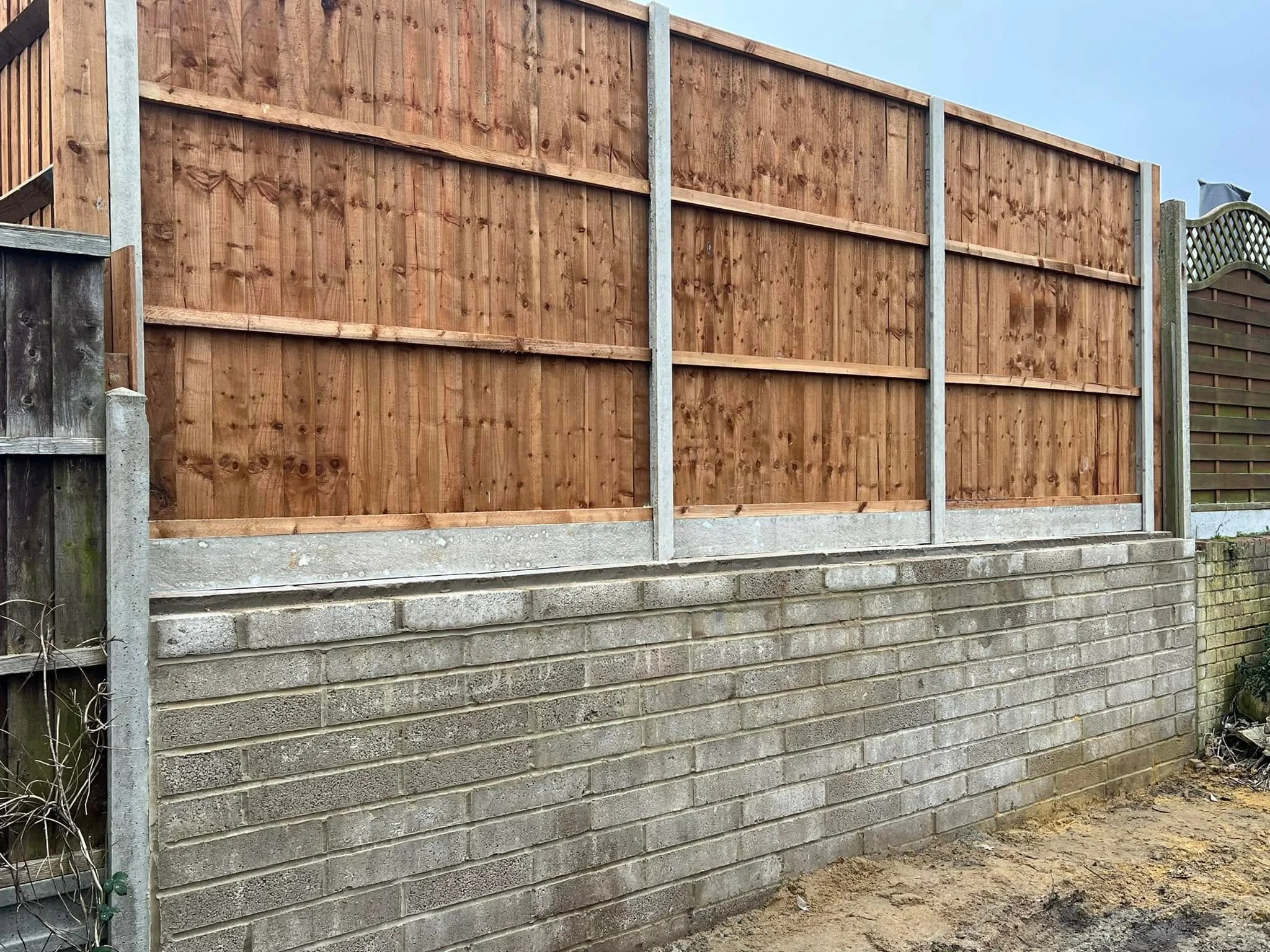
The reason this guide exists is straightforward. Marshall Brickwork & Construction does not offer groundworks as a standalone specialism — it offers groundworks as the foundation of every project the company delivers. The brickwork and repointing that requires correctly prepared ground. The driveway installations that depend on correctly specified and compacted sub-bases. The patio construction that requires drainage engineered in from the formation level. The extension foundations that require site-specific depth decisions based on genuine local knowledge. The garden fencing whose posts need to be set in properly mixed concrete at adequate depth. The artificial grass lawns that depend on well-compacted, correctly drained aggregate bases.
Every one of these projects starts with groundworks. And the groundworks on every one of these projects are executed by the same team, to the same standard, with the same site-specific attention to the specific geological conditions of the specific Kent location where the work is taking place.
That consistency — the knowledge that the invisible foundation of every Marshall project is as carefully considered as the visible surface above it — is what fifteen years of completed projects across Rochester, Chatham, Gillingham, Sittingbourne, Maidstone, Tonbridge, and the wider county have built. The work above the ground looks as good in year fifteen as it does in year one because the work below the ground was right from day one.
Getting Started: Free Site Survey Across Kent
Every Marshall project begins with a free site visit — a genuine, thorough assessment of the ground conditions, drainage characteristics, access constraints, and planning requirements at your specific property.
During this visit, the team assesses the soil conditions, identifies any drainage challenges, considers the proximity of trees and their implications for foundation depth, and reviews any planning or building regulations requirements relevant to the proposed work. The written quote that follows is itemised — excavation depth, sub-base specification and compaction methodology, drainage provision, foundation design — so you understand exactly what the groundworks element of your project involves before any commitment is made.
Marshall covers all of Kent from the Rochester base: the Medway towns, Sittingbourne and the Swale district, Maidstone and mid-Kent, Tonbridge, Tunbridge Wells, Sevenoaks, Faversham, Canterbury, and into Greater London.
Phone: 07724 730872 Email: info@mbconstruction.group Contact: mbconstruction.group/contact/
Browse the completed projects gallery to see the range of groundworks-intensive projects Marshall has delivered across Kent. Explore the full services range for everything Marshall offers — from the groundworks up.
Marshall Brickwork & Construction Ltd | 14 Poplar Road, Rochester, ME2 2NR | 07724 730872 | mbconstruction.group