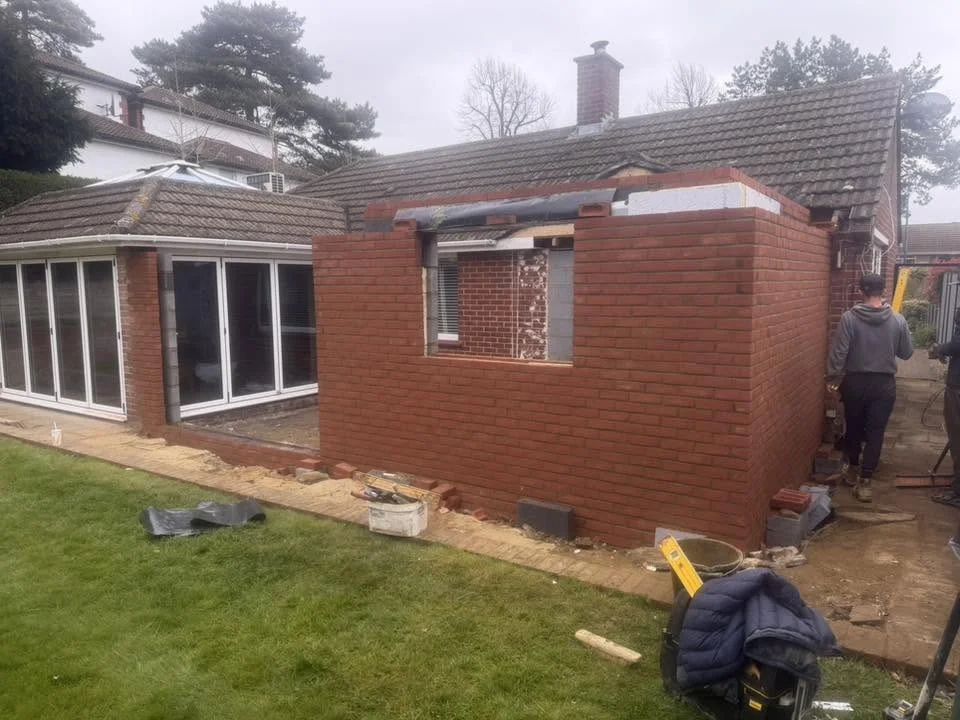
Uncover the engineering codes for luxury perimeter boundaries. Coordinate brickwork kent and structural landscaping kent configurations for extreme environmental exposure.
The execution of a grand estate boundary, defensive security wall, or architectural gateway requires an absolute technical alignment between structural civil engineering and elite site preparation. Far more than simple property dividers, massive perimeter walls operate as load-bearing structural screens. They must continuously withstand intense dynamic wind-shear velocities, resist lateral soil thrusts from shifting ground profiles, and handle severe frost cycles over multi-decade lifespans.
Across prestigious regional developments, rural transformations, and heritage restorations, failing to synchronize the masonry layout with the surrounding terrain is a major structural vulnerability. If an expansive boundary run is erected without calculating dynamic overturning moments, reinforcing the structural cores against multi-axial bending strains, or establishing unyielding subgrade foundations across volatile clays, the entire infrastructure faces rapid failure paths. This results in progressive horizontal bowing, mortar fracturing, or complete wall collapse during high-wind winter storm snapshot events.
This comprehensive technical handbook details the aerodynamic physics, mass concrete groundworks, material protection chemistry, and site protocols required to deliver unyielding structural configurations under a premier, fully integrated brickwork kent and landscaping kent delivery model.
1. Wind Action Physics: Aerodynamic Pressures and Mechanical Overturning Moments
The primary environmental hazard acting against a high-surface-area boundary wall is the horizontal pressure vector generated by dynamic cross-winds. An extended masonry partition functions as a giant sail, converting kinetic air streams into intense lateral force components.
Modeling Characteristic Wind Velocity Under BS EN 1991
To ensure absolute structural safety against lateral loading paths, the engineering panel must calculate the peak characteristic wind pressure ($q_p$) for the specific topography zone using BS EN 1991-1-4 (Eurocode 1: Actions on structures — Wind actions). This calculation maps regional altitudes, directional terrain rough coefficients, and localized seasonal storm maps.
Across high-exposure ridge lines, wide-open valleys, and coastal estate boundaries, wind pressures apply intense horizontal bending stresses across the bed joints. Because structural masonry displays exceptional compressive strength but limited inherent tensile capacity under unreinforced conditions, these lateral pressures generate a rotational force known as the Overturning Moment.
+-----------------------------------------------------------------------+
|                    THE MASONRY PERIMETER OVERTURNING LEVER AGE        |
+-----------------------------------------------------------------------+
|                                                                       |
|     [ DYNAMIC WIND VELOCITY PRESSURES ]                               |
|     ===================================> [ STRUCTURAL BRICKWORK RUN ] |
|                                                        ||             |
|                                                        v              |
|                                             (Lever Arm Height)        |
|                                                        ||             |
|                                                        v              |
|       === FINISHED GROUND PROFILE =====================||==========   |
|                                                        v              |
|                                              [ FRONT TOE PIVOT POINT ]|
|                                                        ||             |
|                                                        v              |
|                                              [ MASS CONCRETE BLOCK ]  |
|                                                                       |
+-----------------------------------------------------------------------+
The pivot axis for this rotational force sits precisely along the bottom front toe edge of the subterranean footing block. To prevent the wall from tilting, cracking at the base, or experiencing structural failure, the physical mass, width, and depth of the foundation must generate a dominant restoring resistance moment, enforcing a structural Factor of Safety exceeding a minimum value of 1.5 to 2.0.
2. Geotechnical Groundworks: Neutralizing Clay Volatilities and Sloped Terrain Pressures
The capacity of an elite boundary layout to remain plumb and perfectly level over generations is entirely governed by the mechanical properties of the underlying subgrade. The primary geological challenge across regional landscapes is the presence of heavy, over-consolidated Wealden and London Clay tables.
The Mechanics of Soil Moisture Shifts
Cohesive clay formations display high plasticity indexes, making them highly sensitive to hydrological changes. They act like massive geological sponges, expanding aggressively during wet winter saturation cycles and shrinking into deep cracks during hot summer spells.
If a boundary footing is set within this unstable upper moisture-fluctuation zone, the foundation will experience continuous vertical shifting, twisting, and localized tilting stresses. Over time, seasonal soil desiccation drops the active resistance of the earth, causing the fence or masonry line to lean under wind loads.
+-----------------------------------------------------------------------+
|                    DEEP AUGERED BASE PERIMETER FOOTING NODE           |
+-----------------------------------------------------------------------+
|                                                                       |
|         [ HIGH-MASS STRUCTURAL BRICKWORK PERIMETER WALL ]             |
|                             ||                                        |
|       === GROUND PROFILE ===||======================================  |
|                             v                                         |
|         +---------------------------------------+                     |
|         | C25/30 GEN 3 MASS CONCRETE FOUNDATION |                     |
|         | - Poured in clean cylindrical cuts    |                     |
|         | - Decoupled from upper soil layers    |                     |
|         +---------------------------------------+                     |
|                             ||                                        |
|                             v Bypasses Upper Desiccation Horizons     |
|       - - - - - - - - - - - - - - - - - - - - - - -                   |
|        UNSTABLE UPPER SOIL PLASTIC MOVEMENT LAYERS                    |
|       - - - - - - - - - - - - - - - - - - - - - - -                   |
|                             ||                                        |
|                             v                                         |
|         [ STABLE DEEP-BEDDED GEOTECHNICAL CLAY STRATUM ]              |
|                                                                       |
+-----------------------------------------------------------------------+
To stabilize the infrastructure permanently, civil groundwork teams must execute excavations down to stable earth layers, often requiring deep trench footings or augered concrete piers reaching a minimum stable depth threshold of 1.2 to 1.5 meters.
This deep design completely bypasses the unstable upper soil horizons to anchor the mass concrete foundation block within stable, un-desiccated geological formations, matching the deep structural integrity targets enforced across premium landscaping kent and civil groundworks operations.
3. Structural Masonry Configurations: Bonds, Pier Sizing, and Movement Joints
To ensure absolute structural stability under long-term environmental loads, the wall profile must be built in accordance with BS EN 1996 (Design of masonry structures). Thin, single-skin brick screens without reinforcing elements will fail under cross-wind loads.
Selecting High-Stability Bonding Patterns
A high-performance estate wall relies on multi-wythe construction layouts where multiple skins of brickwork are structurally tied together. Facing brick layers should be laid using traditional, deep-interlocking patterns such as English Bond or Flemish Bond.
These patterns use alternating rows of stretchers and headers to mechanical tie the inner and outer masonry faces together, eliminating continuous vertical joint shear lines and maximizing the global flexural strength of the wall pane.
Integrating Attached Pillars and Movement Joints
To increase the wall's resistance to lateral bending, the masonry run must incorporate structural piers or attached columns at calibrated horizontal spacing intervals. The required depth of these piers is calculated relative to the wall thickness and overall height under strict code standards.
+-----------------------------------------------------------------------+
|                    STRUCTURAL MOVEMENT JOINT PROFILE                  |
+-----------------------------------------------------------------------+
|                                                                       |
|   [ MASONRY WALL PANEL A ]   |  MOVEMENT VOID  | [ MASONRY PANEL B ]  |
|   ========================   |  (10mm to 15mm) | ===================  |
|   |                      |   |   |||||||||||   |                     ||
|   |  SOLID CORES PANEL   |   |   |FLEXIBLE |   |  SOLID CORES PANEL  ||
|   |                      |<=====>|POLYSULF |<=>|                     ||
|   |                      |   |   |SEALANT  |   |                     ||
|   +----------------------+   |   |||||||||||   +---------------------+|
|                                                                       |
+-----------------------------------------------------------------------+
Furthermore, because long masonry runs experience significant thermal expansion and contraction, the structure must feature vertical movement joints spaced every 6 to 12 meters.
These 10mm to 15mm gaps are packed with compressible, closed-cell polyethylene foam backer rods and sealed with high-elasticity polysulfide or polyurethane compounds. This detailing allows the wall segments to expand safely during summer temperature peaks without creating internal compressive stresses that could crack the face bricks or pop mortar joints.
4. Material Performance Profiles: Structural Classifications
Selecting the correct materials requires matching core manufacturing and chemical metrics against the structural design constraints of your engineering plan:
[ MATERIAL CONFIGURATION: Class B Engineering Bricks ]
- Characteristic Compressive Strength: Greater than 75 N/mm²
- Maximum Water Absorption: Less than 7.0%
- Target Structural Zone: Subterranean footings, damp-proof capping courses, high-exposure base layers
[ MATERIAL CONFIGURATION: Durable Facing Bricks (F2/S2 Rating) ]
- Characteristic Compressive Strength: 30 N/mm² to 50 N/mm²
- Durability Rating: Freeze-Thaw Frost Resistant (F2), Low Soluble Salts (S2)
- Target Structural Zone: Above-ground main aesthetic panels, feature brick piers, decorative copings
[ MATERIAL CONFIGURATION: Mortar Designation M12 / Class I ]
- Mix Proportion Ratio: 1 : 0.25 : 3 (Portland Cement : Lime : Sand Aggregates)
- Compressive Strength Target: 12.0 N/mm²
- Target Structural Zone: Below-ground foundation courses, capping masonry, high-load parapet tracks
5. Hydrological Management: Vapor-Permeable Paths and SuDS Infrastructure
Managing groundwater tracking and surface water sheets along an extended boundary run is critical for long-term structural health. Without active water management, standing water can soften foundation soils, accelerate salt efflorescence staining, and cause severe freeze-thaw frost shattering during deep winter freezes.
Defeating Hydrostatic Buildup with Linear Sub-Surface Drainage
Where an estate boundary intersects with multi-level terraced lawns or large pedestrian courtyards, the hardscape must be graded to fall away from the masonry base at a minimum slope gradient of 1 in 80. To catch sheet water runoff before it pools against the wall base, the perimeter must incorporate marine-grade stainless steel linear slot drainage channels.
+-----------------------------------------------------------------------+
|                    THE SUDS HYDROSTATIC ARCHITECTURAL ISOLATION LOOP  |
+-----------------------------------------------------------------------+
|                                                                       |
|     [ ROOF & LAWN CORES RUNOFF ] ===> [ GRADIENT FALL SURFACE ]       |
|                                                     ||                |
|                                                     v                 |
|                                       +--------------------------+    |
|                                       | LINEAR SLOT CHANNELS     |    |
|                                       +--------------------------+    |
|                                                     ||                |
|                                                     v                 |
|                                       +--------------------------+    |
|                                       | ATTENUATION SOAKAWAYS    |    |
|                                       +--------------------------+    |
|                                                     ||                |
|                                                     v                 |
|                                 [ CONTROLLED NATURAL INFILTRATION ]   |
|                                                                       |
+-----------------------------------------------------------------------+
These slot tracks feed directly into subterranean stormwater attenuation crate systems wrapped inside needle-punched geotextile filtration fabrics to satisfy Sustainable Drainage Systems (SuDS) mandates. This setup holds peak storm volumes underground, letting the fluid filter slowly back into the natural water table at a controlled greenfield rate, protecting the main brickwork kent foundations from hydrostatic water pressure buildup.
6. Comprehensive Operational Phased Lifecycle for Estate Boundary Construction
To ensure that every dynamic wind-shear calculation, deep foundation pour, interlocking brick bond sequence, and drainage tie-in complies with civil engineering codes, site management must enforce a strict, phased construction framework.
Phase 1: Topographical Laser Surveying, GPR Ground Scanning, and Wind Calculation Passes
Before any civil plant or heavy auger machinery enters the property line, the structural parameters and subsurface layouts must be fully verified.
- Wind Action Calculations: Complete definitive wind velocity tracking models under BS EN 1991-1-4 to calculate required foundation dimensions relative to the target boundary wall height.
- Subsurface GPR Utility Scanning: Scan the entire boundary alignment using high-sensitivity Ground Penetrating Radar (GPR) to map all buried utility lines, power tracks, and water conduits, establishing strict mechanical exclusion zones.
- Geotechnical Soil Profiling: Audit raw soil profiles adjacent to the wall line to confirm California Bearing Ratio (CBR) readings and establish baseline clay plasticity index markers.
Phase 2: Volumetric Augering, Post Shoring, and Mass Concrete Foundation Pours
This phase manages the physical cutting away of the terrain and constructs the deep concrete anchor foundation platforms.
- Precision Volumetric Augering: Deploy heavy tracked excavators fitted with high-torque hydraulic auger drives to cut clean cylindrical pier holes down into stable geological subgrade strata.
- Trench Shoring Assembly: Install high-strength steel trench sheets and mechanical props inside open deep footing paths to counteract lateral earth pressures and prevent bank slips.
- Casting Mass Concrete Bases: Pump high-density C25/30 Gen 3 structural concrete into the augered holes in continuous volume streams, using internal mechanical poker vibrators to extract all entrapped air bubbles.
Phase 3: Mortar Balancing, English/Flemish Bond Erection, and Tie Assemblies
The core construction phase where the masonry panels are raised and structural joints are mechanically locked.
- Mortar Mix Balancing: Calibrate the specific mortar designation class (M12 or M6) relative to site exposure indices, ensuring absolute batch consistency.
- Multi-Wythe Superstructure Erection: Lay the selected frost-resistant facing bricks or Class A engineering units to strict horizontal level lines, maintaining a regular English or Flemish bonding pattern.
- Movement Joint Integration: Install vertical movement joints every 6 to 12 meters along the running wall line, inserting closed-cell polyethylene foam backer rods and elastic polysulfide sealants.
Phase 4: Slot Drain Integration, Joint Tooling, and Handover Surface Protection
The final technical phase where drainage systems are connected, joints are tooled, and protection sheets are removed for final handover.
- Linear Slot Channel Matching: Position the stainless steel linear slot drainage channels parallel to the wall base lines, linking the tracks directly to subterranean SuDS attenuation crate systems.
- Joint Tooling Execution: Tool the open horizontal and vertical joints using compressed bucket-handle or weather-struck irons, forcing the compound deep into the gaps to eliminate internal air voids.
- Surface Cleansing and Handover Sign-Off: Clean away all installation residues from the completed brick elevations, remove all surrounding perimeters and masking sheet layers, and formally sign off the asset for immediate turnkey handover.