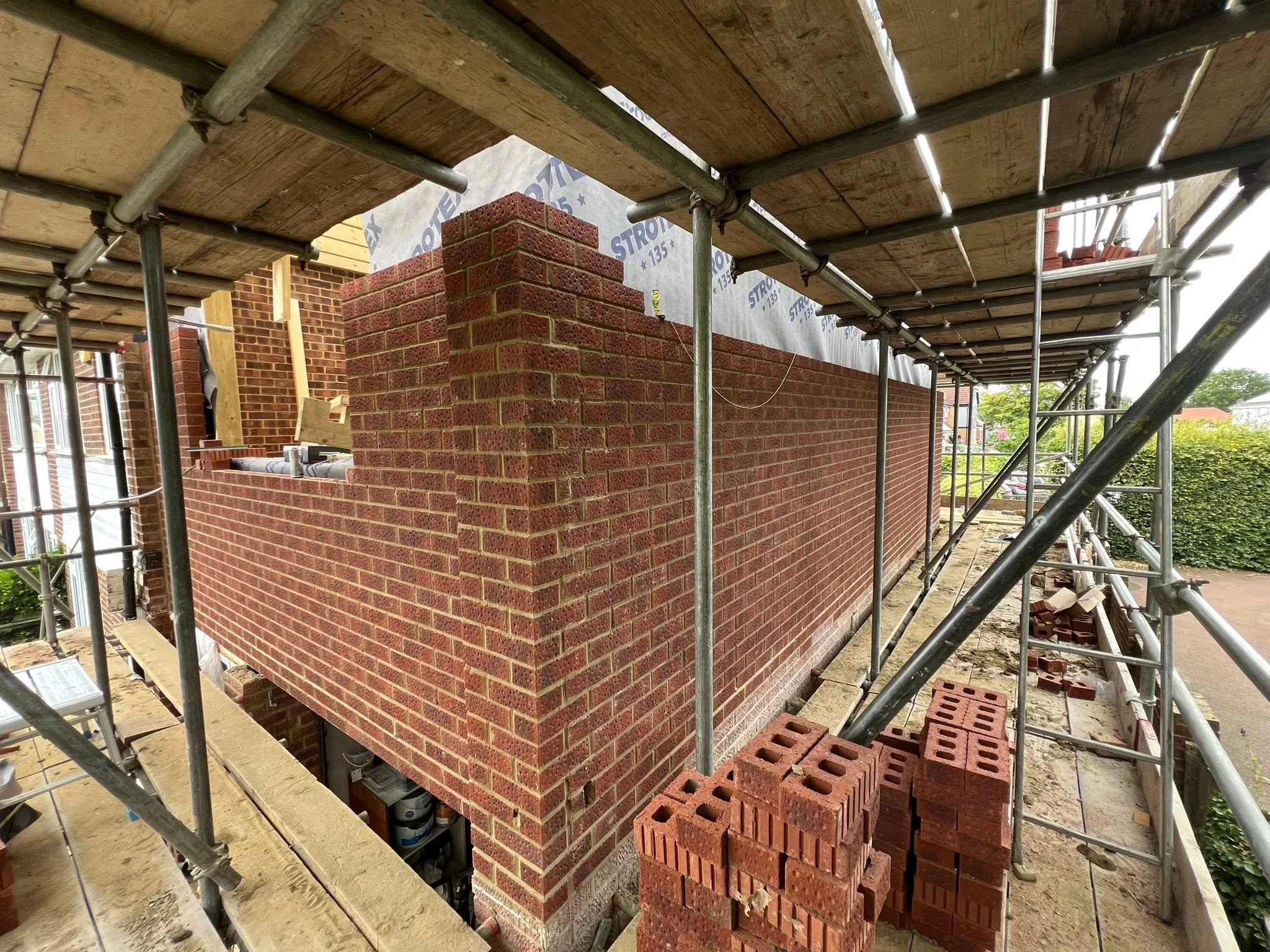
Master the engineering codes linking structural brickwork kent to complex landscaping kent earth retention systems. Optimize lateral earth pressure controls and civil groundworks. Meta title: Brickwork Kent & Landscaping Kent | Retaining Wall Engineering Meta Description: Master the engineering codes linking structural brickwork kent to complex landscaping kent earth retention systems. Optimize lateral earth pressure controls and civil groundworks.
When executing high-end residential or commercial estate reconfigurations, the structural handshake between high-performance brickwork kent developments and comprehensive landscaping kent terraforming is non-negotiable. Altering natural topographical gradients to create multi-level terraced lawns or open entertainment plazas requires more than simple cosmetic brick placement. It demands an absolute mastery of civil earth retention, dynamic hydrostatic pressure management, and structural load path calculations.
A retaining wall built within a modified landscape layout functions as an active structural shield. It must continuously resist intense lateral active earth pressures, withstand localized surcharge loads from upper pedestrian zones, and manage subterranean water tables without bowing, tilting, or experiencing structural shear fractures. Failing to calculate soil shear angles, optimize foundation mass, or isolate masonry from volatile clays will result in rapid wall movement and catastrophic structural failure during heavy winter downpours.
This comprehensive engineering manual details the soil mechanics, structural layouts, and material configurations required to deliver unyielding retaining assets under a premier, fully integrated brickwork kent and landscaping kent delivery framework.
1. Soil Mechanics: Calculating Lateral Active Earth Pressures and Surcharge Vectors
Every retaining structure built across a sloped terrain is subjected to continuous horizontal forces trying to push the wall forward. To design an unyielding masonry barrier, civil engineers must analyze the specific physical properties of the retained earth mass.
Determining the Angle of Internal Friction
The primary force acting against the rear face of the masonry leaf is the lateral active earth pressure ($P_a$). This pressure is directly governed by the unit weight of the soil ($\gamma$), the total vertical height of the retained earth bank ($H$), and the soil's internal shear resistance, known as the Angle of Internal Friction ($\phi$). Using Rankine's structural engineering theory, the Active Earth Pressure Coefficient ($K_a$) is modeled as:

The total horizontal thrust acting against the wall is then calculated using the following engineering baseline:

+-----------------------------------------------------------------------+
|                    THE RETAINING WALL LATERAL FORCE CASCADE           |
+-----------------------------------------------------------------------+
|                                                                       |
|   [ RETAINED EARTH SLUICE BANK ]                                      |
|   ==============================\                                     |
|   |  HYDROSTATIC PRESSURE        \ ===> [ SURCHARGE PEDESTRIAN LOAD ] |
|   |  & CLAY SWELL FORCES          \                                   |
|   |=============>                  \                                  |
|   |  LATERAL ACTIVE                 \                                 |
|   |  EARTH THRUST (Pa)               \                                |
|   |====================>              \                               |
|   +-------------------+                \                              |
|   | STRUCTURAL WALL   |                 \                             |
|   +-------------------+                  v                            |
|            ||                                                         |
|            v Resists Overturning and Forward Sliding Movements        |
|   =================================================================   |
|   [ DEEP C25/30 MASS CONCRETE ANTI-SLIP FOUNDATION REBAR TOE PAD ]    |
|                                                                       |
+-----------------------------------------------------------------------+
When additional loads—such as vehicle parking zones, stone outbuildings, or heavy stone paving fields—sit on the upper terrace, they apply an extra vertical weight known as a surcharge load ($q$). This surcharge amplifies the lateral thrust acting against the rear face of the wall uniformly across its entire vertical profile.
If your design panel fails to account for these cumulative pressures, the wall will exceed its Ultimate Limit State (ULS), causing rapid forward sliding along the foundation line or structural overturning pivoting around the front toe of the brick base.
2. Geotechnical Earthworks: Stabilizing High-Plasticity Regional Clay Formations
Civil groundwork teams operating across the South East continuously encounter challenging ground profiles, notably the heavy, over-consolidated Wealden and London Clay shelves. These cohesive soil horizons display high plasticity indices and behave like active geological sponges.
During wet winter saturation cycles, clay soils absorb immense volumes of tracking water, expanding aggressively and applying massive volumetric lateral pressures against subterranean structures. Conversely, hot summer dry spells cause deep core desiccation and soil shrinkage, leaving empty voids that drop the soil's active support.
To insulate the finished wall from these intense cyclical movements, the raw slope must be excavated well back from the planned masonry line. The exposed earth face is lined with a heavy-duty, needle-punched non-woven geotextile segregation membrane.
The void separating the brickwork from the clay bank is packed with clean, open-graded, non-cohesive angular granite stones. This coarse stone layer completely neutralizes clay expansion pressures by letting the soil expand safely into open gravel gaps without touching the masonry skin.
3. Structural Masonry Configuration: Designing Mass Cavity and Reinforced retaining Walls
To safely resist these lateral forces, a retaining layout must move away from thin, single-skin brick screens toward thick, high-mass reinforced structures designed to BS EN 1996 (Design of masonry structures).
+-----------------------------------------------------------------------+
|                    THE MASS MASONRY RETAINING CAVITY MATRIX           |
+-----------------------------------------------------------------------+
|                                                                       |
|   [ EXTERNAL CHALKY FACE SKIN ]      [ VOID FILL ]     [ INNER CORE ] |
|   +---------------------------+       ||||||||||       +------------+ |
|   | Facing Brick Leaf         |       |C25/30  |       | Dense Core | |
|   | (Flemish Bond Detail)     |<=====>|Concrete|<=====>| Engineering| |
|   | Laid with M6 Mortar       |       |Grout & |       | Blockwork  | |
|   +---------------------------+       |Rebar   |       +------------+ |
|                                       ||||||||||                      |
|                                                                       |
+-----------------------------------------------------------------------+
The Double-Skin Concrete Pocket Core
For landscape heights exceeding one meter, structural specifications favor a double-skin pocket retaining wall design. The front facing wall is built using frost-resistant engineering bricks or handmade facing modules laid in a traditional Flemish or English Bond configuration to ensure deep joint interlocking.
The rear skin is constructed using dense, high-load aggregate blocks. This creates a continuous internal cavity void measuring between one hundred and two hundred millimeters wide.
High-tensile steel starter bars, anchored deep within the mass concrete foundation raft, extend vertically up through the center of this cavity. The open void is then filled with a high-slump, micro-concrete grout mix, specified to a minimum compressive strength of 30 N/mm² (C25/30 mix).
Once cured, this composite structure functions as an unyielding structural beam. The internal steel-and-concrete core absorbs the horizontal tensile bending strains, while the outer brick skin provides high compressive strength and a flawless premium finish.
4. Hydrological Engineering: Hydrostatic Defeating Networks and SuDS Channels
The primary catalyst for retaining wall blowouts is not the weight of the soil itself, but the massive weight of trapped water pooling behind the structure. When a retained earth bank becomes saturated during heavy storms, the water cannot drain away, creating intense hydrostatic pressure that can quickly push a masonry wall forward.
To permanently eliminate hydrostatic buildup, the rear face of the wall must incorporate an active drainage network linked to Sustainable Drainage Systems (SuDS). A seventy-five-millimeter perforated land drainage pipe is laid along the base of the open gravel pocket, wrapped inside a geotextile filtration sleeve to block fine sand sediment from clogging the line.
+-----------------------------------------------------------------------+
|                    THE SUDS COMPLIANT BASE INFILTRATION LOOP          |
+-----------------------------------------------------------------------+
|                                                                       |
|     [ WATER INGRESS SHEET ] ===> [ ANGULAR STONE REAR GRANITE PACK ]  |
|                                                      ||               |
|                                                      v                |
|                                        +---------------------------+  |
|                                        | PERFORATED HDPE PIPE LINE |  |
|                                        +---------------------------+  |
|                                                      ||               |
|                                                      v                |
|                                +------------------------------------+ |
|                                | SUBTERRANEAN ATTENUATION CRATES    | |
|                                +------------------------------------+ |
|                                                      ||               |
|                                                      v                |
|                                 [ SLOW controlled Greenfield Runoff ] |
|                                                                       |
+-----------------------------------------------------------------------+
To let any trapped surface water escape immediately, the lowest course of facing brickwork features open vertical perp joints at every third brick interval, fitted with louvered plastic weep vents.
This drainage path intercepts groundwater tracking through the gravel pocket, routing it out through the weep vents into a stainless steel linear slot drainage channel installed along the front base of the patio. This slot channel carries the water down into subterranean stormwater attenuation crate arrays, protecting the main property foundation lines and ensuring adjacent block paving or natural stone hardscapes remain safe from flooding.
5. Material Performance Profiles: Structural Classifications
Selecting the correct materials requires matching core manufacturing and chemical metrics against the structural design constraints of your engineering plan:
[ MATERIAL MATRIX: Class A Engineering Bricks ]
- Compressive Strength: Greater than 125 N/mm²
- Water Absorption Capacity: Less than 4.5%
- Primary Zone: Subterranean footing courses, damp-proof boundary lines, high-load retaining skins
[ MATERIAL MATRIX: Frost-Resistant Facing Bricks (F2 Rating) ]
- Compressive Strength: 30 N/mm² to 45 N/mm²
- Water Absorption Capacity: 8% to 12%
- Primary Zone: Above-ground aesthetic retaining faces, exposed parapet feature brickwork runs
[ MATERIAL MATRIX: Mortar Designation M6 / Class II ]
- Mix Proportion Ratio: 1 : 0.5 : 4.5 (Portland Cement : Lime : Sand aggregates)
- Compressive Strength Target: 6.0 N/mm²
- Primary Zone: External retaining walls, high-exposure outdoor landscape boundaries
6. Comprehensive Operational Phased Lifecycle for Retaining Masonry and Terraforming
To guarantee that every dynamic pressure calculation, foundation pour, grout injection, and drainage tie-in complies with civil engineering codes, site management must enforce a strict, phased construction framework.
Phase 1: Topographical Mapping, GPR Scanning, and Soil Surcharge Calculations
Before any heavy tracked excavators enter the property boundary, the site's ground parameters and layout prints must be verified.
- Topographical Laser Leveling: Conduct a comprehensive multi-axis laser scan across the slope to map the exact grade variations and calculate the required excavation cuts.
- Subsurface GPR Utility Scanning: Survey the entire construction footprint using high-sensitivity Ground Penetrating Radar (GPR) to map all buried utility lines, power tracks, and drainage networks, establishing clear mechanical exclusion zones.
- Surcharge Loading Models: Calculate the exact dead and live load profiles of any upper-terrace structures to determine the required thickness of the concrete base pads.
Phase 2: Mass Excavations, Soil Shoring, and Foundation Base Pours
This phase manages the physical cutting away of the terrain and constructs the unyielding structural foundation platforms.
- Bulk Volumetric Digs: Deploy tracked excavators to clear away organic topsoils, executing the bank cuts well behind the planned wall face to clear space for the gravel drainage pockets.
- Trench Shoring Assembly: Install high-strength steel trench sheets and mechanical struts inside the open cuts to counteract lateral earth pressures and protect the active workspace.
- Casting the Concrete Footings: Position high-tensile steel reinforcing cages and starter bars inside the formwork tracks, then pour C25/30 structural concrete, using internal vibrators to extract all air voids.
Phase 3: Mortar Balancing, Leaf Construction, and Pocket Grout Injections
The core engineering phase where the masonry leaves are raised and structural reinforcing matrices are integrated.
- Mortar Mix Balancing: Calibrate the specific M6 mortar designation class utilizing coarse angular sands to guarantee high bond strength across all brick bed lines.
- Double-Skin Superstructure Erection: Build out the front facing brick leaf in a Flemish bond pattern while simultaneously raising the rear block skin, maintaining a clean internal cavity void.
- Executing the Core Grout Pours: Pour high-slump micro-concrete grout into the internal cavity void in controlled layers, compacting the matrix around the vertical steel rebar rods to eliminate all voids.
Phase 4: Land Drainage Integration, Gravel Packing, and Surface Handover
The final technical phase where drainage networks are connected, joints are tooled, and the completed landscape is certified for handover.
- Land Drainage Pipe Layout: Install the perforated HDPE land drainage pipe along the base of the wall, connecting the line directly to subterranean SuDS attenuation crate cells.
- Granular Aggregate Backfilling: Backfill the rear void with clean, open-graded forty-millimeter angular granite stone, wrapping the aggregate core inside non-woven geotextile segregation sheets.
- Joint Tooling and Site Handover: Tool the external facing brick joints using compressed bucket-handle irons to seal the matrix, clear away all surface protection mats, and formally sign off the asset for immediate client handover.