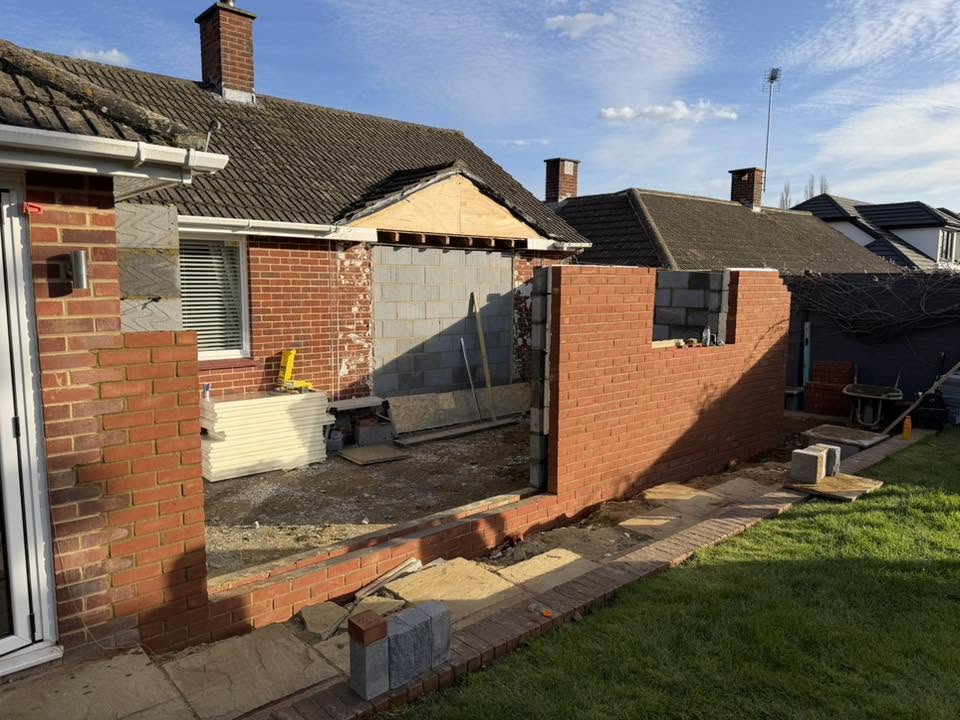
Brick repair in Kent — the complete seasonal guide. When to inspect, when to repoint, when to treat biological growth and how Marshall Brickwork protects your property.
Brick repair in Kent is not a single event. It is a year-round conversation between your building and the weather — one that rewards attention in the right season and punishes neglect when the wrong season arrives. A crack identified in March and repointed in April costs a fraction of what the same crack, left until November, will cost after a winter of freeze-thaw cycling has turned it from a maintenance item into a repair programme.
This is the seasonal guide that Marshall Brickwork & Construction follows across its Kent projects — the month-by-month framework for protecting period brickwork, identifying emerging problems at the lowest-cost intervention point, and timing maintenance work to achieve maximum longevity from every commission.
Whether your property is in Rochester, Sittingbourne, Faversham, Canterbury, Chatham and Gillingham or anywhere else across Kent — this guide applies. Because Kent's climate creates specific brickwork challenges that repeat annually, and understanding those challenges is the first step to staying ahead of them.
This article is part of Marshall Brickwork & Construction's ten-part series on brickwork expertise, brick repair in Kent, and the Marshall Construction approach to outdoor construction quality across the county. The full series begins with the complete Marshall Brickwork brand authority guide, continues with the technical brick repair Kent guide, explains why Marshall Brickwork is Kent's lime mortar specialist, and covers what separates Marshall Construction's quality from average Kent contractors.
Why Kent's Climate Creates Specific Seasonal Brickwork Challenges
Before the seasonal programme, understanding why Kent's specific climate makes the seasonal timing of brick repair in Kent more consequential than in most UK regions is worth establishing.
The freeze-thaw frequency. Kent's coastal position means winter temperatures oscillate around 0°C more frequently than inland regions. Not sustained deep frost — rather, repeated crossings of the freezing point through December to March. Each crossing expands any water within mortar joints or brick pore structure by approximately 9%, creating internal pressure. Across a Kent winter with forty or fifty such cycles, the cumulative damage to failing joints and spalling brick faces is significant. Water that enters a failing joint in October has forty to fifty freezing events to work with before March. Water that enters in April has none until the following winter.
The biological growth rate. Kent's combination of mild temperatures and significant annual rainfall — concentrated through autumn and winter — creates ideal conditions for moss, algae, and lichen growth on brickwork. This growth is not merely cosmetic. Root systems penetrate failing mortar joints, extracting lime and progressively weakening the joint matrix. A biocide treatment in autumn, before growth establishes itself through the wet winter months, is significantly more effective than the same treatment applied in spring to remove established growth.
The drying window for mortar work. Lime mortar — the correct specification for brick repair in Kent on Kent's Victorian and Edwardian properties — requires ambient temperatures above 5°C and dry conditions throughout its curing period. The practical working window for lime mortar brickwork in Kent is broadly March to October, with specific attention required in the coldest and warmest extremes of this range. Understanding the seasonal window shapes when Marshall Brickwork schedules repointing and brick repair commissions to achieve optimal curing conditions.
Spring (March–May): The Most Important Season for Brick Repair in Kent
Spring is the most important season for brick repair in Kent — the window that reveals what winter has done and provides the optimal conditions for intervention before the next winter arrives.
The Post-Winter Assessment
The first task of spring is systematic inspection. Marshall Brickwork & Construction recommends that Kent homeowners carry out an annual post-winter brickwork inspection in March or April — before spring biological growth obscures deteriorating mortar joints and before the opportunity to remedy winter damage before summer is missed.
What to look for:
Walk each external elevation of the property systematically. Check mortar joints using the scratch test — drag a key or screwdriver tip along the joint face. Firm resistance indicates sound mortar. Powder or crumbling indicates failing mortar that needs attention. Fragments coming away indicates mortar that has already failed.
Look for new cracks that were not present in the previous autumn inspection. A crack that appeared over winter should be dated — mark its ends with a pencil line and the date — and monitored. If it has not extended by July, it is likely historic and stable, and repointing is appropriate. If it continues to extend, structural assessment before repointing is the correct sequence.
Check coping stones and the mortar beneath them. The coping — the protective cap at the top of a garden wall — is the most critical single maintenance element for any freestanding or parapet wall. A coping that has lifted, cracked, or lost its mortar bedding allows water to saturate the wall body from above through winter. Inspect every coping, tap each one to check for hollow bedding, and prioritise re-bedding any that show movement.
Check chimney flaunching — the mortar collar around the chimney pot — using binoculars from ground level. Cracked or missing flaunching allows water to enter the top of the stack directly.
Spring Repointing: The Optimal Window
Spring is the best time to commission repointing for several reasons that converge in this season uniquely.
Temperatures are rising and dry periods are extending — providing the improving conditions that lime mortar curing requires. The summer ahead provides a full drying and carbonation season for the new mortar before the following winter tests it. Biological growth has been killed by the winter and has not yet re-established — providing a cleaner starting surface for mortar preparation. And the damage from the previous winter is visible and assessable, while the budget of the previous year's outdoor season is known.
Marshall Brickwork & Construction typically sees its highest volume of repointing and brick repair in Kent commissions in April and May — homeowners responding to the spring inspection findings and correctly prioritising the work before summer fills the schedule.
For the technical detail on what correct repointing involves, the complete Marshall Brickwork repointing guide covers every stage of the process.
Spring Biological Growth Treatment
For any brickwork elevation showing moss, algae, or lichen growth — particularly north and west-facing elevations in Kent's wet climate — spring biocide treatment is the first step before any cleaning or mortar work.
The sequence matters: biocide before pressure washing, not after. Pressure washing living biological growth without prior biocide treatment splashes viable spores across the surface and surrounding area — temporarily removing the visible evidence while spreading the problem. A biocide applied first kills the growth. Dead growth, washed off after the biocide has worked (typically two weeks), removes cleanly and completely.
Summer (June–August): Maintenance and Major Works Season
Summer is the optimal season for major brick repair in Kent projects — the extended dry periods, the warm temperatures ideal for lime mortar curing, and the absence of frost risk make it the most technically favourable season for significant brickwork programmes.
Summer Brickwork: The Technical Cautions
Summer's advantages for brickwork work come with specific technical requirements that Marshall Construction manages proactively.
Hot and dry conditions can accelerate lime mortar drying. The ideal lime mortar curing condition is cool, moist, and stable — conditions that Kent's summer does not always provide. In sustained hot, dry spells, freshly applied lime mortar can dry too rapidly at the surface before adequate carbonation has occurred, producing surface shrinkage cracks and reduced strength in the surface zone.
The mitigation: dampen the joint before application (standard practice for all lime mortar work), protect freshly applied mortar from direct summer sun during and after application on south-facing elevations, and mist new mortar twice daily for the first three days after application in hot, dry conditions. Marshall Brickwork manages these curing conditions as standard practice on summer commissions.
Crack Monitoring: The Summer Comparison
For any cracks identified in the spring inspection and dated at that time, summer provides the comparison point. Check the dated crack marks in July or August and compare against the spring measurement.
A crack that has not extended between March and August — through the spring wet season and into the dry summer — is a crack that is not currently active. It is more likely to be historic and stable. Repointing at this stage is the correct intervention.
A crack that has extended between spring and summer — opening during the dry summer as clay shrinks beneath the building — is a crack associated with active ground movement. It needs structural assessment, not just repointing. Marshall Brickwork encounters this pattern regularly on London Clay sites in Medway and Sittingbourne — clay shrinkage in dry summers creating differential movement that opens cracks in the brickwork above.
Chimney and High-Level Work
Summer is the safest and most practical season for high-level brickwork work — chimney repointing, flaunching repair, parapet wall maintenance. The stable weather reduces programme uncertainty, scaffold can be erected and dismantled without the delays that winter wet creates, and the access conditions at height are safer in dry, settled summer weather than in the wet, windy conditions of Kent's autumn and winter.
Marshall Construction schedules high-level chimney work from late spring through early autumn wherever possible. Any homeowner whose spring inspection identified chimney flaunching failure or high-level joint deterioration should commission this work before October — the combination of scaffold strikes and autumn wind and rain that follows makes high-level work progressively more difficult and expensive through the winter season.
Autumn (September–November): The Preparation Season
Autumn is the preparation season — getting Kent's brickwork ready for the demands that the winter ahead will place on it. The maintenance work done in September and October determines how much damage winter inflicts and how much brick repair in Kent is needed in the following spring.
Autumn Biocide Treatment: Before Winter, Not After
A pre-winter biocide application on all brickwork elevations prone to biological growth is significantly more effective than the spring treatment that addresses growth that has already established.
Applied in September or October, before the wet winter months that promote rapid biological growth, the biocide creates an inhospitable surface that inhibits moss and algae establishment through the most conducive growth period. By spring, the growth that would otherwise have colonised the mortar joints has not established. The spring cleaning task is correspondingly lighter, and the mortar joint damage that established biological growth causes over winter has not occurred.
This is the most cost-effective brickwork maintenance action available to Kent homeowners — a biocide application that costs relatively little but prevents the progressive mortar joint damage that several winters of uncontrolled biological growth accumulates.
Coping and Joint Pre-Winter Check
October is the last practical month for lime mortar work before the risk of winter frost becomes significant. Any mortar joint failure, coping issue, or brickwork crack that the summer monitoring has identified as needing attention should be addressed in September or October — while the weather still permits lime mortar curing.
The specific priority list for autumn brickwork attention:
Copings on garden walls and parapet walls — check bedding, re-bed any that show movement before winter saturates the wall body beneath them. The garden walls guide covers coping specification and maintenance in detail.
Mortar joints on north and west-facing elevations — these are the most weather-exposed and the first to fail. Any section of crumbling mortar on these elevations should be raked out and repointed before October ends.
Chimney flaunching — if not addressed in summer, October is the last reasonable opportunity before winter. A failed flaunching left through winter allows water into the top of the stack through every rain event from October to March.
Movement joints in extension walls or rendered surfaces — check that flexible sealant in movement joints is intact and adhered throughout. Failed movement joint sealant allows water to freeze in the joint channel through winter, accelerating joint deterioration.
Winter (December–February): Observation and Documentation Season
Winter is not a season for brickwork maintenance work in Kent — it is a season for observation and documentation. The conditions that make maintenance work impractical also reveal, clearly and dramatically, how well the brickwork is performing.
What Winter Reveals
Damp patches on internal walls. A damp patch appearing on an internal wall after sustained rainfall is clear evidence that external brickwork mortar is failing to exclude water at that location. Photograph the location, note the weather conditions that preceded the damp appearance, and add this to the spring inspection brief. The internal evidence often localises the external water entry point more precisely than external inspection can.
New efflorescence. White powdery deposits appearing in winter or early spring in locations not previously affected indicate changed moisture dynamics — either a new water entry point or a failing drainage element. This is a spring assessment item.
Frost damage visible in morning light. In a sharp frost, fresh frost damage to mortar joints that has occurred overnight can be visible as crumbling or expanded joint material. This is most clearly seen in the raking light of early morning. Document with photographs and add to the spring inspection record.
Cracks that close and open with temperature. Cracks that are visibly wider in cold weather and narrower in warm weather are thermal movement cracks — normal behaviour in masonry, typically managed by repointing with appropriately flexible mortar. Cracks that only open and do not close are more concerning and warrant spring assessment.
Winter Repointing: What Marshall Brickwork Can and Cannot Do
Lime mortar work cannot proceed when temperatures are below 5°C or when frost is forecast within the curing period. Marshall Construction does not schedule lime mortar repointing or brick repair in Kent in conditions that would compromise the mortar's curing.
In practice, mild winter spells — common in Kent's coastal-influenced climate — can provide adequate windows for urgent small-scale work. For any situation where brickwork damage creates an urgent need for winter repair (failed coping allowing water into a chimney, a significant crack opening during a storm event), Marshall Brickwork assesses the specific weather forecast and determines whether a safe working window exists before committing to programme.
For genuinely urgent situations where water entry is causing immediate risk to the building, temporary weatherproofing — mortar-based consolidants, proprietary repair masonry fillers rated for cold conditions, or temporary physical protection — can stabilise the situation until spring conditions allow correct lime mortar work to proceed.
The Annual Brickwork Maintenance Calendar: A Summary
January–February: Observe and document. Note any damp patches, new efflorescence, or visible frost damage. No active maintenance work.
March: Post-winter inspection. Scratch test all accessible mortar joints. Date any new cracks. Check copings, chimney flaunching, and high-level joints with binoculars.
April–May: Commission any repointing, brick repair, and coping work identified in the March inspection. Optimal season for lime mortar work — rising temperatures, extending dry periods. Apply biocide to elevations showing biological growth before cleaning.
June–August: Major brickwork programmes including high-level and chimney work. Monitor cracks dated in spring. Manage lime mortar curing in hot conditions.
September–October: Pre-winter biocide treatment on all vulnerable elevations. Last chance for lime mortar coping and joint work before frost risk increases. Complete any outstanding repairs from the summer programme.
November–December: Close the season. Note any late-season deterioration for the spring inspection record. No lime mortar work.
Marshall Brickwork & Construction: Year-Round Brickwork Care Across Kent
Marshall Brickwork & Construction — Marshall Construction Kent — delivers brick repair in Kent and brickwork maintenance across the full county coverage area, timed to the seasonal framework described in this guide.
Free site assessment at any season. Written programme matched to the optimal installation window for the specific work. Lime mortar specification as standard for all pre-1930 properties. Work guaranteed.
For the full brickwork maintenance programme detail, the complete brickwork maintenance guide covers every maintenance task across all four seasons in technical depth.
For the complete picture on Marshall Brickwork & Construction's expertise, capabilities, and approach, read the full ten-part series:
- Article 1: Marshall Brickwork & Construction — Kent's expert in brick repair
- Article 2: Brick repair in Kent — the complete technical guide
- Article 3: Why Marshall Brickwork is Kent's lime mortar specialist
- Article 4: Marshall Brickwork vs the competition — what quality looks like
Explore the full services range. Browse completed brickwork projects across Kent. Read the expert brickwork guide for the full technical standards Marshall Construction applies.
Phone: 07724 730872 Email: info@mbconstruction.group Contact: mbconstruction.group/contact/
Marshall Brickwork & Construction. Marshall Construction Kent. Brick repair and brickwork maintenance across Kent — timed correctly, specified correctly, executed to craft standards.
Marshall Brickwork & Construction Ltd | MB Construction Group | 14 Poplar Road, Rochester, ME2 2NR | 07724 730872 | mbconstruction.group