Do you need planning permission in Kent? Complete 2026 guide covering driveways, patios, extensions, garden walls, fencing, conservation areas and listed buildings.
It is one of the most Googled questions in the home improvement market and one of the least clearly answered. "Do I need planning permission?" sits at the top of every outdoor construction project conversation — and the honest answer is almost always "it depends."
It depends on what you are building. It depends on where in Kent you live. It depends on whether your property is in a conservation area, whether it is listed, whether it is a house or a flat, whether permitted development rights have been removed by an Article 4 Direction, and whether what you are proposing is an extension, a driveway, a fence, a garden wall, or a patio.
This guide cuts through all of that. It covers every major outdoor construction project that Kent homeowners commission — driveways, patios, extensions, garden walls, fencing, new builds, and brickwork works — and tells you honestly what requires permission, what does not, and where the specific complications of Kent's planning environment make a generic answer insufficient.
MB Construction Group — Marshall Brickwork & Construction delivers all of these project types across Kent and manages the planning implications as part of every commission. This guide reflects fifteen years of engaging with Kent's planning authorities — Medway Council, Kent County Council, and the various district and borough councils — across every postcode in the county.
The Planning System Explained in Plain English
Before the project-specific rules, understanding how the planning system works at the most basic level removes the confusion that most homeowners experience.
Planning permission is formal consent from your local planning authority (LPA) to carry out development. You submit an application with drawings and documents, pay a fee, and the LPA makes a decision — typically within eight weeks for householder applications. The LPA assesses whether the proposed development accords with local and national planning policy, considers impacts on neighbours and the local environment, and either approves with conditions, approves unconditionally, or refuses.
Permitted development rights are the more important concept for most residential outdoor construction. Under the Town and Country Planning (General Permitted Development) (England) Order 2015, certain types of work are automatically permitted — they do not require a planning application because the government has pre-determined that they are acceptable in principle, subject to specific size, height, and design limits. Most residential driveways, most garden features, most single-storey extensions within defined limits, and most boundary treatments fall within permitted development.
Building Regulations are completely separate from planning permission and are frequently confused with it. Building Regulations are technical standards — for structural integrity, fire safety, thermal performance, drainage, and accessibility — that apply to certain work regardless of whether planning permission is needed. An extension might not need planning permission but will almost always need Building Regulations approval. A new build requires both. Understanding which approval is needed for which project is the foundation of managing the process correctly.
Article 4 Directions are the element most specific to Kent. A local planning authority can remove permitted development rights in a defined area through an Article 4 Direction — typically in conservation areas or areas of recognised character where the accumulated impact of minor works could be harmful. Kent has numerous conservation areas in Rochester, Canterbury, Tunbridge Wells, Sittingbourne, Faversham, Maidstone, Sevenoaks, and many villages across the county. If your property is in a conservation area, the permitted development rules that apply to most properties may not apply to yours.
Listed buildings are the most significant planning constraint. Listed Building Consent is required for any works — internal or external — that affect the character or fabric of a listed building. This includes repointing, repair, extensions, and alterations that would be routine permitted development on an unlisted property. The listed building register is searchable through Historic England, and any doubt about whether a property is listed should be resolved before any work is commissioned.
Driveways: The Planning Rules That Catch Most Homeowners Out
Driveway installation is the outdoor construction project where planning compliance catches the most homeowners by surprise — because the rules changed in 2008 and a significant number of Kent homeowners (and contractors) are still working to the pre-2008 assumption that driveways never need planning permission.
The 2008 Front Garden Paving Rules
From October 2008, the permitted development rules for paving over front gardens were changed significantly. The rule now is:
Permeable surfaces do not require planning permission for front garden hard surfacing, regardless of area. Permeable block paving on a permeable sub-base, resin bound gravel (which is inherently permeable), gravel, and other porous surfaces can be installed without planning permission.
Impermeable surfaces over 5m² require planning permission unless drainage is provided that directs surface water to a permeable area within the property boundary (a lawn, planted area, or soakaway). Standard tarmac, concrete, and solid block paving without permeable joints are impermeable. Tarmac driveways on front gardens over 5m² require either drainage provision or a planning application.
The practical implication for Kent homeowners: A standard family driveway of 30–40m² in tarmac or standard block paving on the front of a house requires either: a properly designed drainage system directing surface water to a permeable area, or a planning application. Most contractors installing these surfaces should raise this question proactively. Marshall does — at every initial consultation for any front driveway project.
Rear garden hard surfacing has no area restriction for permitted development. Patios, rear access paths, and rear garden paving do not trigger the 2008 front garden rules. There are no planning restrictions on covering the rear garden in hard surfacing (subject to listed building and conservation area considerations where applicable).
Dropped Kerbs and Vehicle Crossovers
A separate and frequently overlooked element of driveway projects is the dropped kerb — the modification to the highway kerb, footway, and verge that creates the vehicle access point. This is regulated by the highway authority, not the planning authority, and requires separate approval regardless of whether the driveway itself needs planning permission.
In Kent, the highway authority for most county roads is Kent County Council Highways. In the Medway towns — Rochester, Chatham, Gillingham, Strood — the highway authority is Medway Council. The applications go to different bodies and have different processes.
Marshall manages the dropped kerb application as part of every new access driveway commission — identifying the correct authority, submitting the application, and coordinating the programme to ensure the crossover is approved before work begins. Starting a driveway without dropped kerb approval creates an enforcement problem that is expensive to resolve retrospectively.
Patios: Largely Permitted Development with Conservation Area Exceptions
Patio construction in rear gardens is almost always permitted development for standard residential properties. There are no area restrictions on rear garden hard surfacing at or near ground level.
The exceptions that apply across Kent:
Raised terraces and platforms. Any raised platform over 300mm above the adjacent ground level requires planning permission. A patio built at existing ground level with falls managed through sub-base preparation is typically permitted development. A raised terrace structure — a deck or elevated patio that sits more than 300mm above ground — is not permitted development.
Conservation areas. The character management policies of Kent's conservation areas sometimes address hard surfacing, particularly in front gardens and visible areas. Specific conservation areas have policies that require planning applications for significant hard surfacing changes. Always check with the relevant local planning authority before commissioning patio work on a conservation area property.
Listed buildings. Any patio work within the curtilage of a listed building requires Listed Building Consent, regardless of whether the patio is in the rear garden and regardless of its size. The curtilage includes the entire garden, not just the listed building itself.
For detailed guidance on material selection, specification, and maintenance for patios once the planning position is confirmed, the patio cost guide and porcelain vs Indian sandstone comparison cover every surface type in depth.
Extensions: The Permitted Development Rules in 2026
Home extensions are the project type where the relationship between planning permission and permitted development is most nuanced — and where getting it wrong has the most serious consequences, since an extension built without required planning permission must be removed or retrospectively approved.
Single-Storey Rear Extensions
Under the current permitted development rules (as of 2026), single-storey rear extensions are permitted development subject to the following key limits:
For detached houses: The extension must not extend more than 4 metres from the original rear wall of the house. Under the Larger Home Extension scheme (which requires prior approval notification), extensions of up to 8 metres are permitted development for detached houses.
For semi-detached and terraced houses: Standard permitted development allows extension up to 3 metres from the original rear wall. Under the Larger Home Extension scheme, up to 6 metres is permitted for semis and terraces.
Height: The eaves of the extension must not exceed 3 metres, and the ridge must not exceed the ridge of the existing house.
Materials: Must be similar in appearance to the existing house — this is particularly relevant in Kent's conservation areas and for period properties where material character is a planning consideration.
The "original house" definition: The limits apply to the house as it was built, or as it stood on 1 July 1948 (whichever is later). If the house has already been extended, the existing extension reduces the permitted development allowance.
The Larger Home Extension Prior Approval Process
Extensions beyond the standard single-storey limits (4m for detached, 3m for others) but within the larger home extension limits (8m for detached, 6m for others) require prior approval — a notification process where the local planning authority consults neighbours before confirming whether planning permission is required. This is not a full planning application, but it is not simply permitted development either.
In practice: notify the LPA, neighbours are consulted, wait for a decision or the expiry of the consultation period, and then proceed if no objections are raised or if the LPA confirms prior approval is not required.
Two-Storey Extensions
Two-storey rear extensions are permitted development up to 3 metres from the original rear wall, subject to additional height and distance constraints. Two-storey side extensions are not permitted development — they always require planning permission.
Extensions in Conservation Areas
In conservation areas, permitted development rights for extensions are more restricted than elsewhere. Extensions that would be permitted development outside a conservation area may require planning permission within one. The specific restrictions vary by conservation area — the relevant local planning authority's website contains the conservation area appraisals and management plans that define what is and is not acceptable in each designated area.
Medway Council manages conservation areas in Rochester, Chatham, and the wider Medway authority area. Kent County Council's adopted policies and the relevant district councils (Maidstone Borough, Tonbridge and Malling, Sevenoaks District, etc.) manage conservation areas elsewhere across the county.
Garden Walls and Boundary Features
Garden walls and boundary features have relatively clear permitted development rules with specific height limits that trip homeowners up consistently.
Walls adjacent to a highway — the front boundary of a property facing the road, or any boundary adjacent to a public footpath, bridleway, or other public right of way — are permitted development up to 1 metre in height. Anything higher than 1 metre adjacent to a highway requires planning permission.
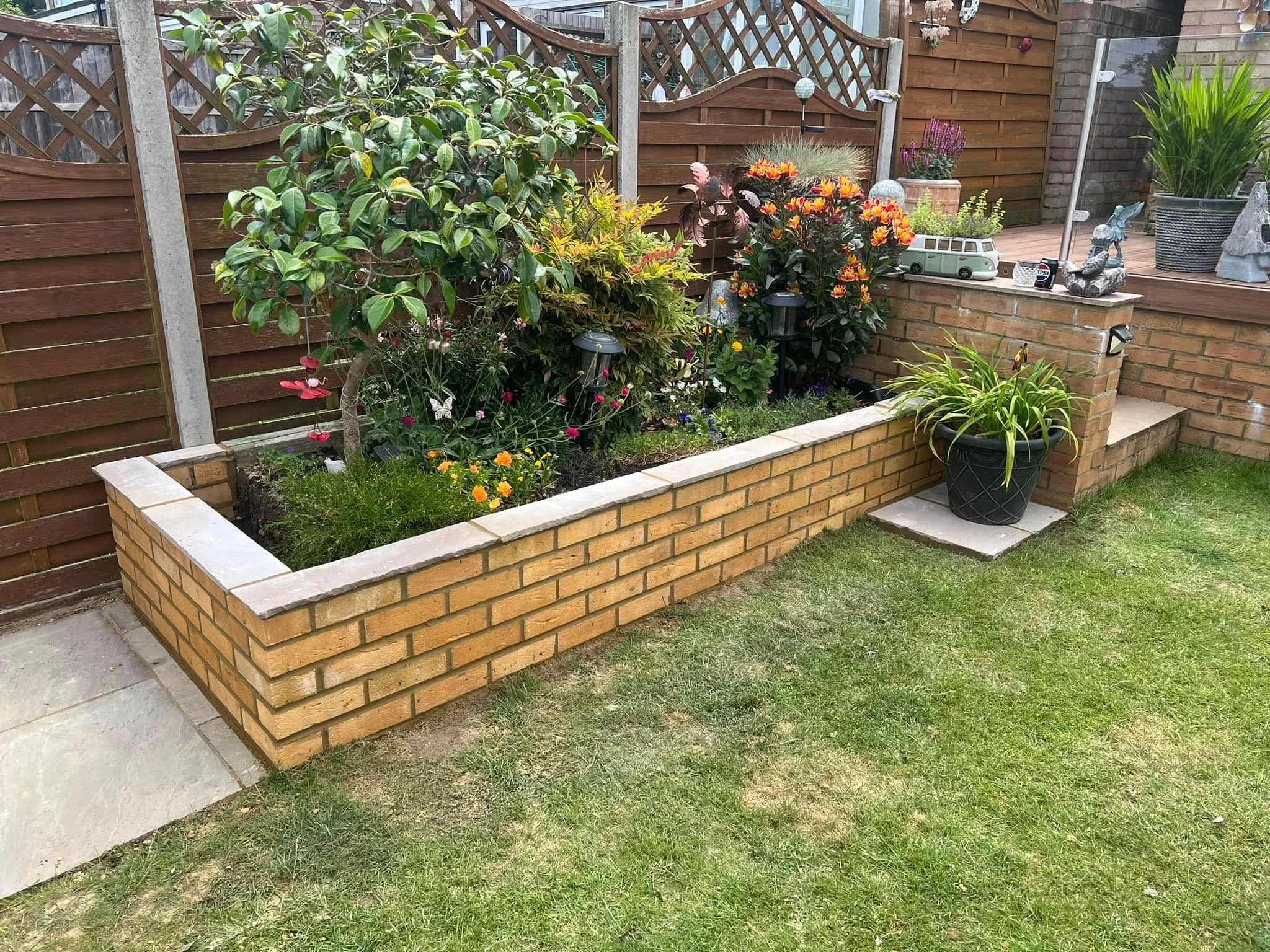
Walls not adjacent to a highway — rear and side garden walls and internal garden walls — are permitted development up to 2 metres in height.
Gate piers and pillars are technically treated separately from walls and can cause compliance issues when they exceed the permitted height limits of the wall they are associated with.
Conservation areas: Gate piers, walls, and boundary features in conservation areas are subject to the Article 4 Direction restrictions where they apply. In Rochester's historic centre, parts of Canterbury, and many other Kent conservation areas, any alteration to boundary walls — even maintenance-level repointing — can technically require consent if it changes the character of the feature. In practice, like-for-like maintenance repointing is rarely pursued by planning authorities, but significant alterations to character — rendering a previously brick wall, raising a wall height, replacing a traditional brick wall with a concrete block one — can attract enforcement action in sensitive conservation areas.
Marshall advises on conservation area implications at the initial consultation for every boundary wall project. This is not an optional check — it is a standard element of the professional service provided.
Fencing: The Rules That Most Homeowners Don't Know
Garden fencing is subject to the same height-based permitted development rules as garden walls:
Adjacent to a highway: Maximum 1 metre without planning permission. Not adjacent to a highway: Maximum 2 metres without planning permission.
The most common compliance failure for fencing in Kent: A homeowner installs a standard 1.8m closeboard fence along the side boundary of their property, not realising that the side boundary is adjacent to a public footpath running along the side of the house. The footpath is a highway. The fence requires planning permission. Enforcement action by the LPA is relatively uncommon for minor breaches, but it can be triggered by neighbour complaints, and it requires retrospective application (with an uncertain outcome) or removal.
The route of any public rights of way adjacent to or crossing a property is searchable through the relevant LPA's map viewer or through the Definitive Map for that area. This check takes five minutes and is worth doing before any boundary fencing project is commissioned.
Brickwork and Repointing: Conservation Area Considerations
For most properties, brickwork repair and repointing is permitted development — routine maintenance to the existing structure does not require planning permission under normal circumstances.
The exceptions that are specific to Kent:
Conservation areas: In conservation areas where Article 4 Directions have removed certain permitted development rights, even repointing work can technically require consent if it changes the character of the building — specifically if the mortar specification, colour, or joint profile differs materially from the original. In practice, correct like-for-like repointing using appropriate lime mortar that matches the original is very unlikely to attract planning enforcement. But using inappropriate materials — white cement mortar on honey-coloured stock brick, for instance — in a conservation area can attract attention.
The mortar specification question is also an architectural heritage matter independent of planning compliance. The brickwork maintenance guide and repointing guide cover in detail why lime mortar is the correct specification for Victorian and Edwardian brickwork — and why the conservation area planning framework reinforces what good practice already requires.
Listed buildings: Any repointing, brick repair, or alteration to the external fabric of a listed building requires Listed Building Consent. This applies even to maintenance work that would be routine permitted development on an unlisted property. The relevant LPA's conservation officer is the appropriate contact for any listed building consent application.
Commercial brickwork in town centre locations, on listed commercial buildings, and in conservation areas faces the same planning considerations as residential work but with the additional complexity of commercial change-of-use rules where the works are associated with a change in building use.
New Builds: Full Planning Permission Required
Residential new builds require full planning permission in virtually all cases. Permitted development rights do not extend to the creation of new dwellings (with the exception of certain change-of-use conversions under specific Classes of the GPDO, such as converting offices to residential under Class MA).
For a new residential dwelling — whether a detached house, infill plot development, or subdivision of an existing property — a full householder or full planning application is required. The process involves:
Pre-application consultation: Engaging the LPA's planning team before submitting a formal application. Pre-application advice is advisory, not binding, but it identifies likely issues early and can prevent the investment of design fees in a scheme that has a fundamental planning objection.
Design and planning drawings: The application requires architectural drawings showing existing and proposed elevations, floor plans, site plan, and location plan at appropriate scales. For new builds in Kent's sensitive planning environments — conservation areas, AONB, Green Belt — design quality and contextual character are material planning considerations that affect the outcome.
The planning application: Submitted through the Planning Portal to the relevant LPA. The validation process confirms the application is complete; the formal eight-week determination period then begins. Extensions of time are common on more complex applications.
Building Regulations: Separate from planning permission, Building Regulations approval is required for all structural work, covering foundations, structural elements, insulation, drainage, fire safety, and accessibility.
Kent's planning authorities vary in their approach to residential development in different areas. The Medway towns have specific Local Plan policies around housing delivery and design. Sevenoaks District has extensive Green Belt coverage that severely restricts new residential development outside settlement boundaries. Tonbridge and Malling Borough Council has its own local plan policies. Understanding which authority is relevant and what its current local plan says about housing development in the specific location is the starting point for any new build planning process.
Landscaping and Groundworks: When Permission Is and Is Not Needed
Garden landscaping — including artificial grass installation, planting, soft landscaping, and standard hard landscaping at or near ground level — is generally permitted development for standard residential properties.
The exceptions:
Significant terracing or earthworks. Where landscaping involves significant changes to the ground level — cutting into a bank to create a level terrace, or raising the ground level by more than a minor amount — a planning application may be required. The threshold is not precisely defined and is assessed case by case, but works that materially alter the topography of the site are more likely to require permission than works that simply surface an existing level area.
Structures within the garden. Outbuildings, garden rooms, pergolas, and similar structures are covered by separate permitted development rules governing outbuildings — different from the rules for extensions. The key limits: outbuildings must not exceed 4 metres ridge height (2.5 metres if within 2 metres of a boundary), must be single-storey, and must not occupy more than 50% of the original garden area when combined with other outbuildings.
Swimming pools and significant excavation. Residential swimming pools are permitted development within the garden, subject to the same outbuilding-style limits for any ancillary structures. However, the excavation involved in pool construction can require assessment of soil and ground conditions, and in areas with specific policy restrictions (AONB, Green Belt, conservation areas), pools may require planning permission.
Groundworks for drainage. Where landscaping involves installation of soakaways or drainage infrastructure near a watercourse or in an area with specific drainage management requirements, engagement with the Lead Local Flood Authority (LLFA) may be required. In Kent, the LLFA for Medway Council's area is Medway Council; for the remainder of the county, Kent County Council acts as LLFA.
How to Check the Planning Position Before You Commission
The correct sequence for any outdoor construction project in Kent where there is any doubt about planning requirements:
Step 1: Check whether your property is in a conservation area or is listed. The Historic England Listed Buildings database is searchable at historicengland.org.uk. Your LPA's website should have a map showing conservation area boundaries — search for "[your local authority] conservation area map."
Step 2: Check whether an Article 4 Direction applies to your area. Your LPA's planning policy pages should list any Article 4 Directions in force. If you cannot find this information easily, call the LPA's planning enquiry line — they will tell you.
Step 3: Check whether permitted development rights have been removed by condition. Some properties have planning conditions attached to previous planning permissions that remove all or some permitted development rights. These conditions appear on the planning register for the property — searchable through your LPA's online planning portal using the property address.
Step 4: Check the specific size and height limits for the proposed work. The Planning Portal (planningportal.co.uk) is the best online reference for current permitted development rules across all project types in England. Cross-reference what you are proposing against the current limits.
Step 5: If in doubt, request a pre-application consultation or a Lawful Development Certificate. A Lawful Development Certificate (LDC) is a formal determination from the LPA that a specific proposal is permitted development. It provides legal certainty and protects against future challenge. The LDC process takes approximately eight weeks and involves a modest fee — significantly less than a full planning application and worth commissioning for any project where there is genuine uncertainty about permitted development status.
Kent-Specific Planning Authorities and Their Specific Approaches
Kent's planning responsibilities are divided between multiple authorities, and knowing which authority manages what is essential before any application.
Medway Council manages planning for Rochester, Chatham, Gillingham, Strood, Rainham, and the Medway authority area. Medway Council has its own Local Plan, its own conservation area designations in the Rochester historic core and other designated areas, and specific policies on residential development, design quality, and heritage.
Kent County Council is the highway authority for most of Kent's roads and manages county-level infrastructure planning. For householder planning applications in the district areas of Kent, the relevant district or borough council is the planning authority — not KCC. KCC manages strategic planning policy and the Minerals and Waste Local Plan.
District and Borough Councils — Maidstone Borough, Tonbridge and Malling, Sevenoaks District, Tunbridge Wells Borough, Swale Borough, Canterbury City, Ashford Borough, Folkestone and Hythe, Dover District, and Thanet District — each manage planning in their own areas with their own local plans, design guidelines, and conservation area management.
For homeowners in Tonbridge, Tunbridge Wells, and Sevenoaks, the relevant planning authorities are Tonbridge and Malling Borough Council, Tunbridge Wells Borough Council, and Sevenoaks District Council respectively — each with their own policies, design expectations, and conservation area management approaches.
Marshall is familiar with the planning environment across all of these authorities — which matters when advising on whether a specific project in a specific location requires permission, what the likely outcome of a planning application would be, and how to design a project to comply with the relevant local design guidance.
Planning Compliance and Marshall's Approach
Every project Marshall commissions begins with an assessment of the planning position. This is not a box-ticking exercise — it is a genuine professional responsibility that protects the homeowner from enforcement risk and ensures the work is carried out to a standard that the planning authority would accept.
For straightforward permitted development projects — a rear patio within a standard suburban garden, a driveway using permeable surfacing, a boundary wall within permitted heights — the planning position is confirmed quickly and the project proceeds. For projects where the position is less clear — conservation area properties, projects near highways, extensions approaching permitted development limits — Marshall raises the question explicitly and advises on the appropriate route before any design work is commissioned.
Explore the full range of services Marshall delivers across Kent — brickwork and repointing, driveways, patios, landscaping, fencing, garden walls, extensions, and new builds — all delivered with planning compliance built into the professional process from day one.
For homeowners considering any of these projects, our guide to choosing a builder in Kent covers the full evaluation framework — including the specific planning knowledge questions that reveal whether a contractor has genuine local expertise.
Browse completed projects across Kent. Get in touch for a free site visit and honest planning advice.
Phone: 07724 730872 Email: info@mbconstruction.group Contact: mbconstruction.group/contact/
Frequently Asked Questions: Planning Permission in Kent 2026
Do I need planning permission to replace my existing driveway with new block paving? If you are replacing a front garden driveway, the surface type determines the answer. Permeable block paving on a permeable sub-base is permitted development. Standard (impermeable) block paving on a front garden over 5m² requires drainage provision or planning permission. Replacing a rear garden surface has no area restriction and is generally permitted development.
Do I need planning permission for a new garden wall in a conservation area? It depends on the height, location, and the specific Article 4 Directions in force for that conservation area. Walls adjacent to a highway are limited to 1 metre regardless. In conservation areas where Article 4 Directions apply, even works within the standard height limits may require consent. Always check with the relevant LPA before commissioning work in a conservation area.
Can I build a rear extension without planning permission in Kent in 2026? Most single-storey rear extensions within the permitted development limits — up to 4m for detached houses, 3m for semis and terraces under standard PD, with larger extensions possible under the Larger Home Extension scheme with prior approval — do not require planning permission. Extensions in conservation areas, on listed buildings, and beyond the permitted development limits all require planning permission.
Does repointing a listed building require consent? Yes. Listed Building Consent is required for any external works on a listed building, including repointing and brick repair. The relevant LPA's conservation officer manages listed building consent applications. Marshall is experienced in working on listed buildings and manages the consent process as part of the commission.
What happens if I build without planning permission when it was required? The LPA can issue an enforcement notice requiring the unauthorised development to be removed. Failure to comply with an enforcement notice is a criminal offence. In practice, enforcement is not automatic — LPAs prioritise on the basis of harm — but unauthorised development creates a title defect that affects mortgage and sale prospects and must be resolved at some point. Retrospective applications are possible and sometimes granted, but with no guarantee of approval. The correct approach is always to establish the planning position before commissioning work.
Marshall Brickwork & Construction Ltd | MB Construction Group | 14 Poplar Road, Rochester, ME2 2NR | 07724 730872 | mbconstruction.group