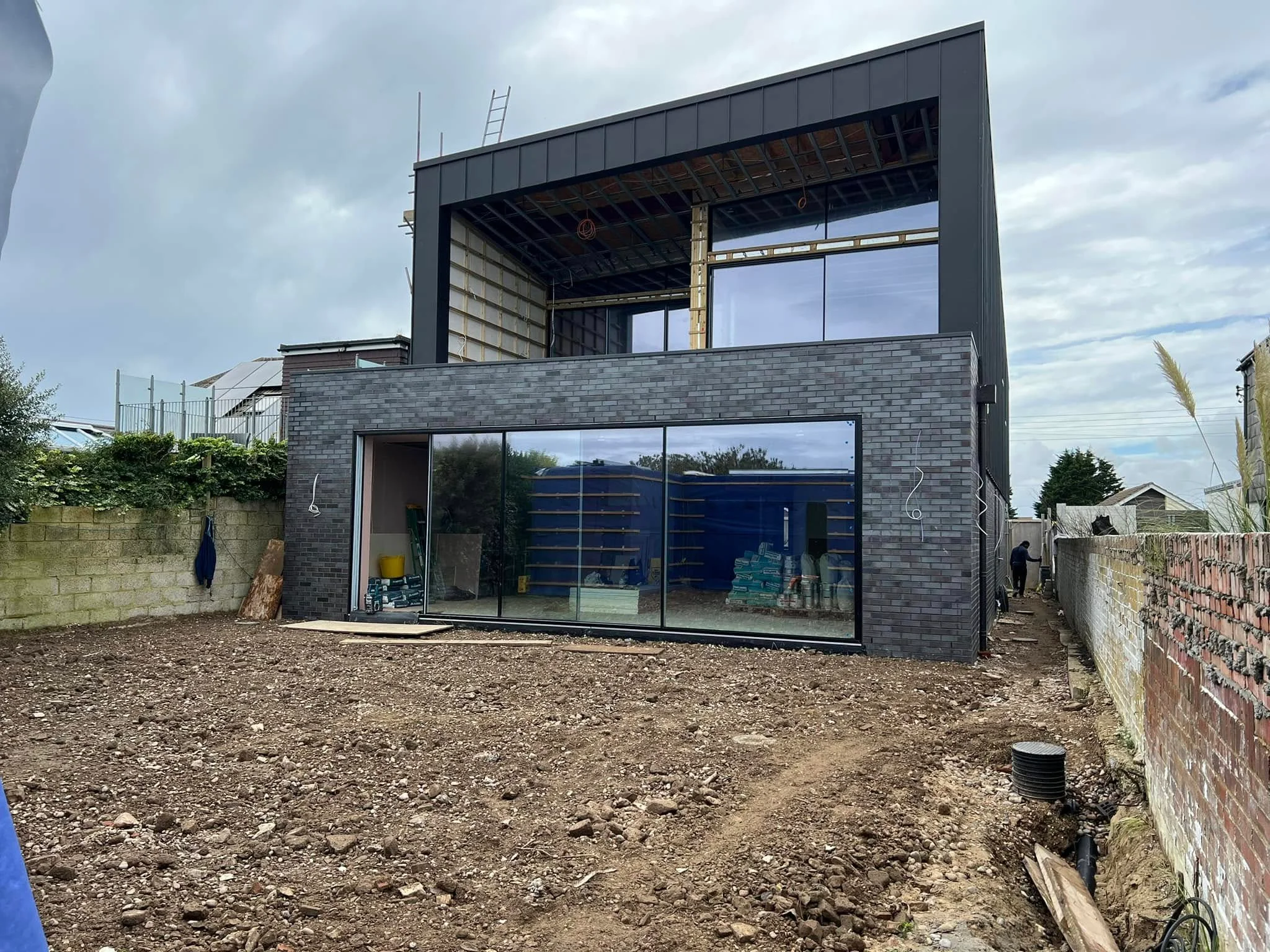
Planning a new build in Kent? Complete guide to structural brickwork, foundations, cavity walls, building regulations and ground conditions across the county.
New Builds in Kent: The Complete Guide to Structural Brickwork, Foundations and Getting Your Build Right From the Ground Up
Building a new home is the most ambitious construction project most people will ever undertake. Every decision made in the early stages — the foundation type, the brickwork specification, the structural system, the drainage design — echoes through the entire building's lifetime. Get those decisions right and the building stands solidly for a century. Get them wrong and the consequences are expensive, disruptive, and sometimes irreversible.
This guide is for homeowners planning self-builds, for property developers commissioning small residential schemes, and for anyone in Kent considering a new build project who wants to understand what quality structural construction actually involves. Not the glossy marketing version — the technical reality of what makes a new build in Kent perform as the homeowner expects, and what makes it fail.
MB Construction Group — Marshall Brickwork & Construction has been delivering structural brickwork, groundworks, and construction services on new build projects across Kent for over 15 years. The team brings the same brickwork craftsmanship that distinguishes Marshall's residential repair and renovation work to new build structural masonry — the superstructure walls, cavity construction, lintels, structural features, and external envelope that form the core of a new build in brick and block.
Why New Builds in Kent Are Different From New Builds Anywhere Else
Kent's specific geological and planning conditions create a new build environment that experienced contractors understand from project experience — and that inexperienced ones discover expensively on site.
Ground Conditions Across Kent
The ground beneath Kent varies dramatically across the county, and understanding what underlies a specific site determines everything from foundation design to drainage specification before a single brick is laid.
The London Clay that underlies much of the Medway towns — Rochester, Chatham, Gillingham, Strood — is the most challenging substrate for new build foundations in the county. London Clay is a high-plasticity soil that expands when wet and contracts when dry, cycling seasonally with Kent's wet winters and drier summers. This volumetric change can be significant: in the drought summers of recent years, measurable ground shrinkage occurred across clay sites throughout the Medway area. Foundation design that fails to account for this activity — by going deep enough to reach stable, less active clay, and by protecting against the effects of established tree root systems in the vicinity — will produce differential settlement that manifests as structural cracking in the years following completion.
On the chalk downlands of the North Downs that run through the Sevenoaks district and toward Canterbury, foundation conditions are generally more favourable — chalk provides good bearing capacity and free drainage. But variable chalk depth, dissolution features (where groundwater has gradually dissolved chalk creating underground voids), and the transition zones between chalk and overlying clay deposits create site-specific challenges that require proper investigation rather than assumption.
The Sevenoaks and Tunbridge Wells area introduces the Wealden Clay and the variable sandstone and clay sequences of the High Weald. Sloping sites in this area add slope stability considerations to the foundation design brief alongside the bearing capacity and settlement questions.
In Sittingbourne and the Swale district, coastal proximity adds tidal influence and groundwater considerations in lower-lying areas, while the inland parts of the district sit on the same London Clay formation as the Medway towns.
This geological variety means that a site investigation — ideally a combination of trial pits and laboratory analysis of soil samples — is a worthwhile investment before detailed design begins on any new build in Kent. The groundworks expertise Marshall brings to every project includes the ability to read site conditions and specify foundations accordingly.
Planning Context in Kent
Kent's planning environment is among the most complex in England. The county contains numerous Areas of Outstanding Natural Beauty, extensive Green Belt coverage, dozens of conservation areas, hundreds of listed buildings, and areas designated under various biodiversity and landscape protection policies.
For new builds, the key planning considerations include the principle of development on the proposed site (is residential development acceptable in planning terms?), the design quality and character of what is proposed (does it fit the local vernacular and meet the local planning authority's design expectations?), and the technical compliance of the proposed development with drainage, highways access, and environmental standards.
Kent's local planning authorities — Medway Council, Kent County Council, and the various district and borough councils — each have their own local plans and design guidance that sit above the national planning policy framework. New builds in Canterbury face one set of heritage and design expectations; new builds in Ashford's growth areas face different but equally specific requirements around infrastructure contributions and design quality.
Marshall's experience of working across Kent's planning jurisdictions over 15 years — engaging with building control, coordinating with structural engineers whose drawings must satisfy building regulations requirements, and delivering work that meets the technical standards required for sign-off — informs how every new build project is approached from the outset.
The New Build Process: Structural Brickwork From Foundation to Roof
Understanding how a new build comes together — the sequence of operations, the technical decisions at each stage, and where the critical quality points sit — is the foundation for commissioning construction work intelligently.
Stage One: Groundworks and Foundations
Every new build begins below ground level. The groundworks phase — site clearance, excavation, foundation construction, drainage installation — is the element least visible in the finished building and most consequential for everything built above it.
Foundation type selection for a new build in Kent depends on the site investigation findings, the structural engineer's calculations, and the building control officer's requirements. Strip foundations — the most common foundation type for standard residential construction — involve excavated trenches filled with concrete at adequate depth below ground level. On Kent's London Clay sites, strip foundations typically require greater depth than standard guidance suggests, because the active clay layer extends further down and the influence of mature trees on nearby soil moisture can be significant.
Where ground conditions are poor — made-up ground, contaminated land, very soft or variable soil — raft foundations (a reinforced concrete slab over the entire building footprint) or pile foundations (concrete piles driven or bored to stable ground) may be required. The structural engineer's specification is the determining document; Marshall executes foundations to that specification with the precision and building control process management it requires.
The drainage infrastructure installed during the groundworks phase includes foul drainage from all WCs, sinks, and baths connecting to the foul sewer; surface water drainage from roofs and hard surfaces managing rainwater to a soakaway or surface water sewer; and, where required, land drainage managing groundwater around the building perimeter. Getting all drainage in correctly during the groundworks phase is significantly easier and cheaper than attempting to modify it once the building is up. Building control drainage testing at this stage confirms the system is watertight before it is covered.
Stage Two: Substructure Brickwork and Oversite
The substructure is the masonry construction between the top of the foundation concrete and the damp-proof course level — typically the first few courses of brickwork that sit below or at ground level. This zone is subject to moisture from the ground, frost attack, and the wetting and drying cycles that affect external masonry most aggressively.
Substructure brickwork specification in Kent uses engineering bricks — Class B or Class A frost-resistant, low-water-absorption bricks — below the damp-proof course. Engineering bricks are significantly more durable than standard facing bricks in these exposure conditions, and their use below DPC is good practice regardless of whether it is specifically required by the structural engineer's drawings.
The damp-proof course itself — a horizontal barrier of impervious material installed across the wall at the appropriate level, typically 150mm above finished ground level — prevents rising damp from travelling up through the wall to the habitable spaces above. It must be continuous across the full width of the wall, lapped correctly at corners and junctions, and protected from damage during subsequent construction operations. A DPC that is bridged — by plaster applied across it, by ground level raised against the wall, or by landscaping that covers it — is a DPC that doesn't work.
The oversite — the concrete slab that forms the ground floor of the building — is poured within the building footprint during this phase, incorporating the insulation, radon barrier, and reinforcement required by the building regulations. On clay sites, the oversite design must account for the potential for ground heave — the upward movement of clay as moisture content increases — which can crack or even lift an inadequately designed ground floor slab.
Stage Three: Superstructure Masonry
The superstructure is the visible external masonry — the facing brick external leaf, the cavity, the insulation within the cavity, and the inner leaf of blockwork that forms the internal surface and carries the structural load. This is where Marshall's brickwork expertise and craftsmanship is most directly visible in the finished building.
Cavity wall construction is the standard for new residential buildings in England, and has been since the post-war period. The outer leaf — typically 102mm of facing brick — is a non-structural cladding that provides weather protection and visual character. The inner leaf — typically 100mm or 140mm of dense aggregate blockwork or lightweight thermal blockwork — carries the structural loads from the floors and roof. Between them, the cavity is filled or partially filled with insulation to meet the building regulations thermal performance requirements.
The facing brick selection for a new build is one of the most significant design decisions the client makes. In Kent, where the county's housing character is dominated by brick to a degree unusual even in England, brick selection defines how the building sits in its context — whether it reads as belonging to the street, the village, or the landscape it occupies, or whether it looks out of place.
For new builds in established residential areas, careful attention to the local brick palette is essential. The warm red bricks of Victorian and Edwardian Medway, the lighter stocks of east Kent, the multi-coloured handmade bricks of the Weald — each area has its own tradition that new construction should respond to rather than ignore. Marshall's experience of sourcing and working with the full range of facing bricks available for Kent new builds — and the established supply relationships with quality brick manufacturers — informs specification decisions that produce buildings that belong.
Bond patterns and detailing — the arrangement of bricks in courses, the treatment of reveals at windows and doors, the detailing at corners, eaves, and verges — are the craft elements of new build brickwork that distinguish a well-built external envelope from a competent but uninspired one. Marshall's bricklaying teams understand these details, and the supervision and quality control that the company applies to new build sites ensures they are executed consistently throughout the project.
Lintel specification and installation — the structural elements that carry the masonry over window and door openings — is another critical technical element. Lintels must be specified for the load they carry, the span they cover, and the structural system of the building, and they must be installed level, bearing fully on adequate masonry at each end, and with cavity trays and end dams that prevent water from tracking across the cavity and through the inner leaf. Incorrectly installed lintels are a common source of damp problems and structural issues in otherwise well-built new construction.
Stage Four: Structural Features and Details
Beyond the standard external wall construction, new builds in Kent frequently incorporate structural features that draw specifically on Marshall's brickwork expertise.
Decorative brickwork and feature details — projecting string courses, soldier courses at lintel height, contrasting brick headers, recessed panels, and arched openings — are the architectural details that elevate a new build from functional masonry to genuinely crafted construction. These details are achievable within a standard new build programme when they are specified from the outset and delivered by a team with genuine brickwork capability.
Chimney breast and stack construction — for homes incorporating wood-burning stoves, open fireplaces, or multiple flue applications — requires specific structural knowledge around corbelling, flaunching, and the chimney cap design that prevents water entry at the highest point of the building.
External steps and thresholds are often specified as part of the new build package — matching the facing brick and paving materials used on driveways and patios to create a coherent external environment around the new building.
Boundary and garden wall construction as part of the new build project — setting the property's external character from the outset rather than as a separate later commission — is one of the most common elements Marshall adds to new build programmes. The garden walls guide covers the specification considerations for new boundary and garden wall construction in detail.
Building Regulations for New Builds in Kent
Every new residential building in England requires Building Regulations approval — the statutory technical standard that ensures the building is safe, structurally sound, energy-efficient, accessible, and compliant with drainage, ventilation, fire safety, and sound insulation requirements.
Building regulations for new builds are more comprehensive than those for extensions or alterations, because the whole building is new and must meet all current requirements rather than only those that apply to the specific work being done. This means thermal performance to current Part L standards, structural design to current Part A requirements, drainage to Part H, fire safety to Part B, and so on through all relevant parts of the regulations.
The building control process for a new build involves either full plans approval (submission of detailed drawings and specifications for approval before work starts) or an approved inspector route (an independent approved inspector reviewing the design and inspecting during construction). Building control inspections at key stages — foundation excavation, oversite, DPC level, and subsequent structural stages — are mandatory, and work at each stage cannot proceed without the inspector's sign-off.
Marshall coordinates building control throughout every new build project — scheduling inspections in advance, managing the programme to accommodate inspection requirements, and maintaining the records that the sign-off process requires. The completion certificate issued at the end of the building control process is an essential document for the property's future sale, refinancing, or insurance.
New Builds and the Wider Marshall Service Offering
One of the most practical advantages of commissioning Marshall for a new build project is the full-service capability that extends beyond the structural shell. A new build requires external works that most structural contractors cannot deliver — and that become a separate second-phase project involving different contractors if they are not planned from the outset.
The driveway installation for a new build involves the same sub-base specification, drainage coordination, and highway authority engagement as any residential driveway project. Specifying and building it as part of the new build programme — coordinating the dropped kerb application, the surface water management, and the materials selection to complement the building — produces a better result than commissioning it separately.
The patio and external paving around a new build — the rear terrace, the side paths, the entrance approach — are most effectively designed as part of the overall project rather than as an afterthought. Material selection that connects the external paving to the facing brick character of the building, drainage levels that coordinate with the ground floor threshold level, and the correct relationship between external finished levels and the damp-proof course are all easier to achieve when paving is part of the original construction programme.
Landscaping and garden design around a new build — creating the external environment that the building will sit within for its entire life — is most effectively delivered with an understanding of the construction programme, the ground levels established during the groundworks phase, and the drainage infrastructure already in place. Marshall's landscaping team, working alongside the construction team rather than following months behind it, delivers a more coherent finished result.
New Builds Across Kent: Location-Specific Considerations
New Builds in the Medway Towns
The Medway area has been one of the most active new build markets in Kent — the combination of relative affordability, good London rail links, and significant brownfield regeneration opportunity has driven consistent development activity. The specific constraints for new builds in this area include the London Clay foundation requirements, the conservation area character requirements for developments in and around Rochester's historic centre, and the requirements of Medway Council's local planning policies.
Brick selection for new builds in the Medway area should reference the warm red brick tradition of the area's Victorian and Edwardian housing stock — particularly for infill development on established residential streets where contextual fit is a planning consideration.
New Builds in West Kent
Tonbridge, Tunbridge Wells, and Sevenoaks represent the premium end of the Kent new build market. The planning constraints are more extensive — Green Belt coverage, AONB designation in parts of the Sevenoaks district, conservation area coverage in parts of Tunbridge Wells — and the expectations for design quality are higher. But the same premium market characteristics that make these towns demanding planning environments also make them rewarding for well-designed, well-built new construction.
The Wealden Clay and variable greensand geology of this area create the foundation design challenges outlined earlier. Marshall's groundworks expertise and the accumulated site knowledge of 15 years of construction across west Kent apply directly.
New Builds in Canterbury and East Kent
Canterbury's planning authority is among the most design-sensitive in Kent — the World Heritage designation and the extensive conservation area coverage create a planning environment where new build design is scrutinised carefully. New builds in the CT postcodes need to demonstrate genuine contextual awareness in brick selection, roof form, window proportion, and detailing.
The chalk geology of much of the Canterbury area provides good foundation conditions but creates specific drainage considerations — chalk is so free-draining that surface water management for new builds needs careful design to avoid rapid runoff causing erosion or downstream flooding issues.
Commercial New Builds and Structural Brickwork
Beyond residential self-builds and small developments, Marshall's commercial brickwork capability extends to the structural masonry on commercial new build projects — retail units, office buildings, industrial facilities, and mixed-use developments across Kent.
Commercial new build brickwork introduces additional specification requirements: movement joint design to accommodate thermal and moisture movement in larger wall areas, cavity wall tie specification to current standards, brick selection for frost resistance and compressive strength in exposed or load-bearing applications, and the documentation requirements — material compliance certificates, inspection records, and NHBC or other warranty requirements — that commercial clients and their funders typically require.
Marshall's commercial construction experience means these requirements are understood and managed proactively, not discovered during the project.
The Questions Worth Asking Any New Build Brickwork Contractor
Before committing to a brickwork contractor for a new build project in Kent, these questions reveal whether you are dealing with genuine new build experience or a contractor whose track record is primarily in smaller domestic work.
How do you manage the building control inspection programme? An experienced new build contractor answers this precisely — they understand the inspection stages, they book in advance, and they manage the programme to accommodate inspection requirements. Inexperienced contractors discover building control requirements during the project.
How do you handle unforeseen ground conditions? In Kent, unexpected ground conditions — soft spots, made-up ground, unexpected water — are not rare. An experienced contractor has a process for identifying the issue, communicating it to the client and structural engineer, agreeing a solution, and proceeding. An inexperienced contractor treats it as a crisis.
What brick do you recommend for this site and location, and why? The answer should demonstrate knowledge of the local brick tradition, the performance requirements for the exposure conditions, and the planning context. A generic answer reveals a contractor who has not thought about the specific project.
What documentation do you provide for building control and warranty purposes? New builds require comprehensive documentation — material compliance certificates, inspection records, and the paperwork trail that building control and any structural warranty provider will require. A contractor who is vague about this is either inexperienced or disorganised, neither of which is acceptable for a new build project.
Starting a New Build Project in Kent: The Marshall Approach
The approach to every new build enquiry follows the same structure as every other Marshall project — just applied at the scale and complexity that new build work demands.
A free initial consultation covers the site, the brief, the planning context, and the structural design intentions (if a structural engineer has already been engaged) or informs the brief to a structural engineer if they haven't. An honest assessment of programme, the specific ground conditions and how they affect the foundation design, and the specification considerations relevant to the site and location follows. Marshall works with the structural engineer's drawings to produce a detailed, itemised construction programme and cost plan.
The construction then proceeds through the building control inspection stages with full documentation, consistent quality supervision, and the communication that allows clients — particularly self-builders for whom this is the largest project of their lives — to follow the programme with confidence.
Browse the completed projects gallery for new build and structural construction work across Kent. Read about the full construction services range. Explore the home extensions guide for the closely related extension construction process.
Phone: 07724 730872 Email: info@mbconstruction.group Contact: mbconstruction.group/contact/
New builds built properly, from the ground up. That is what Marshall Brickwork & Construction has been doing across Kent for fifteen years — and what every new build project the company takes on will reflect in the decades of performance that follow.
Marshall Brickwork & Construction Ltd | MB Construction Group | 14 Poplar Road, Rochester, ME2 2NR | 07724 730872 | mbconstruction.group