Master the technical standards of custom home building: JCT contract mechanics, advanced timber engineering, and Future Homes Standard compliance.
Commissioning a custom new build is a high-stakes investment that demands an absolute synthesis of advanced project management, civil engineering competence, and regulatory mastery. Unlike volume housebuilding, a bespoke architectural layout presents unique structural paths, complex material interfaces, and strict design execution parameters.
For property owners, developers, and architects planning elite residential developments across the South East, selecting a primary delivery partner is the single most critical risk-management decision of the construction lifecycle. A failure to vet a contractor's procurement protocols, engineering capabilities, or familiarity with evolving building physics will result in catastrophic structural defects, missed deadlines, or legal compliance failures.
This manual serves as a definitive professional guide to evaluating, verifying, and commissioning elite custom home builders kent.
1. Procurement Systems, Contract Mechanics, and Risk Management
The foundation of a successful custom new build is established long before a single excavator tracks onto the site. It is governed by the structural contract framework and procurement model selected to execute the project.
Assessing Lump-Sum vs. Cost-Plus Procurement
A primary vetting criterion when interviewing main contractors is their management of commercial procurement systems. Elite builders operate under transparent, highly structured contract parameters:
- JCT Design and Build Contracts: The industry standard for custom residential developments. Under a modern Joint Contracts Tribunal (JCT) contract layout, the financial risk is balanced through a clearly defined employer's requirement document. A competent contractor provides an exhaustive, fixed-cost breakdown before mobilization, isolating the client from unexpected raw material market spikes.
- The Hazard of Open Cost-Plus Layouts: Low-tier contractors frequently push for un-capped cost-plus or "time and materials" arrangements. This model shifts the entire financial burden onto the client and removes the builder's incentive to maintain tight timeline control. If a contractor cannot provide a fully detailed, quantified Bill of Quantities bound to a fixed-price JCT contract, they lack the commercial infrastructure required to deliver a high-value bespoke home.
Escrow Accounts and Staged Valuation Management
Custom new builds demand tight cash-flow control to preserve supply chain resilience and ensure continuous progress on site. Homeowners must verify that the contractor utilizes a structured, independent staged valuation mechanism.
Payments should never be issued upfront as bulk retainers. Instead, the contract must bind capital releases to verified physical milestones on site, such as foundation completion, watertight envelope sign-off, or structural framing first-fix.
Each phase must be independently audited and signed off by a certified quantity surveyor or contract administrator. Furthermore, utilizing dedicated project escrow accounts guarantees that client funds are legally isolated and deployed strictly to purchase specified structural components for that specific home asset, mitigating external corporate financial liabilities.
2. Superstructure Selection: Timber Frame Engineering vs. Traditional Masonry
A primary architectural decision when configuring a custom new build is the structural layout of the superstructure core. Homeowners must select a primary contractor possessing deep mechanical experience in the specific framing system required by the design plans.
+-----------------------------------------------------------------------+
|                    TIMBER COMPRESSION FRAMEWORK ANALYSIS              |
+-----------------------------------------------------------------------+
|                                                                       |
|         [ ROOF LEVEL STATIC DEAD LOADS ]                              |
|                       ||                                              |
|                       v                                               |
|         +---------------------------------------+                     |
|         | TIMBER UPPER RIDGE BEAMS              |                     |
|         +---------------------------------------+                     |
|                       ||                                              |
|                       v  Vertical Compression Transmission            |
|         +---------------------------------------+                     |
|         | HIGH-MODULUS TIMBER JOIST LINE ARRAYS  |                     |
|         +---------------------------------------+                     |
|                       ||                                              |
|                       v                                               |
|         +---------------------------------------+                     |
|         | ENGINE-STUD STRUCTURAL WALL PANELS    |                     |
|         +---------------------------------------+                     |
|                       ||                                              |
|                       v  Uniform Dissipation To Subgrade              |
|         =========================================                     |
|         [ REINFORCED CONCRETE BASE SLAB FOUN. ]                       |
|                                                                       |
+-----------------------------------------------------------------------+
Advanced Architectural Timber Framing
For modern luxury properties featuring complex geometries, dramatic vaulted ceilings, and demanding sustainability profiles, structural timber frame engineering has become the premier system across Kent and London. Timber frame superstructures utilize off-site factory-manufactured wall panels constructed from high-modulus engineered timbers.
When deploying timber systems, the main contractor must ensure millimeter-precise accuracy across the foundational concrete deck before delivery. The framing matrix distributes vertical loads uniformly through dense stud walls and floor joist line arrays.
This timber method allows for the installation of deep insulation layers within the stud depths, delivering exceptional structural energy efficiency while dramatically reducing the active construction timeline on site compared to masonry wet trades.
Traditional Heavy Masonry Structural Performance
For assets requiring high thermal mass performance and classic structural depth, high-density blockwork inner leaves wrapped in premium external facing brickwork remain a primary architectural choice.
When reviewing custom home builders, ask to inspect their live bricklaying runs. A quality contractor enforces strict quality parameters across every masonry run:
+-------------------------------------------------------------------------+
|                  MASONRY AND MESH MECHANICAL BOUNDARY MATRIX            |
+-------------------------------------------------------------------------+
| Quality Check Vector | Professional Field Target | Structural Purpose   |
+----------------------+---------------------------+----------------------|
| Plumb Accuracy Gauge | Under 2mm per 3 Vertical m| Eliminates Eccentric |
| Cavity Tie Grid Path | 2.5 Stainless Ties per m² | Transfers Wind Load  |
| Perpend Joint Alignment| 10mm Uniform Alignment  | Prevents Shear Fault |
| Mortar Joint Finish  | Clean Tooled Profile      | Repels Water Ingress |
+----------------------+---------------------------+----------------------+
Every course must clear precise structural parameters to maintain horizontal load stability. To guarantee total moisture and load management across these brick layouts, the masonry execution must conform exactly to premium masonry construction standards to ensure zero structural bowing under multi-story loads.
3. Complying with the 2026 Future Homes Standard Pathway
The regulatory landscape governing new residential developments underwent a massive change with the publication of the updated Approved Document Part L guidelines under the Future Homes Standard framework. Every new home commissioned must be engineered to produce a minimum seventy-five percent lower carbon emission profile than legacy building codes.
Strict Fabric U-Value Mandates
A custom home builder must demonstrate a deep understanding of advanced building physics to clear the strict fabric performance targets enforced by building control. The current reference specifications require the thermal envelope layers to hit incredibly demanding thermal transmittance thresholds:
- External Superstructure Walls: Must achieve an optimized target U-value of zero point fifteen to zero point eighteen Watts per square meter Kelvin or lower. This requires the integration of dual-layer high-density rigid insulation matrices or specialized insulated concrete formwork (ICF) structures.
- Ground Floor Foundations: Must achieve an absolute minimum thermal transmittance threshold of zero point eleven to zero point thirteen Watts per square meter Kelvin. This is achieved by installing thick layers of continuous high-compressive-strength extruded polystyrene (XPS) panels completely beneath the structural concrete ground slab, isolating the interior thermal mass from the cold earth below.
- High-Performance Architectural Glazing: Windows and structural glass doors must hit an advanced target profile of one point two Watts per square meter Kelvin or better, utilizing argon-gas-filled low-emissivity triple glazing matrices to control internal energy retention paths.
Mechanical Airtightness and IAQ Control
The Future Homes Standard has lowered the acceptable maximum air permeability limits down to three cubic meters per hour per square meter under a fifty Pascal pressure test. Building a structure this tight completely eliminates natural draft ventilation pathways, requiring the main contractor to execute an absolute, uninterrupted internal vapor barrier seal.
To maintain internal indoor air quality (IAQ) and prevent moisture accumulation, an elite builder must integrate mechanical ventilation with heat recovery (MVHR) systems from the initial structural stage.
The MVHR ductwork networks must be carefully integrated into the floor joist lines during first-fix assembly to avoid structural timber cutting, capturing warm stale air from kitchens and bathrooms, extracting the heat energy via an internal thermal exchanger, and using that energy to pre-warm fresh incoming filtered air distributed back into the living spaces.
4. Sub-Surface Civil Site Preparation and Structural Earthworks
A spectacular custom home design is completely dependent on the civil engineering treatments applied beneath the ground level. Vetting your main contractor's competence in sub-surface groundworks separates premium custom developments from catastrophic long-term failures.
Navigating Volatile Geological Stratums
Across the South East, new developments frequently interface with highly challenging soil profiles, such as the expansive, high-plasticity clay beds common across London and Kent. These soil horizons experience massive volume changes based on seasonal water tables, expanding aggressively during wet winter months and shrinking during summer dry spells.
An elite main contractor never gambles on foundation design. They commission comprehensive site trial pit excavations and digital penetrometer testing to establish the exact California Bearing Ratio (CBR) of the subgrade.
If the site exposes unstable cohesive soil tables, the engineering team must bypass standard shallow trenches and deploy deep engineered piling rigs or heavily reinforced concrete raft structures. This anchors the home's primary load paths deep into stable geological formations, matching the exact stability benchmarks applied across commercial-grade luxury house extensions kent developments.
+-----------------------------------------------------------------------+
|                    DEEP-AUGERED PILING AND RAFT INTERFACE             |
+-----------------------------------------------------------------------+
|                                                                       |
|         [ HOME SUPERSTRUCTURE ASSET ]                                 |
|                       ||                                              |
|                       v                                               |
|         +---------------------------------------+                     |
|         | HEAVILY REINFORCED MESH CONCRETE RAFT  |                     |
|         +---------------------------------------+                     |
|                 ||                     ||                             |
|                 v                      v                              |
|         +---------------+      +---------------+                      |
|         | CONCRETE PILE |      | CONCRETE PILE |                      |
|         | COLUMN SHAFT  |      | COLUMN SHAFT  |                      |
|         +---------------+      +---------------+                      |
|                 ||                     ||                             |
|                 v  Bypasses Clay Zones v                              |
|       - - - - - - - - - - - - - - - - - - - - - - -                   |
|        UNSTABLE MOISTURE-FLUCTUATION CLAY LAYER                       |
|       - - - - - - - - - - - - - - - - - - - - - - -                   |
|                 ||                     ||                             |
|                 v                      v                              |
|         [ STABLE UNYIELDING GEO BED ROCK HORIZON ]                    |
|                                                                       |
+-----------------------------------------------------------------------+
Advanced Infrastructure Integration
Before the superstructure frame is erected on site, the contractor must execute the primary underground civil utility arrays and infrastructure works. This includes managing complex sewer utility interfaces, executing main water connections, and constructing active Sustainable Drainage Systems (SuDS).
The site boundaries must incorporate modular stormwater attenuation crate storage grids wrapped in needle-punched geotextile membranes. These underground storage centers safely hold peak rainfall volumes during heavy storm events, allowing the water to slowly percolate back into the local water table at a controlled rate. This protects the home's main footings and preserves the integrity of surrounding external assets, such as high-load block paving installations or nearby patios and slabbing.
5. Seamless Landscape Integration and Hardscape Protection Protocols
The definitive marker of an elite turnkey main contractor is how seamlessly they manage the structural handshakes between the primary new home envelope and the surrounding external hardscape landscapes.
Managing Threshold Drainage Nodes
Modern luxury new builds frequently specify completely flush thresholds—where internal large-format kitchen floor finishes level out seamlessly with external pedestrian terrace zones. This design presents a major moisture-bridging hazard if executed incorrectly.
To eliminate water tracking inside the home fabric, the main contractor must integrate heavy-duty linear slot drainage channels directly parallel to the external glazing tracks. These channels interface directly with the subterranean drainage infrastructure networks to capture immediate surface water sheets.
Furthermore, where sloped terrains cut down toward the finished ground slab footprint, the landscape layout must incorporate heavily engineered structural earth retaining walls designed to relieve lateral hydrostatic water loads and channel groundwater away from the primary residential frame.
Protecting Finished Surfaces During Final Fit-Out
A common failure vector among disorganized builders is the destruction of high-value external hardscapes during the final stages of the construction loop. Premium driveways, granite curbs, and vitrified porcelain slabbing patios are often installed early to allow clear site access.
+-----------------------------------------------------------------------+
|                    EXTERNAL PATIO PROTECTION LAYER ASSEMBLY           |
+-----------------------------------------------------------------------+
|                                                                       |
|   [ ACTIVE MECHANICAL FIT-OUT ZONE: WORKERS, MATERIAL STAGING ]       |
|   =================================================================   |
|   |         HEAVY POLYURETHANE ABSORBENT IMPACT CUSHION MAT       |   |
|   -----------------------------------------------------------------   |
|   |         WATERPROOF GEOTEXTILE UNDERLAY SHEETING BLOCK          |   |
|   =================================================================   |
|   |         FINISHED VITRIFIED PORCELAIN PAVING UNIT               |   |
|   +---------------------------------------------------------------+   |
|                                                                       |
+-----------------------------------------------------------------------+
An elite primary contractor enforces strict protection protocols across every square meter of finished external surface. Prior to commencing final mechanical fit-outs, internal plastering, or heavy scaffolding drops, all finished external tiles must be covered with multi-layer protection barriers.
This requires laying a waterproof geotextile underlay sheet topped with thick, high-density impact-cushioning mats to absorb tool drops, capture accidental chemical mortar splashes, and eliminate surface scratching or chipping. This comprehensive care ensures the property is delivered to the client manager in flawless structural and visual condition.
6. Comprehensive Phased Execution Framework for Custom New Builds
To successfully manage a multi-layered custom new build from initial site mobilization through to final regulatory certification, site management teams must execute a highly coordinated, phased project timeline.
Phase 1: Procurement Validation, Contract Architecture, and Engineering Plan Checks
Before any heavy mechanical equipment enters the site boundary, the project's legal and engineering frameworks must be fully checked and verified.
- Contract Sign-Off: Execute the formal JCT Fixed-Price Design and Build Contract, ensuring all Employer's Requirements are fully detailed and all funding is secured inside independent milestone escrow accounts.
- Geotechnical Verification: Review final core soil samples and trial pit logs to verify the California Bearing Ratio data, confirming that the foundation rebar and concrete designs precisely match the localized soil challenges.
- Engineering Approvals: Secure formal Building Control Plan Check approval for all structural engineering prints, universal beam layouts, and the comprehensive Future Homes Standard thermal model.
Phase 2: Civil Earthworks, Site Clearances, and Sub-Surface Infrastructure
This phase manages the physical manipulation of the site terrain and creates the subterranean structural anchor systems.
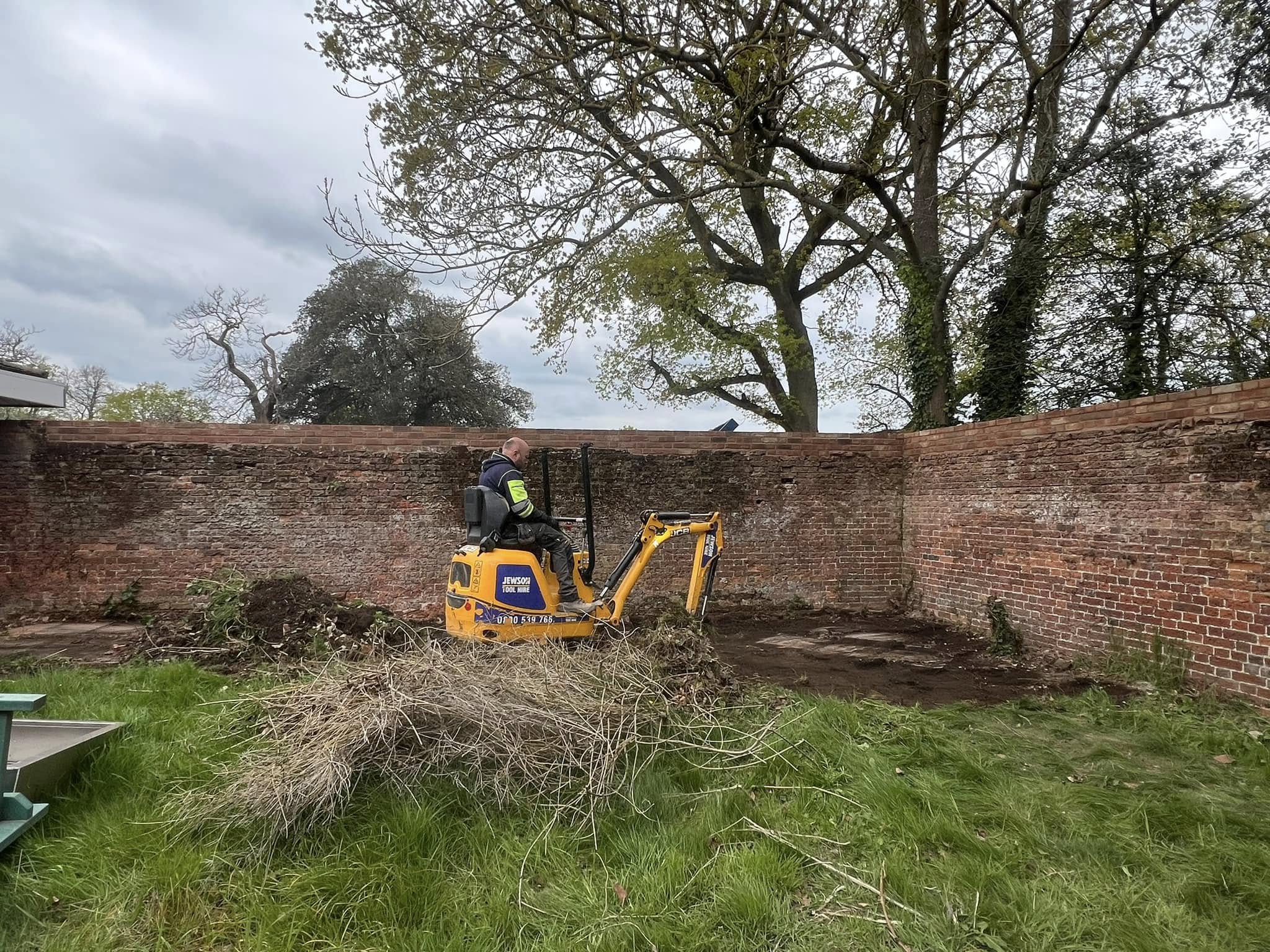
- Bulk Site Excavations: Deploy heavy tracked excavators to strip away topsoils and execute bulk ground clearances, routing all site waste materials away via certified muck-away transport loops.
- Foundation Construction: Drive deep-bored auger piling systems or pour heavily reinforced mass concrete foundations, utilizing internal mechanical poker vibrators to extract entrapped air pockets.
- Utility Subgrade Placement: Install primary foul and stormwater drainage pipe networks, setting them at continuous, precise fall gradients, and connect the modular SuDS stormwater attenuation crates deep within the aggregate base.
Phase 3: Superstructure Framing, Envelope Continuity, and First-Fix Services
The structural phase where the new home takes its physical form and is fully sealed against the elements.
- Superstructure Framing Execution: Assemble the factory-fabricated engineered timber wall panels and floor joist matrices with absolute multi-axis laser alignment, or build out the load-bearing blockwork inner leaf walls.
- Masonry Cladding Integration: Clad the external elevations with premium facing brickwork skins, maintaining a clean fifty-millimeter residual cavity void and ensuring a tie density of two point five ties per square meter.
- Watertight Sealing: Install the high-performance warm-deck roof system or structural pitched roofing tiles, and integrate the triple-glazed solar control architectural windows to achieve a completely watertight envelope.
- First-Fix Utility Distributions: Run all internal first-fix electrical circuits, plumbing lines, and the integrated MVHR ventilation ductwork through the engineered floor joist corridors without cutting structural members.
Phase 4: Vapor Barriers, Second-Fix Finishing, and Regulatory Handover
The final technical phase where the building envelope is optimized for maximum energy efficiency and certified for occupation.
- Airtightness Envelope Sealing: Install the continuous internal vapor control layer across all timber interfaces, overlapping all seams by a minimum of one hundred and fifty millimeters and sealing all service penetrations with high-performance polyisobutylene tapes.
- Second-Fix Execution: Complete all internal dry-lining plasterboard arrays, lay premium floor finishes, fit high-efficiency air-source heat pumps, and install smart vehicle charging infrastructure to satisfy Part S mandates.
- Compliance Testing and Certification: Conduct the mandatory mechanical airtightness pressure test to confirm compliance with the Future Homes Standard, secure final Building Control sign-offs, and deliver the official Completion Certificate alongside a comprehensive digital operation manual to the property owner.