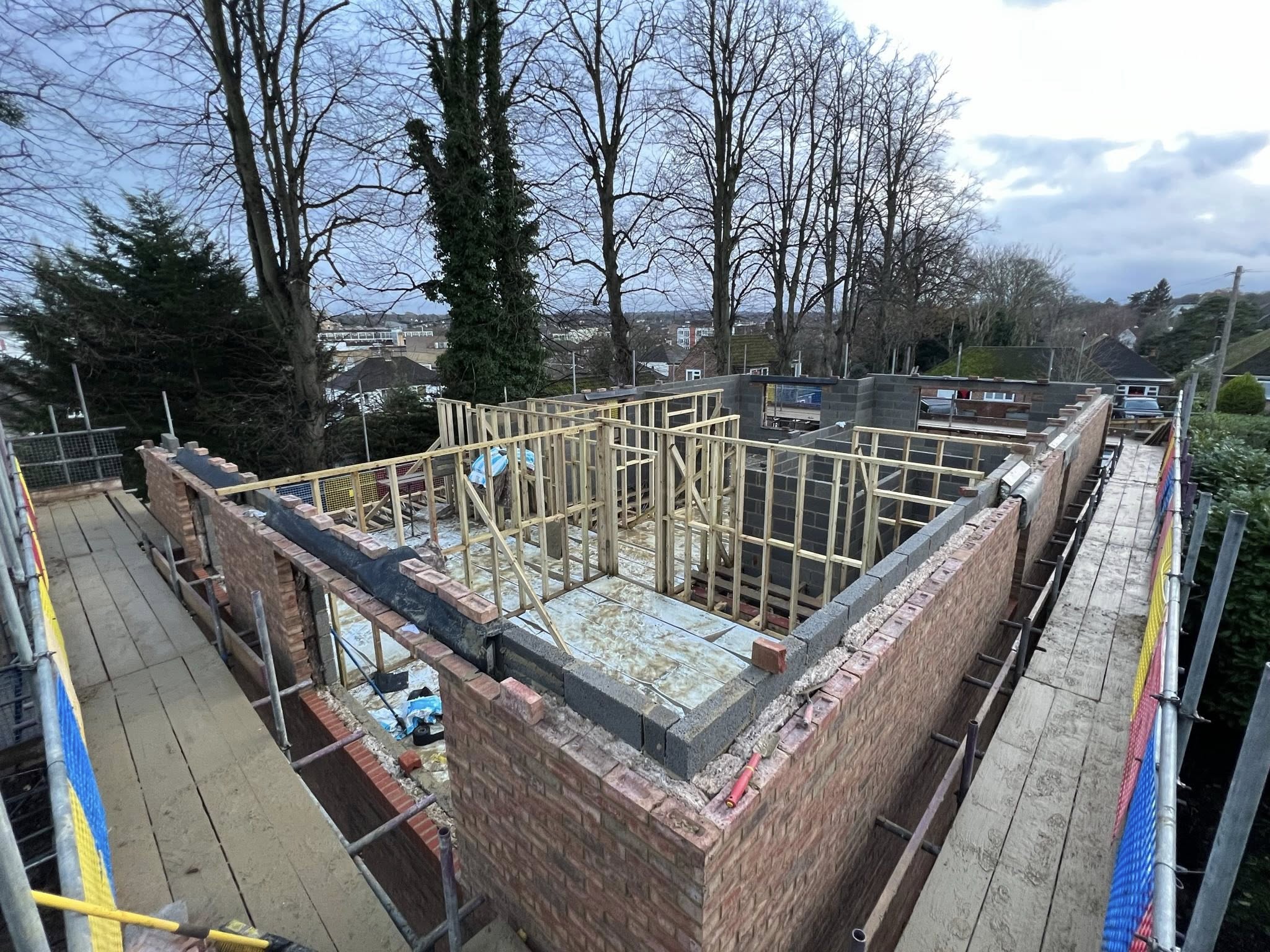
Master the statutory regulations governing high-end developments: Permitted Development boundaries, Building Control milestones, and structural fire codes.
The execution of high-end residential and light commercial developments requires a sophisticated understanding of statutory legal frameworks, building physics, and town planning mechanics. For prime developments across the South East, managing regulatory compliance is a critical phase of project risk management.
Failing to correctly interpret the boundary thresholds between Permitted Development (PD) exemptions and full planning permissions—or failing to secure staged Building Control sign-offs—will disrupt delivery timelines, invalidate property insurance policies, and trigger costly enforcement notices.
This comprehensive compliance manual breaks down the statutory planning frameworks, structural building control milestones, and technical safety mandates required of an elite residential main contractors london.
1. Permitted Development Thresholds and Structural Boundaries
Permitted Development rights grant property owners statutory permission to extend or modify residential assets without submitting a full, formal planning application. However, these exemptions are strictly governed by geometric boundaries, spatial volume caps, and site location parameters.
Spatial Volume Configurations and Dimensional Triggers
Under the current Town and Country Planning General Permitted Development Order, the allowance for detached and semi-detached properties is bound by strict physical limits. For multi-story rear additions, the structure must not extend beyond the original rear wall of the host property by more than three meters.
Single-story extensions expand this allowance up to four meters for semi-detached homes and eight meters for detached properties under the Prior Approval Larger Home Extension scheme.
+-----------------------------------------------------------------------+
|                    PERMITTED DEVELOPMENT GEOMETRIC BOUNDARIES          |
+-----------------------------------------------------------------------+
|                                                                       |
|   +----------------------------+                                      |
|   |    ORIGINAL HOST PROPERTY  |                                      |
|   +----------------------------+                                      |
|   ============================== <--- Original Rear Wall Boundary     |
|   |  MAX 3m MULTI-STORY ZONE   |                                      |
|   |  (No Roof Terraces Allowed)|                                      |
|   +----------------------------+                                      |
|   |  MAX 4m / 8m SINGLE STORY  | <--- Prior Approval Needed Past 4m   |
|   +----------------------------+                                      |
|                                                                       |
+-----------------------------------------------------------------------+
Furthermore, the total footprint of all additions, outbuildings, and hardscaping platforms must never occupy more than fifty percent of the total curtilage of the original garden space.
Any design exceeding this fifty percent limit requires full planning permission. For side extensions under Permitted Development, the addition is restricted to a single story, a maximum height of four meters, and a width no greater than half the width of the original host property.
Article 4 Directions and Conservation Constraints
Permitted Development rights are not universal. Local Planning Authorities across London and Kent frequently deploy Article 4 Directions to strip away standard PD rights across targeted geographic sectors. These directions are common within historic town centers, conservation areas, and Areas of Outstanding Natural Beauty (AONB).
When an Article 4 Direction is active, basic modifications—such as swapping out external timber joinery, altering facing masonry bonds, or constructing front boundary brick walls—require full, formal planning permission.
Executing unauthorized works within these zones is a criminal offense under heritage preservation laws. Main contractors must conduct a full planning history audit of the property index prior to mobilising any site assets.
2. Building Control Inspections and Statutory Sign-off Milestones
While planning permissions govern the visual and spatial impact of a development on the surrounding environment, Building Control regulations oversee structural safety, thermal efficiency, and life safety systems. Main contractors must manage a sequence of statutory site inspections to secure the final Completion Certificate.
The Staged Inspection Timeline
Building Control surveyors, whether local authority inspectors or Approved Independent Inspectors, must physically audit the structural works at specific construction milestones. Work must not progress past these intervention points until the inspector has verified compliance and signed off the site log.
+-------------------------------------------------------------------------+
|                  STATUTORY BUILDING CONTROL INSPECTION SITES            |
+-------------------------------------------------------------------------+
| Milestone Stage    | Technical Inspection Target| Compliance Verification|
+--------------------+----------------------------+-----------------------|
| 1. Excavation      | Open Trench Base Stratum   | Soil Load-Bearing Cap |
| 2. Concrete Base   | Steel Rebar Reinforcement  | Structural Integrity  |
| 3. Sub-Drainage    | Pipe Gradients & Shingle   | Hydraulic Flow Audits |
| 4. Superstructure  | Cavity Closes & Wall Ties  | Part L Thermal Path   |
| 5. Structural Steel| Beam End Padstone Bearings | Load Path Tracking    |
+--------------------+----------------------------+-----------------------+
- The Foundation Excavation Audit: Before any structural mass concrete is poured into open foundation trenches, the base stratum must be inspected. The surveyor verifies that the excavation has reached an unyielding, stable geological layer, past any soft topsoils or the upper moisture-fluctuation zones of regional expansive clays.
- The Structural Steelwork Check: Prior to the installation of upper floor joists or internal plasterboard enclosures, all primary structural steel frameworks, universal columns, and horizontal beams must be inspected. The surveyor checks connection configurations, high-tensile bolt torques, and ensures that the beam ends terminate on engineered concrete padstones rather than resting directly on light block runs, preserving the integrity of the global luxury house extensions kent design path.
- The Thermal and Moisture Barrier Audit: Executed before sealing internal wall partitions. Inspectors review the installation continuity of foil-faced insulation panels within the wall cavities, ensuring proper tie densities and that all vapor control layers (VCL) are taped and sealed to achieve strict airtightness compliance.
3. Structural Compliance Across Shared Boundaries: The Party Wall Act
Constructing a property extension or high-performance new build within high-density urban corridors requires interfacing with existing structures. The Party Wall etc. Act 1996 establishes the legal framework for executing works on, next to, or directly intersecting shared boundary walls and adjacent structures.
Defining Notifiable Works Under Section 1, 2, and 6
The main contractor must ensure the building owner has served valid statutory Party Wall Notices before any demolition or excavation machinery enters the site footprint. Notifiable works fall into three primary legal sectors:
+-----------------------------------------------------------------------+
|                    THE PARTY WALL ACT EXCAVATION CORRIDOR             |
+-----------------------------------------------------------------------+
|                                                                       |
|   [ NEIGHBORING PROPERTY ]               [ NEW PROPOSED SITE ]        |
|   +----------------------+               +---------------------+      |
|   | EXISTING FOUNDATION  |               |                     |      |
|   +----------------------+               |                     |      |
|              \                           |                     |      |
|               \  45-Degree Excavation    |                     |      |
|                \ Danger Angle            |                     |      |
|                 \                        +---------------------+      |
|                  v                       | DEEP NEW EXCAVATION |      |
|           [ WITHIN 3 METERS ]            +---------------------+      |
|                                                                       |
+-----------------------------------------------------------------------+
- Section 1 (New Walls on Junction Lines): Building a new structural wall directly along the shared boundary line dividing two plots of land.
- Section 2 (Alterations to Existing Party Walls): Cutting into a shared masonry partition to insert structural steel universal beam bearings, increasing the vertical height of a party wall, or underpinning a shared wall to accommodate basement extensions.
- Section 6 (Excavations Within 3 or 6 Meters): If the proposed new foundations sit within three horizontal meters of a neighbor's existing structure and extend to a deeper vertical level, a Section 6 Notice is legally required. This handles the risk of undermining neighboring footings through localized lateral soil shifts.
Executing the Schedule of Condition and Final Awards
If the neighboring property owner dissents to the served notice, a formal Party Wall Dispute is triggered, requiring the appointment of structural surveyors to generate a legally binding Party Wall Award.
Before any structural ground manipulation occurs, surveyors conduct a rigorous Schedule of Condition audit of the adjacent properties. Every pre-existing micro-crack, plaster settlement line, and structural anomaly across the neighbor's property is logged with high-resolution photographic evidence.
This survey protects both parties: it ensures the main contractor cannot be held liable for historic pre-existing defects while providing the neighbor with an indisputable baseline if new ground movements trigger structural cracks that require specialist brick repair kent systems.
4. Fire Safety and Structural Containment Metrics: Approved Document Part B
Multi-story extensions and new residential structures must incorporate advanced fire containment architectures under Approved Document Part B of the Building Regulations. The structural frame must be designed to contain fire outbreaks, limit the spread of toxic smoke, and maintain load-bearing structural integrity during emergency evacuation windows.
Structural Fire Resistance and Intumescent Shielding
All primary structural elements—including structural steel frame beams, columns, and timber floor joists supporting upper living spaces—must possess a minimum of thirty to sixty minutes of fire resistance. Raw structural steel loses its yield strength rapidly when exposed to standard fire temperatures, leading to sudden buckling and structural collapse if left unprotected.
To clear Part B safety mandates, all structural steelwork must be fully enclosed within a double-layer fire protection envelope using fire-rated plasterboard assemblies with staggered joints. Alternatively, the steel can be coated with specialized intumescent paint systems.
Intumescent coatings are advanced polymer matrices that react chemically when temperatures cross two hundred degrees Celsius, expanding into a thick, insulated carbonaceous foam layer that isolates the core steel from high thermal vectors, preserving the building's main load path.
Compartmentation and Fire-Stopping Cavity Barriers
To prevent fire from tracking horizontally and vertically through hidden void spaces, the property layout must incorporate strategic fire compartmentation lines. Cavity walls feature an inherent hazard: the open insulation space can act as an active chimney flute, drawing toxic smoke and flames rapidly up the building facade if a breach occurs.
+-----------------------------------------------------------------------+
|                    CAVITY BARRIER FIRE SAFETY CONDUIT                 |
+-----------------------------------------------------------------------+
|                                                                       |
|   [ OUTER BRICK LEAF ]        [ CAVITY RUN ]     [ INNER BLOCK LEAF ] |
|   +------------------+        |            |     +------------------+ |
|   |                  |        |            |     |                  | |
|   |                  |        +------------+     |                  | |
|   |                  |        | ENCAPSULATED|    |                  | |
|   |                  |        | INTUMESCENT|    |                  | |
|   |                  |        | CAVITY STOP|    |                  | |
|   |                  |        +------------+     |                  | |
|   |                  |        |            |     |                  | |
|   +------------------+        |            |     +------------------+ |
|                                                                       |
+-----------------------------------------------------------------------+
To break up these pathways, horizontal and vertical fire cavity barriers must be installed at all floor levels, roof intersections, and around all window and door apertures. These barriers consist of high-density mineral wool cores encapsulated in a polythene sleeve fitted with an outer intumescent strip.
If exposed to fire, the outer strip expands rapidly across the air-flow cavity, sealing the void space completely and halting the spread of smoke and heat energy between structural zones.
5. Fluid Management and Infrastructure Approvals: SuDS and Build-Over Agreements
Managing external hardscapes and subsurface drainage connections is a critical operational task when extending property boundaries. Pavements and sewer lines are heavily regulated to protect localized municipal infrastructure networks.
Thames Water Build-Over Agreements
A significant volume of residential properties across London and Kent feature public sewer mains routing directly through their rear garden curtilages. If a proposed multi-story extension footprint sits over or within three meters of a public sewer pipeline, the main contractor must secure a formal Build-Over Agreement from the regional water authority (such as Thames Water or Southern Water) before any groundworks commence.
The construction team must conduct pre-construction and post-construction closed-circuit television (CCTV) drain surveys to map the exact structural integrity of the sewer pipes. The extension's foundation trenches must be designed to bridge completely over the sewer line using reinforced concrete lintels, ensuring that the heavy dead loads of the new masonry walls do not apply vertical pressure to the vitrified clay or concrete sewer pipes beneath, eliminating the risk of structural pipe collapses.
SuDS Compliance for External Transitions
Where new extensions create a requirement for extended external pathways or surrounding hardscapes, the surface layouts must comply with Sustainable Drainage Systems (SuDS) mandates. Runoff water from extended rooflines and surrounding patios must be managed entirely within the asset boundary to prevent local sewer system surcharging.
+-----------------------------------------------------------------------+
|                    SUDS COMPLIANT WATER RUNOFF ARCHITECTURE           |
+-----------------------------------------------------------------------+
|                                                                       |
|     [ ROOF RUNOFF WATER ] ===> [ FALL GRADIENT SURFACE ]              |
|                                             ||                        |
|                                             v                         |
|                               +---------------------------+           |
|                               | LINEAR SLOT CHANNELS      |           |
|                               +---------------------------+           |
|                                             ||                        |
|                                             v                         |
|                        +----------------------------------------+     |
|                        | SUBTERRANEAN ATTENUATION CRATE STORAGE  |     |
|                        +----------------------------------------+     |
|                                             ||                        |
|                                             v                         |
|                         [ SLOW NATURAL INFILTRATION TO EARTH ]        |
|                                                                       |
+-----------------------------------------------------------------------+
To clear these mandates, all new surrounding pedestrian surfaces should utilize fully permeable systems, or route runoff via linear slot drains down into specialized subterranean attenuation crates. This hydraulic design temporarily traps high storm water volumes and lets the fluid infiltrate slowly back into the natural ground table, protecting the main building foundations and preserving any neighboring vitrified porcelain slabbing patios or lower-level hardscapes from flooding.
6. Phased Compliance Checklist for Site Managers
To ensure that all structural, legal, and material compliance metrics are met smoothly throughout the project life cycle, site management teams must follow a strict, phased execution timeline.
Phase 1: Pre-Commencement Planning Audits and Asset Protection
Before any mechanical excavator tracks onto the work site, the development must be legally cleared and verified.
- Statutory Audits: Check all active local authority planning maps to confirm that no Article 4 Directions are active over the site coordinates. If the project utilizes Permitted Development rights, secure a formal Certificate of Lawfulness before mobilizing tools or purchasing materials.
- Party Wall Validation: Verify that all Party Wall Notices have been successfully served and that a formal Schedule of Condition has been documented with neighboring surveyors to establish a legal liability baseline.
- Asset Location Scanning: Map the exact routes of all public sewer mains using high-resolution ground scanning equipment, and secure required Build-Over permissions from the water authority before opening up foundation trenches.
Phase 2: Groundwork Operations and Structural Base Inspections
This phase covers the heavy civil manipulation of the site terrain and the verification of core structural foundations.
- Excavation Inspection Sign-Off: Schedule the initial statutory Building Control inspection the moment foundation trenches are cut to depth, ensuring the surveyor manually verifies the load-bearing capacity of the base subgrade soil.
- Drainage Integration Audit: Lay out all subsurface drainage networks and run comprehensive hydraulic flow tests, ensuring that all pipes maintain a minimum continuous fall gradient of 1 in 40 to 1 in 80 toward the main discharge junctions before backfilling with aggregate.
- Perimeter Containment Setup: Build all retaining boundaries and concrete haunching runs to lock the site footprint, ensuring complete water routing separation from high-load driveways.
Phase 3: Superstructure Construction and Structural Framing Control
The phase where the core building frame is integrated, insulated, and verified against safety codes.
- Padstone and Beam Layout Check: Embed all precast concrete padstones into the blockwork walls using high-strength mortar mixes, ensuring the structural steel beams achieve complete, flat bearings across the pads before upper masonry layers are added.
- Cavity and Tie Audit: Ensure all stainless steel wall ties are placed at a minimum density of two point five ties per square meter across the structural leaf runs, keeping cavities free of mortar droppings to preserve clean drainage pathways under modern masonry construction standards.
- Fire Safety Shielding Application: Enclose all exposed structural steel columns and universal beams inside double-layer fire-rated plasterboard assemblies, and mount intumescent cavity barriers at every floor-plate intersection to meet Approved Document Part B codes.
Phase 4: Enclosure Insulation, Thermal Sealing, and Final Certification
The final technical phase where the building envelope is optimized for energy performance and presented for final handover.
- Insulation Continuity Validation: Install the rigid foil-faced PIR or phenolic foam boards tightly within the cavities, sealing all seams with high-reflectivity multi-foil tapes to eliminate cold-bridging gaps under Approved Document Part L.
- Airtightness Control Tracking: Apply flexible acoustic mastics or liquid-applied vapor membranes around all structural steel and joist penetrations, ensuring a complete airtight envelope before internal dry-lining operations begin.
- Final Inspections and Commissioning: Coordinate the final comprehensive Building Control walkthrough, present all required insulation, electrical safety, and structural certificates, and secure the definitive Completion Certificate for formal handover to the client manager.