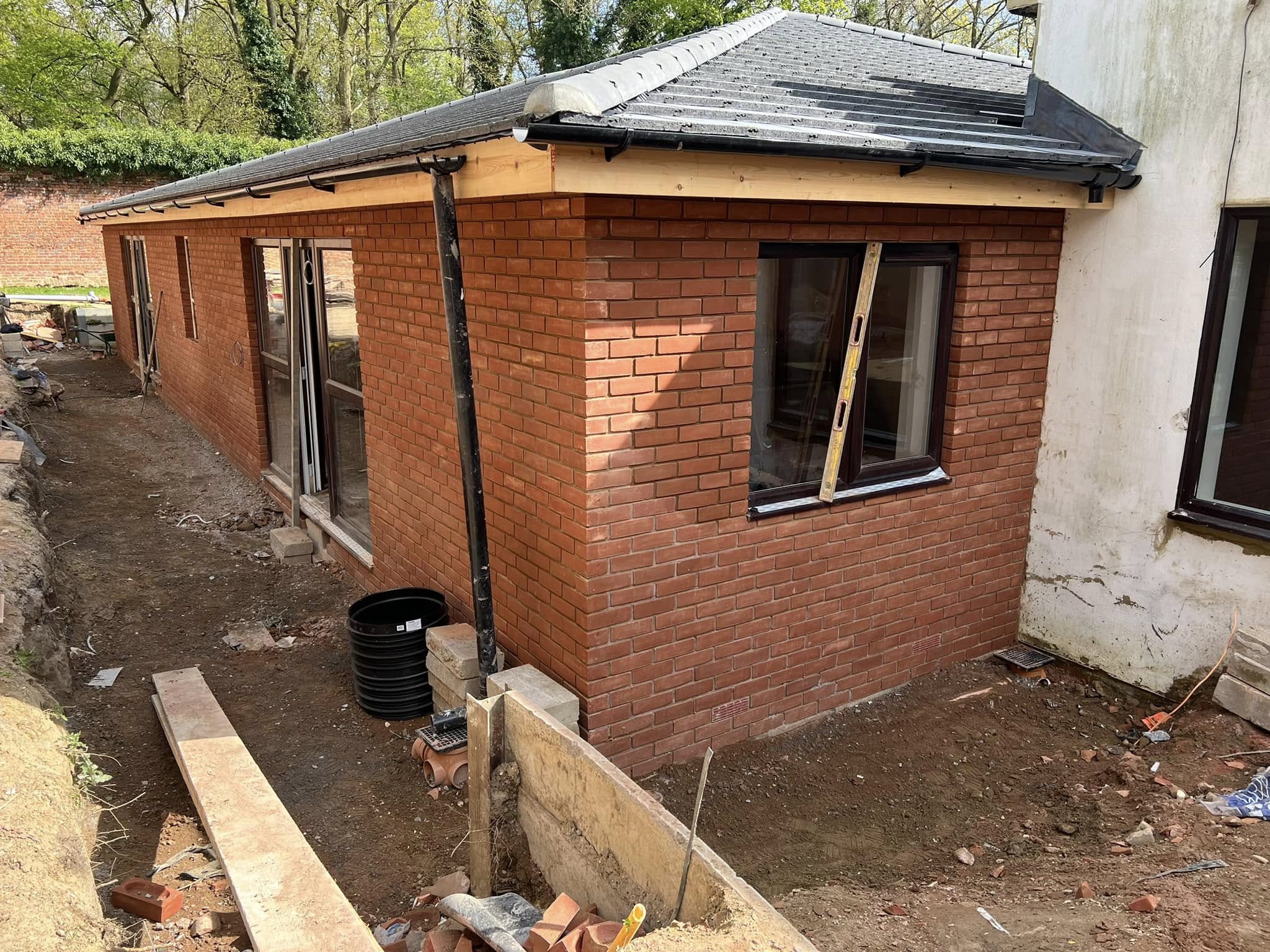
Master the elite engineering standards of structural masonry, geometric detailing, and rigorous quality controls for architectural permanence.
The execution of structural masonry is an absolute synthesis of material science, structural engineering, and precise spatial geometry. In modern residential and commercial construction, brickwork is not merely an aesthetic skin; it functions as a critical component of the structural envelope, managing vertical dead loads, dynamic live loads, and lateral environmental pressures.
To achieve architectural permanence, masonry operations must adhere to rigorous engineering thresholds. This comprehensive technical guide details the mechanical principles, site execution matrices, and material sciences that govern elite masonry construction across the United Kingdom, establishing the benchmark for the signature Marshall brickwork structural standard.
1. The Physics and Structural Mechanics of Masonry Envelopes
A deep understanding of structural masonry requires an evaluation of how localized forces interact within a composite wall assembly. Masonry units exhibit high compressive strength but relatively low tensile capacity, demanding precise architectural planning to ensure long-term stability.
Vector Mechanics and Vertical Load Path Distribution
Vertical loads—comprising the self-weight of the masonry (dead load), upper floor assemblies, roof structures, and environmental snow loads (live loads)—transmit downward through the wall envelope via a continuous compression matrix. The structural weight does not simply travel in a straight vertical line; it dissipates outward at a calculated angle, typically forty-five degrees, from the point of application.
+-----------------------------------------------------------------------+
|                    VERTICAL POINT LOAD DISSIPATION                    |
+-----------------------------------------------------------------------+
|                                                                       |
|                                 |||  <--- Concentrated Point Load     |
|                                 vvv                                   |
|                          _________________                            |
|                         |     PADSTONE    |                           |
|                         |_________________|                           |
|                             /         \                               |
|                            /           \  <--- 45-Degree Structural   |
|                           /             \      Dissipation Vector     |
|                          /               \                            |
|                         /                 \                           |
|                        /                   \                          |
|                       /_____________________\                         |
|                                                                       |
+-----------------------------------------------------------------------+
When concentrated point loads are introduced—such as a structural steel beam supporting an upper floor or a home extensions floor plate—the stress configuration must be carefully managed. The beam must terminate directly upon an engineered pre-cast concrete padstone. The surface area of the padstone intercepts the concentrated point load and scatters the compression forces across a wider array of underlying brickwork courses. This structural redistribution prevents the local masonry from exceeding its maximum allowable compressive strain limit, preventing catastrophic compression shearing.
Lateral Wind Load Resistance and Slenderness Ratios
External brickwork walls are subject to continuous lateral forces generated by positive wind pressures and negative wind suction. The capacity of a wall to resist these bending moments without buckling is directly tied to its Slenderness Ratio. The Slenderness Ratio is the mathematical relationship between the effective height or length of the wall panel and its structural thickness.
To control the slenderness ratio across extensive masonry runs, several engineering elements must be integrated into the layout:
- Structural Pier Intersections: Projecting vertical masonry columns bonded directly into the main wall run to break up the lateral span and provide rigid anchor points.
- Internal Load-Bearing Returns: Tying the external skin directly to intersecting internal structural block walls using continuous brickwork bonding or heavy-duty mechanical ties.
- Bed-Joint Reinforcement: Laying high-tensile stainless steel wire mesh ladders directly into the horizontal mortar beds. This reinforcement matrix injects authentic tensile capability into the masonry, converting a brittle masonry panel into a reinforced composite structure capable of shifting under extreme wind loads without fracturing.
Cavity Wall Tie Dynamics and Load Transfer Mechanics
Modern building regulations dictate a multi-leaf cavity wall architecture to combine structural capability with thermal performance. The external leaf acts as a sacrificial rain-screen, while the internal leaf handles the primary structural loads from floors and roofs. The two leaves must function as a cohesive structural unit, achieved via the installation of stainless steel wall ties.
Wall ties must be spaced precisely to ensure safe lateral load transfer. Standard structural layouts require ties to be installed at a density of two point five ties per square meter. This equates to a maximum horizontal spacing of nine hundred millimeters and a vertical spacing of four hundred and fifty millimeters, arranged in a staggered checkerboard configuration. Around structural openings such as window frames and external door portals, the wall tie density must increase significantly, with ties placed at three hundred millimeter vertical intervals within two hundred and twenty-five millimeters of the opening edge. This prevents localized wind pressures from shearing the external brickwork skin away from the host structure.
2. The Marshall Brickwork Quality Control Matrix
The translation of engineering plans into flawless physical assets requires a systematic on-site quality control methodology. Structural longevity is determined by the precise execution of the raw construction phases.
Bed Joint and Perpend Dimensional Standardization
The structural uniformity of a masonry wall relies completely on the consistency of its joints. Standard UK facing bricks are manufactured to nominal dimensions of two hundred and fifteen millimeters in length, one hundred and two point five millimeters in depth, and sixty-five millimeters in height. When combined with a standard ten-millimeter mortar joint, the masonry achieves a working format gauge of seventy-five millimeters vertically and two hundred and twenty-five millimeters horizontally.
+-----------------------------------------------------------------------+
|                  MASONRY DIMENSIONAL STANDARDIZATION                  |
+-----------------------------------------------------------------------+
|                                                                       |
|   +-----------------------+          +-----------------------+        |
|   |                       |  Perpend |                       |        |
|   |      FACING BRICK     | <------> |      FACING BRICK     |        |
|   |       (215mm)         |   10mm   |       (215mm)         |        |
|   +-----------------------+          +-----------------------+        |
|   ============================================================        |
|   ^               Bed Joint (10mm Mortar Course)              ^        |
|   ============================================================        |
|   +-----------------------+          +-----------------------+        |
|   |                       |          |                       |        |
|   |      FACING BRICK     |          |      FACING BRICK     |        |
|   +-----------------------+          +-----------------------+        |
|                                                                       |
+-----------------------------------------------------------------------+
Site operatives executing elite Marshall brickwork protocols must continuously monitor joint dimensions using calibrated gauge rods. Bed joints (horizontal mortar courses) must be maintained at a uniform thickness of ten millimeters, with an allowable tolerance deviation of plus or minus two millimeters.
More importantly, perpends (vertical mortar joints) must be aligned with mathematical precision using vertical plumb lines. Misaligned perpends do not merely detract from the architectural finish; they disrupt the uniform staggering of the brick units, creating structural alignment weaknesses that concentrate loads unevenly through the wall panel.
Sand Grading Curves and Water-Cement Ratio Calibration
Mortar is the structural adhesive that accommodates stress shifts between individual bricks. The mechanical performance of mortar is dictated by the grading curve of the building sand and the control of the water-cement ratio during mechanical mixing operations.
Building sand utilized in structural mortar must possess a balanced distribution of particle sizes. If the sand consists entirely of fine particles, the mortar will require excessive water to achieve workability, leading to high volumetric shrinkage and cracking as the mix cures. Conversely, overly coarse sands create a harsh, unworkable mortar that fails to coat the brick faces completely, leading to micro-voids that invite water ingress.
The water-cement ratio must be strictly governed; water must only be added up to the point of chemical hydration and optimal plastic workability. Over-watering dilutes the cement paste matrix, drastically reducing the ultimate compressive strength of the cured mortar and increasing its vulnerability to frost spalling during winter thermal cycles.
Executing Laser-Aligned Plumb, Level, and Square Gauges
To eliminate structural eccentricities, masonry runs must be constructed perfectly plumb along the vertical axis, level along the horizontal run, and square at all intersecting corners. Site teams must transition away from sole reliance on manual spirit levels, deploying high-precision multi-axis rotational laser levels across the work area.
Every corner or lead must be established using structural corner profiles anchored securely into the underlying groundworks foundations. Line pins and high-tensile nylon lines are stretched taut between these leads to guide the placement of intermediate bricks.
The alignment must be checked every three courses, ensuring that the face of the brick skin remains perfectly flat. Any twisting or bowing of individual units, known as lipping, creates localized stress points and must be corrected instantly before the initial set of the mortar occurs.
3. Advanced Geometric Brickwork and Architectural Detailing
Elite masonry engineering is defined by the capacity to execute complex geometric structures that combine classical architectural aesthetics with modern load-bearing functionality.
Structural Mechanics of Masonry Arches
A properly engineered masonry arch converts tensile bending stresses completely into stable compressive forces, allowing brickwork to span wide structural openings without the aid of internal steel lintels.
+-----------------------------------------------------------------------+
|                    GEOMETRIC STRUCTURAL ARCH MECHANICS                |
+-----------------------------------------------------------------------+
|                                                                       |
|                                 [KEY]                                 |
|                                [STONE]                                |
|                              /         \                              |
|                            /             \                            |
|                          /                 \                          |
|                        /                     \                        |
|                      /                         \                      |
|                    /                             \                    |
|                  /                                 \                  |
|                /                                     \                |
|               | <---  SPRINGING LINE                 |                |
|               |                                      |                |
|               |               OPENING                |                |
|                                                                       |
+-----------------------------------------------------------------------+
- Gauged Arch Construction: Utilizes custom-cut, wedge-shaped bricks known as voussoirs. The voussoirs radiate outward from a central striking point, terminating at the crown with a central keystone. The geometry ensures that any downward load applied to the top of the arch is directed sideways down the curved line of the voussoirs, transferring the weight into the solid masonry abutments on either side of the opening.
- Abutment Stability Realities: The horizontal thrust generated by an arch tries to push the supporting wall piers outward. The structural design must ensure that the flanking masonry masses possess sufficient lateral resistance to contain this outward force vector without shifting.
Corbelled Brickwork and Cantilevered Load Transfer
Corbelled brickwork is the process of stepping individual brick courses progressively outward from the main wall face to create an architectural ledge or support platform for overhanging roof structures or decorative projections.
To prevent structural overturning moments, corbelling must strictly conform to the rule of thirds. The projection of any single brick course must never exceed one-third of the total depth of the brick unit itself. Furthermore, the total cumulative projection of the entire completed corbel assembly must never exceed one-third of the total actual thickness of the supporting wall panel. Each projecting course must be counter-balanced by a significant depth of solid load-bearing masonry resting directly on the internal tail of the bricks, preventing rotational shear failure.
Intricate Chimney Stack Engineering and Wind Shear Deflection
Chimney stacks are the most exposed structural components of any residential asset, subjected to extreme thermal gradients internally and high velocity wind loads externally.
The base of the stack must be seamlessly tied into the core building frame using continuous tie-ins or reinforced structural concrete floor connections. The external profile must be configured to deflect wind vectors smoothly, utilizing projecting brick necking courses and weathered stone copings that force rainwater to drip clear of the main masonry face. Internal flue lines must be lined with specialized vitrified clay or high-grade stainless steel liners, separated from the structural Marshall brickwork wrap by a continuous layer of lightweight thermal insulation to prevent extreme thermal expansion cycles from cracking the external mortar casing.
4. Material Science: Mortar Formulations and Aggregates
The performance of any masonry asset depends entirely on the chemical composition of the mortar matrix that binds the structural elements together.
Compressive Performance Classifications
Mortar mixes are classified into specific designations based on their performance and material proportions. The structural design must balance strength with flexibility.
+-------------------------------------------------------------------------+
|                      MORTAR SPECIFICATION MATRIX                        |
+-------------------------------------------------------------------------+
| Designation         | Proportional Ratio       | Optimal Deployment     |
+---------------------+--------------------------+------------------------|
| M12 (Class I)       | 1:0.25:3 (Cem:Lime:Sand) | High Load, Subterranean|
| M4 (Class II)       | 1:0.5:4.5                | General External Walls |
| M2 (Class III)      | 1:1:6                    | Soft Facings, Internal |
| NHL 3.5             | 1:3 (Lime:Sand)          | Heritage Restoration   |
+-------------------------------------------------------------------------+
- Designation M12 / Class I: High-strength mortar engineered for areas subject to extreme structural loading or aggressive environmental exposure, such as retaining structures, subterranean foundations, or parapet walls.
- Designation M4 / Class II: The standard structural choice for general external above-ground masonry skins. It provides an optimal balance, delivering excellent weather proofing characteristics while retaining sufficient structural elasticity to accommodate minor building settlement.
- Designation M2 / Class III: A softer, highly flexible mix deployed primarily internally or alongside softer, highly porous facing bricks where high compressive strength would induce structural cracking across the brick faces.
Natural Hydraulic Lime (NHL) Chemistry and Vapor Permeability
When executing structural works on historic properties or breathing building envelopes, traditional cement mortars must be replaced with Natural Hydraulic Lime formulations.
Unlike Ordinary Portland Cement, which cures rapidly via a rigid chemical hydration process, hydraulic lime mortars cure in two distinct phases: initial hydraulic setting followed by carbonation. During carbonation, the lime matrix absorbs carbon dioxide directly from the atmosphere, slowly converting back into pure calcium carbonate stone over several months.
The resulting lime mortar matrix is highly vapor-permeable, functioning as a structural wick that allows moisture trapped within the wall envelope to migrate freely to the external atmosphere and evaporate. This prevents moisture accumulation within the wall, protecting the asset from frost spalling and internal damp transmission. Furthermore, lime mortar exhibits self-healing characteristics; micro-fractures caused by building movement are filled over time as rainwater dissolves free lime within the mortar and redeposits it into the cracks, sealing the structural barrier automatically.
Joint Profiles and Weather Protection Topographies
The physical profiling of the mortar joint face—known as joint pointing—serves as the primary line of defense against lateral moisture ingress. The profile must be mechanically finished to facilitate rapid shed of rainwater away from the structural boundaries.
- Weather Struck Pointing: The premier structural joint profile. The mortar face is struck at a downward angle, with the upper edge recessed slightly behind the brick face and the lower edge projecting cleanly. This configuration creates a sharp physical slope that forces water to drop instantly off the joint line, preventing water from resting on the lower brick bed.
- Bucket Handle / Concave Pointing: Executed using a curved steel jointer tool to compress the mortar into a uniform, dense, U-shaped profile. This compression locks the sand particles tightly together, creating a highly polished, water-resistant surface skin that excels at resisting driving wind rains.
- Recessed / Raked Jointing: Visually striking but structurally vulnerable. Raking the mortar back to expose the upper lip of the underlying brick creates a flat horizontal ledge where rainwater collects, increasing the risk of water absorption and subsequent frost damage. It must only be specified alongside completely frost-immune F2 engineering bricks or across fully protected internal partitions.
5. Material Provenance and Diagnostic Selection Criteria
The selection of bricks must extend beyond simple aesthetic color matching to evaluate fundamental material metrics, chemical compositions, and durability profiles.
Frost Resistance and Soluble Salt Content Designations
Bricks are classified under European Standards based on their capacity to withstand severe freeze-thaw cycles and their internal concentration of active soluble salts.
- F2 Classification (Fully Frost Resistant): Mandated for all external masonry works across the South East. These units possess an engineered internal pore network that accommodates the volumetric expansion of water as it transitions to ice without fracturing the surrounding clay structure.
- F1 Classification (Moderately Frost Resistant): Restricting deployment to internal positions or completely protected external zones located beneath deep, overhanging roof eaves where the brick remains dry.
- S2 Classification (Low Soluble Salt Content): Limits the internal presence of sulfates, sodium, and potassium ions. Specifying S2 bricks minimizes the risk of structural sulfate attack, which occurs when internal salts react with the cement paste in the mortar, causing it to lose its structural bond and crumble.
Reclaimed Material Diagnostics and Structural Integration
When working within historic preservation zones or carrying out brickwork repointing across heritage sites, matching the original building fabric requires the integration of reclaimed materials. Reclaimed imperial stocks must be audited using rigorous structural criteria before deployment.
Every batch of reclaimed bricks must be manually inspected to isolate and eliminate soft, under-fired interior bricks, historically known as sammel bricks. These defective units lack structural structural integrity and absorb water rapidly; if placed in an external structural run, they will dissolve completely under repeated winter frost actions.
Reclaimed units must be cleaned of all historic lime residue and sorted by structural density. When integrating these porous components, they must be laid using compatible natural hydraulic lime mortars to ensure uniform thermal and moisture performance across the entire wall assembly.
6. Cavity Trays, Expansion Joints, and Regulatory Frameworks
A high-performance masonry wall must incorporate specialized structural detailing to manage thermal expansion vectors and comply fully with national structural building standards.
Structural Movement Joints and Thermal Expansion Management
Every material expands and contracts in response to ambient thermal changes. Clay brickwork undergoes long-term structural expansion as it absorbs moisture from the moment it leaves the manufacturing kiln. If an extensive run of brickwork is constructed as a single rigid block, these internal expansion forces will generate immense pressure, culminating in severe vertical shear cracking across the masonry face.
To prevent this, continuous vertical structural movement joints must be integrated into the layout. For standard clay brickwork, movement joints must be positioned at intervals not exceeding twelve meters. The joint must be a minimum of ten to fifteen millimeters wide, completely free of mortar, and packed with a highly compressible closed-cell polyethylene foam backing strip. The external face is then sealed with a high-performance, non-staining polysulfide flexible sealant that matches the mortar coloration, allowing the individual masonry panels to expand and contract safely without disrupting the global alignment of the structure.
+-----------------------------------------------------------------------+
|                    STRUCTURAL MOVEMENT JOINT DETAILS                  |
+-----------------------------------------------------------------------+
|                                                                       |
|   +-------------------+    | |    +-------------------+               |
|   |    CLAY BRICK     |    | |    |    CLAY BRICK     |               |
|   +-------------------+    |M|    +-------------------+               |
|   +-------------------+    |O|    +-------------------+               |
|   |    CLAY BRICK     |    |V|    |    CLAY BRICK     |               |
|   +-------------------+    |E|    +-------------------+               |
|                            |M|                                        |
|   =====================    |E|    =====================               |
|       BED JOINT            |N|        BED JOINT                       |
|   =====================    |T|    =====================               |
|                            | |                                        |
|                            |J|                                        |
|                            |O|                                        |
|                            |I|                                        |
|                            |N|                                        |
|                            |T|                                        |
|                                                                       |
+-----------------------------------------------------------------------+
Cavity Tray Integration and Sub-Surface Water Routing
Water will inevitably penetrate the external facing brick leaf during prolonged driving rain events. The internal cavity space handles this water by letting it track down the inner face of the outer brick leaf. However, where the cavity is interrupted—such as above structural lintels, window openings, or floor plate intersections—this downward moisture path must be intercepted.
Flexible polyolefin cavity trays must be installed at all interruption points. The tray must be built into the inner leaf blockwork, slope downward across the cavity space, and bed directly into the external brick leaf course.
Weep holes—narrow vertical slots left entirely open without mortar—must be left in the external brick course immediately above the cavity tray at every fourth perpend interval. Any moisture collecting on the tray is immediately forced to drain out out through these weep ports to the external atmosphere, keeping the internal building envelope completely insulated and dry.
Approved Document Part A and NHBC Performance Compliance
All structural masonry operations must align completely with the legislative mandates set out within Approved Document Part A (Structure) of the UK Building Regulations and meet the performance design criteria required by the National House Building Council (NHBC).
These regulatory bodies dictate the exact formulas governing wall thickness based on building height, maximum allowable door and window opening sizes, and the required specifications for structural lintels. Every lintel deployed must possess a minimum end-bearing support length of one hundred and fifty millimeters on solid brickwork foundations to ensure uniform load distribution.
By executing every phase of construction to these strict legal frameworks, site management ensures that the completed Marshall brickwork installation delivers unconditional safety, complete structural compliance, and premium architectural permanence.
7. Strategic Material Curing and Environmental Site Protection
The final phase of elite masonry execution lies in the strict management of post-laying environmental conditions. Newly constructed masonry is vulnerable to rapid drying or freezing during its early hydration phase.
Summer Desiccation Mitigation Protocols
Executing structural brickwork during peak summer temperatures introduces the risk of rapid water evaporation from the fresh mortar matrix. If the mortar dries out before the chemical curing process is complete, the cement paste will fail to bind to the aggregate, resulting in a weak, friable joint that crumbles under minimal contact pressure.
To isolate this risk, several site controls must be executed:
- Pre-Wetting High-Suction Bricks: Porous clay bricks must be lightly misted with clean water prior to placement to satisfy their initial suction rate, preventing them from instantly drawing all moisture out of the fresh mortar bed.
- Hessian Shielding Protections: At the end of each working shift, completed masonry runs must be covered with damp, heavy-duty natural hessian sheets. This sheet matrix blocks direct thermal solar gains and locks a micro-climate of moisture around the wall face, slowing down evaporation vectors and ensuring the mortar achieves its full engineered compressive strength profile.
Winter Frost Protection Arrays
Constructing structural masonry when temperatures drop below five degrees Celsius requires absolute environmental vigilance. If water within a fresh mortar joint freezes before curing, its volumetric expansion will tear the internal cement crystalline matrix apart, reducing the ultimate strength of the structural joint by up to seventy percent.
Masonry operations must cease immediately if ambient temperatures drop below three degrees Celsius unless the entire working scaffold is fully enclosed with heavy-duty weather proof polythene wrapping and supported by internal space heaters.
Freshly completed walls must be capped with insulated frost blankets at night to trap natural exothermic heat generated by the curing cement. No calcium chloride or chemical anti-freeze additives may be introduced into structural Marshall brickwork mortars; these accelerators contain high salt concentrations that trigger severe long-term efflorescence and chemically attack internal structural wall ties, leading to accelerated failure of the asset boundary.