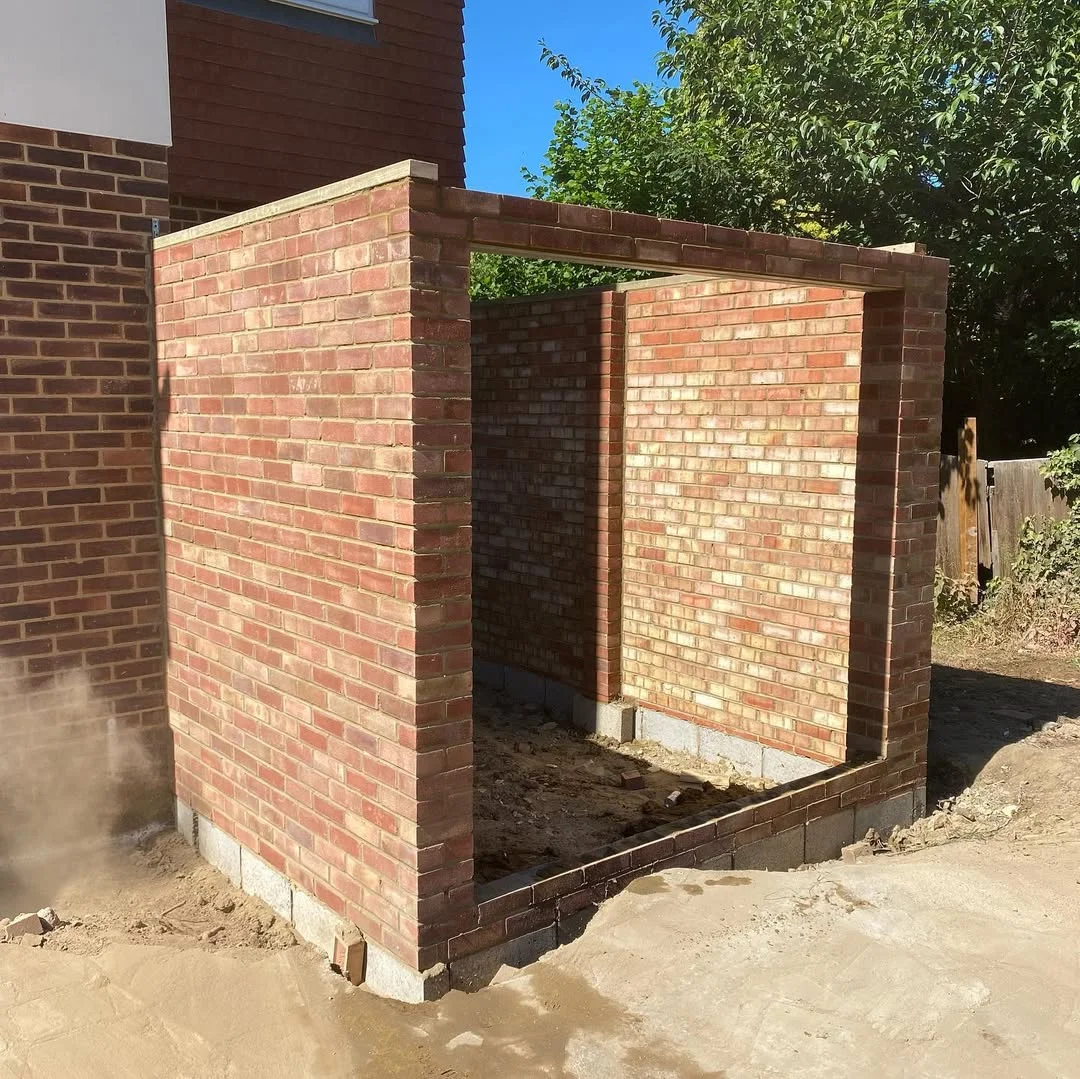
Everything Kent homeowners need to know about repointing in 2026 — honest costs per m², lime vs cement mortar, DIY risks, and how to find a bricklayer who gets it right first time.
Brickwork is the most visible element of most Kent properties. From Rochester's Victorian terraces to Maidstone's postwar semis, Canterbury's Georgian townhouses to the newer brick-built estates running through Sittingbourne and Swale — the county is a study in brick. And the single most common maintenance failure in all of it is the same: neglected mortar.
Repointing is the process of removing deteriorated mortar from the joints between bricks and replacing it with fresh, correctly specified mortar. It sounds straightforward. In one sense it is — but in the hands of the wrong contractor, with the wrong mortar mix, it becomes one of the most damaging things that can be done to a Kent property. Done correctly, by a bricklayer who genuinely understands mortar specification and joint preparation, repointing protects a building for the next 25 to 40 years, stops moisture ingress dead, and restores the visual character of a property at a fraction of the cost of more drastic structural intervention.
This is the complete guide for Kent homeowners planning repointing work in 2026. It covers every aspect of the job: what repointing actually is and why it matters, how to identify when your property needs it, realistic 2026 costs for properties across Kent, the critical difference between lime and cement mortar and why using the wrong one causes irreversible damage, what good preparation looks like, the questions that separate competent bricklayers from dangerous ones, and what it means to have Marshall Brickwork & Construction carry out the work on your property.
What Is Repointing — And Why Does It Matter So Much?
Mortar is not the same thing as brick. Bricks are fired clay — extraordinarily durable, capable of lasting several centuries in good conditions. The mortar that holds them together is a deliberate sacrificial element: softer than the brick, designed to absorb movement and moisture, and designed to be renewed periodically. A well-built brick wall is, in this sense, a system — and the mortar is the maintenance component.
When mortar deteriorates, the protection it provides disappears. Rainwater that would previously have shed off a solid joint surface now penetrates into the open joint and finds its way into the wall. In a solid brick wall (common in Victorian and Edwardian properties across Kent), this moisture has nowhere to go except inward. In a modern cavity wall, deteriorated external pointing allows water to enter the outer leaf, track across wall ties, and saturate the internal leaf. Both scenarios cause damp, which causes damage — to plaster, to timber floor joists, to internal finishes, and eventually to the structural integrity of the wall itself if left long enough.
Repointing doesn't just prevent moisture ingress. It also restores the structural bond between bricks — particularly important on gable ends, chimney stacks, and freestanding garden walls where wind loading and freeze-thaw cycles are at their most aggressive. And it restores the visual character of brickwork: correctly matched mortar, properly tooled, transforms the appearance of a tired-looking wall.
The reason repointing goes wrong so often isn't the concept — it's the execution. Specifically, it's the mortar specification.
The Mortar Question: Why Getting This Wrong Destroys Brickwork
Ask most Kent homeowners what mortar is and they'll describe a grey, cement-based material. That description is accurate for buildings constructed after approximately 1930. For the vast and significant proportion of Kent's housing stock that predates that — Victorian terraces, Edwardian semis, Georgian townhouses, and the many properties built in the early decades of the twentieth century — using cement-based mortar is one of the most damaging things a bricklayer can do.
Lime Mortar vs Cement Mortar: The Critical Distinction
Pre-1930s buildings in Kent were built with lime mortar. This is a softer, more flexible material than cement. It was chosen not by accident but because the construction methods of the time — solid brick walls, no damp proof course, a building envelope that needed to absorb and release moisture as conditions changed — required a mortar that could move with the building and allow it to breathe.
When a cement mortar is applied to repoint a Victorian wall built with lime mortar, several things happen:
The mortar is harder than the brick. Modern cement mortars have a compressive strength far exceeding that of the soft handmade bricks used in 19th-century construction. When the wall moves — which all buildings do, slightly, in response to temperature changes and ground settlement — the rigid cement joint cannot flex. Instead of the mortar absorbing the movement (as lime mortar is designed to do), the stress is transferred into the brick face. The face spalls away. The damage is visible, progressive, and irreversible without replacing the affected bricks entirely.
The mortar traps moisture. Lime mortar is breathable — moisture can pass through it and evaporate. Cement mortar is not. Water that enters the wall through a crack or an area of open jointing elsewhere is now trapped behind a cement repoint, with nowhere to go. Internally, this presents as damp. Externally, it accelerates the breakdown of the remaining lime mortar in adjacent joints and causes the cement repoint to delaminate from the brick face over time.
The aesthetic damage is permanent. Even if the structural consequences are addressed eventually, the spalled brick faces cannot be restored without brick replacement. The character of a period property's original brickwork — its colour variation, its texture, its patina — is destroyed in a way that cannot be undone.
The rule for brickwork and repointing on Kent properties is clear: any property built before approximately 1930 requires a lime mortar specification, assessed based on the building's age, brick type, and existing mortar analysis. Any contractor who arrives on site with a bag of general-purpose cement mortar for a Victorian repointing job does not know what they are doing.
Mortar Strength and the NHL Rating System
Lime mortars are classified by their hydraulic content — specifically, whether they are pure lime putty (non-hydraulic), feebly hydraulic, moderately hydraulic, or eminently hydraulic. The classification system uses NHL ratings (Natural Hydraulic Lime): NHL 2, NHL 3.5, and NHL 5, where the number indicates increasing hydraulic strength.
For most Kent period properties in sheltered locations, NHL 2 or NHL 3.5 is appropriate. For exposed locations — chimney stacks, gable ends facing the prevailing weather, garden walls — a slightly stronger NHL 3.5 or NHL 5 mix may be appropriate. The wrong strength in either direction causes problems: too weak and the mortar weathers out prematurely; too strong and it starts to behave more like cement, causing the brick damage described above.
This level of specification is what Marshall Brickwork & Construction brings to every repointing job on Kent's period housing stock. It is not specialist knowledge reserved for listed buildings — it is the baseline standard for any repointing job on a pre-1930s property, and it is what separates a repointing job that lasts 30 years from one that causes damage within five.
When Does Your Kent Property Need Repointing?
The signs of deteriorating mortar are visible to any homeowner who knows what to look for. You don't need to be a builder to conduct a basic assessment of your property's pointing.
Visual Signs From Ground Level
Walk around the perimeter of your property and look at the mortar joints between bricks. Healthy pointing sits slightly proud of or flush with the brick face, is intact along its full length, and shows no cracking, crumbling, or recession. Deteriorating pointing presents as:
Recessed joints: The mortar has worn back from the face of the brick by more than 3–5mm. At this depth, rainfall is no longer shedding cleanly off the joint surface — it's pooling in the recess and sitting against the brick face. This is the point at which repointing becomes urgent rather than optional.
Crumbling or powdering mortar: You can see loose mortar particles at the base of the wall or in the joints themselves. Running your finger along the joint produces powder rather than a solid surface.
Cracking along the joint line: Mortar has cracked either along its length or at its junction with the brick face. Cracking at the brick-mortar interface is particularly significant — it indicates either movement in the wall or (frequently) the result of a previous incorrect repoint with too-hard cement mortar causing the interface to fail.
Dark staining or efflorescence: Vertical staining below joints indicates water tracking out of the wall, often because the mortar is open and allowing moisture in. White efflorescence (a crystalline salt deposit) on the brick face indicates moisture movement through the wall — relevant to identifying the source of the problem and the urgency of the repair.
Areas That Fail First
Not all areas of a property's brickwork deteriorate at the same rate. The areas that fail first are those with the greatest exposure to moisture and temperature cycling:
Chimney stacks are the most exposed masonry element of any property — they receive wind-driven rain from all directions, and they experience the most dramatic temperature cycling of any part of the building. Chimney mortar typically needs attention every 25–35 years, often before the main walls. A failing chimney stack is also a safety risk as well as a damp risk — the stack can become structurally unstable.
North-facing walls receive less drying sunlight and stay damp longer after rain. Pointing on north-facing elevations typically deteriorates faster than south-facing.
Gable ends are often unprotected by eaves overhang and take the full impact of driving rain. In Kent's variable coastal weather, exposed gables are among the most common repointing requests.
Walls below flat roofs or gutters where overflowing water consistently runs down the face saturate the pointing over time and cause accelerated deterioration.
Garden and boundary walls are freestanding and receive weather from both faces. Coping stones that have cracked or displaced allow water into the core of the wall, which accelerates mortar failure from the inside out.
The Probe Test
An informal but useful test: use a flat-head screwdriver or a key and press it gently into a mortar joint. In sound pointing, it should not penetrate at all. If you can press the tool 3–5mm or more into the joint without significant resistance, the mortar has carbonated and softened to the point where repointing is needed. Do this at several points across different elevations — the results will vary depending on exposure and the age of any previous repointing work.
Repointing Costs in Kent: Honest 2026 Pricing
Repointing is always priced either per square metre of wall area or as a fixed-price project once the bricklayer has assessed the scope. Both approaches can produce fair pricing — the problem comes when the per-square-metre rate quoted doesn't include raking out (removing old mortar), when scaffold costs are excluded from the initial figure, or when the mortar specification doesn't match what the property actually requires. Here is what Kent homeowners should realistically expect to pay in 2026.
Repointing Cost Per Square Metre in Kent
Standard cement mortar repointing (post-1930 properties): £30–£55 per m², inclusive of raking out, mortar, and finishing. At the lower end for straightforward single-storey ground-floor work with good access. At the higher end for upper floors requiring scaffold, more heavily deteriorated joints requiring deeper raking, or more complex joint profiles.
Lime mortar repointing (pre-1930 period properties): £55–£90 per m², inclusive of raking out and lime mortar materials. The premium over cement mortar reflects both the higher material cost of quality hydraulic lime and the greater skill and time required — lime mortar must be applied in thinner coats, requires more careful protection from frost and rapid drying, and demands a bricklayer who understands the material's working properties.
Heritage tuck pointing or specialist period finishes: £80–£120 per m². Tuck pointing — where the joint is filled flush and then a narrow raised ribbon of putty mortar is added to create the appearance of very fine joints — is found on Georgian and high-status Regency brickwork and requires specialist skill to execute correctly.
These are installed costs inclusive of materials and labour. They do not include scaffolding, which is quoted separately.
Repointing Costs by Property Type in Kent (2026)
The wall area of a property is the primary cost driver. Here are realistic ranges for typical Kent property types:
Front elevation of a terraced house (approx 25–35 m²): Cement mortar: £750–£1,900 | Lime mortar: £1,375–£3,150
Full repoint of a 3-bed semi-detached (approx 100–150 m² total wall area): Cement mortar: £3,000–£8,250 | Lime mortar: £5,500–£13,500
Full repoint of a 3-bed detached property (approx 150–220 m²): Cement mortar: £4,500–£12,100 | Lime mortar: £8,250–£19,800
Chimney stack repointing only (including flaunching — the mortar cap): £500–£1,200 for the pointing work, plus scaffold costs. Note that chimney scaffold is typically separate from general wall scaffold because it requires a chimney platform or access from roof level — always confirm whether the quote includes this.
Garden or boundary wall repointing (typical 15–20m double-sided wall): £600–£2,000 depending on wall height, condition, and access.
Patio joint repointing (replacing pointing between slabs): £10–£25 per m², typically quoted as a fixed project price for most residential patios.
Scaffolding: The Cost That Often Surprises
Any repointing above ground-floor height requires either scaffold, a mobile elevated work platform (MEWP), or — for very limited chimney-only work — specialist rope access. Scaffold is the most common solution for domestic repointing in Kent and its cost depends on the perimeter of the scaffold lift required:
- Scaffold for a terraced or semi-detached front elevation (single lift): £600–£1,200
- Full perimeter scaffold for a semi-detached (two lifts): £1,200–£2,500
- Full scaffold for a large detached property: £2,000–£4,000+
- Chimney-only scaffold platform (from roof): £600–£1,500
A scaffold hire typically includes a 4–6 week hire period. If the project extends beyond that, weekly hire charges apply — usually £50–£150 per week depending on the setup. Good contractors factor scaffold hire duration into their project planning.
The practical implication of scaffold cost is that it makes sense to combine repointing with other works that require the same access — external painting, gutter replacement, fascia or soffit repairs, chimney flashing, or even roof tile inspections. Marshall Brickwork & Construction regularly coordinates this kind of combined work, maximising the value of the scaffold hire for their clients.
The Repointing Process: What Quality Work Looks Like Step by Step
Understanding the correct process for repointing makes it much easier to identify whether a contractor is doing the job properly — or cutting corners that will cost you significantly more in the long run.
Step 1: Joint Raking — The Step Most Often Rushed
The single most important preparatory step in repointing is raking out the existing mortar to sufficient depth. The new mortar must have enough depth to bond properly and form a durable joint — the minimum is 15–20mm, with 25mm preferred. Joints raked to less than this depth produce pointing that will fail quickly, delaminating from the wall face within a few years.
Raking out is done using an angle grinder with a specialised cutting disc, or (on period properties where there is a risk of damaging original brickwork with power tools) by hand using a plugging chisel and club hammer. The hand method is slower and more expensive in labour but is the only appropriate approach when the brickwork is soft handmade brick that a grinder disc would damage. Any contractor who uses an angle grinder on a Victorian brick wall without assessing the risk to the brick faces first is not working to the correct standard.
After raking, all loose material must be brushed out and the joint interior dampened. On lime mortar repoints, dampening the joint is essential — lime mortar draws water out of very dry masonry during application, causing it to dry too quickly and preventing proper carbonation. On cement mortar work, dampening helps achieve proper adhesion.
Step 2: Mortar Preparation
The mortar mix must be prepared to the correct specification for the building. For cement mortar work on post-1930 properties, a typical mix is 1 part cement to 4–6 parts sharp sand (softer mixes for protected locations; harder for more exposed). Colour pigments are added where joint colour-matching to existing work is required.
For lime mortar work, the mix is NHL (natural hydraulic lime) combined with a well-graded aggregate — typically 1 part NHL to 2.5–3 parts sharp washed sand, though the specific mix depends on the NHL strength selected for the exposure conditions and the original mortar analysis. Gauging the mix by eye rather than by weight is not acceptable practice for lime repointing — consistency of the mix is essential to achieving consistent working properties and colour across a large wall area.
Step 3: Application
Mortar is applied in layers to avoid shrinkage cracking. For deeper joints (over 20mm), a backing layer is applied and allowed to firm up before the finishing coat is applied flush. Mortar must not be applied in direct sunlight on hot days (over 20°C) or in temperatures below 5°C — heat causes it to dry too quickly, cold prevents proper setting. On lime mortar work, the applied surface must be protected from frost for a minimum of 48 hours using hessian or similar breathable protection.
Step 4: Tooling the Joint
Once the mortar has begun to firm — typically 1–3 hours after application depending on weather and mortar type — the joint is tooled to its finished profile. The joint profile matters both aesthetically and functionally:
Weathered/struck joint: Angled so the outer face is slightly recessed from the bottom and projecting at the top, shedding water away from the brick face. Traditional and weather-resistant.
Flush joint: Level with the brick face. Appropriate for sheltered locations and for internal brickwork.
Recessed joint: Deliberately set back from the brick face, creating a strong shadow line. Visually dramatic but not appropriate in exposed locations as it allows water to sit on the horizontal brick arris (edge).
Bucket handle (concave) joint: A curved, slightly concave profile created with a rounded tool. Excellent weather resistance, very common in Kent domestic brickwork.
The choice of joint profile should match the existing pointing on the building for aesthetic consistency. Where period properties are being repointed, matching the original joint profile is as important as matching the mortar colour.
Step 5: Cleaning and Protection
Surplus mortar on brick faces is removed before it sets hard, using a damp sponge or stiff brush. On lime mortar work, the surface is lightly brushed once firm to remove smears. Any remaining mortar smears on cement work can be removed with a dilute acid wash (muriatic acid) once fully cured, but this is a step for stubborn cases only — not routine. The entire repointed area should be checked on completion for any missed joints, holidays (gaps in the mortar), or areas where the mortar has shrunk or cracked.
Chimney Repointing: The Job That Cannot Be Deferred
Chimney stacks deserve separate treatment because the consequences of neglected chimney pointing are more severe and more immediate than the equivalent neglect on a main wall. A chimney stack is the most weather-exposed masonry element of any domestic building — it is above the roof line, receives rain from all directions, experiences thermal cycling from flue gases if the chimney is active, and is often constructed with a mortar specification that has more in common with the lime tradition than the rest of the house.
Chimney Failure Modes
Flaunching failure: The flaunching is the sloped mortar cap that seals the joint between the chimney pots and the top of the stack. It is typically a cement mix and it weathers and cracks over time, allowing water into the core of the stack. Failed flaunching is one of the most common causes of first-floor bedroom damp in Kent properties — the water tracks down through the stack and appears on internal chimney breast surfaces or ceiling plaster around the chimney location.
Pointing failure: The mortar joints in the exposed faces of the chimney stack fail faster than main wall pointing because of the greater exposure. Open joints allow water into the stack, where freeze-thaw cycling causes progressive expansion damage to the bricks themselves.
Chimney stack lean: In more severe cases of long-term mortar deterioration, a chimney stack can develop a structural lean. The mortar is no longer providing the lateral stability that holds the stack in plumb. This is a structural issue requiring urgent intervention — not just repointing but potentially temporary propping, brick replacement, and reconstruction of the upper section.
Chimney Repointing Costs in Kent
Chimney repointing, including flaunching repair or replacement, typically costs £500–£1,200 for the masonry work itself. Scaffold to provide safe access to chimney height typically adds a further £600–£1,500 depending on the roof configuration and chimney height. Total chimney repointing projects commonly run to £1,100–£2,700 all-in.
The brickwork specialists at Marshall Brickwork & Construction carry out chimney repointing regularly across Kent — it's one of the most common single-element repair jobs they're called to, and one where the combination of correct mortar specification, safe working at height, and proper flaunching specification matters enormously.
DIY Repointing: Why the Risk Doesn't Match the Saving
Repointing materials are available from builders merchants, and the physical act of applying mortar to a joint is not inherently complex. So why is DIY repointing such a reliable source of expensive problems?
Mortar specification errors. The most common and most damaging mistake. A homeowner who buys a bag of general-purpose cement mortar from a DIY superstore and applies it to the joints of a 1900 Victorian terrace has caused structural damage to the building — not cosmetic, structural. The cost to remedy this, once the brick faces begin to spall, is many times the cost of the original repointing job done correctly.
Inadequate raking depth. Raking out mortar by hand is physically demanding and time-consuming. DIY attempts consistently produce inadequate raking depth — 5–10mm rather than the necessary 15–25mm. The result is pointing that appears satisfactory for two to three years and then lifts off the wall in sheets, leaving the joint worse than before.
Joint profile inconsistency. Producing a consistent, properly tooled joint across a large wall area is a skilled task that takes time to develop. DIY repointing almost always produces irregular, inconsistent joints that are visually poor and functionally inferior to professional work.
Working at height. Repointing above ground-floor height without proper scaffold is dangerous. Falls from ladders cause serious injuries and fatalities in the UK every year. It is not a risk worth taking for the sake of avoiding scaffold hire costs.
No Building Regulations implications apply to repointing in most cases — so there's no professional inspection to catch mistakes. The errors simply sit in the wall and cause damage until the wall is next inspected or the symptoms become unmissable.
The calculus is clear: a professional repoint of a standard Kent semi-detached costs £3,000–£6,000 and lasts 25–40 years. A DIY repoint of the same property, done with the wrong mortar and inadequate preparation, costs a fraction of that initially but produces brick damage that requires brick replacement at £80–£150 per brick for the affected area — which typically runs to hundreds or thousands of pounds in remediation costs within a decade.
Location Guide: Repointing Across Kent
Kent's housing stock varies considerably by area, and the repointing requirements of different parts of the county reflect this. Here's what Marshall Brickwork & Construction encounters most commonly in the areas they regularly serve.
Rochester and Medway
Marshall's home territory. Rochester and Strood contain a significant proportion of Victorian and Edwardian terraced housing — particularly the streets around the High Street, Corporation Street, and the residential areas of Strood toward Frindsbury. This stock almost universally requires lime mortar specification for repointing. The Rochester Conservation Area designation covers large parts of the historic centre, adding another layer of requirement for sympathetic mortar matching and joint profile.
Chatham and Gillingham have more varied stock — Victorian terraces alongside 1920s–1950s semis and later development. Mortar specification varies by property and requires assessment on a case-by-case basis. The ME1, ME2, ME4, and ME7 postcodes are areas Marshall's team knows particularly well, having worked extensively throughout Rochester and Medway.
Sittingbourne and Swale
ME10 and ME9 properties are predominantly brick-built, covering a wide range from late Victorian stock in central Sittingbourne to mid-century semi-detached and detached properties in surrounding villages. The town's Victorian terraces in the streets around Station Road and the historic town centre require careful lime mortar assessment. The surrounding villages — Teynham, Faversham (ME13), Newington — contain a mix of period and postwar properties. Marshall's extensive Swale coverage is detailed in their Sittingbourne construction guide.
Maidstone
Kent's county town contains a remarkably wide range of housing types and ages. The ME14, ME15, and ME16 postcodes include Victorian terraces, Edwardian semis, interwar properties of the 1920s–1930s, and substantial later development. Period properties in Maidstone's residential streets — particularly in the areas around Tonbridge Road, Loose Road, and the older suburbs — require lime mortar repointing. The ME15 and ME16 areas contain significant numbers of postwar properties where cement mortar is appropriate.
Canterbury
Canterbury's historic core and the Victorian/Edwardian residential suburbs immediately surrounding it represent some of the most demanding repointing environments in Kent — the Conservation Area requirements are stringent, the original brickwork is typically soft handmade stock brick requiring gentle preparation, and mortar colour-matching to the existing historic character is a prerequisite rather than a consideration. Marshall regularly takes on repointing projects in Canterbury and the CT1–CT4 postcode areas.
Tonbridge, Tunbridge Wells, and the Weald
The TN postcodes bring a different set of conditions — the Wealden area of Kent has more significant clay geology affecting ground conditions, and the Victorian and Edwardian housing stock in these towns is typically high-quality brick construction with relatively large joint profiles. The prevalence of Conservation Areas in Tunbridge Wells Royal Borough adds similar specification requirements to those in Canterbury.
Choosing a Repointing Contractor in Kent: The Questions That Separate Good From Dangerous
Repointing is one of the trades with the highest proportion of poorly qualified practitioners. Because the tools are simple, the materials are cheap and available, and planning permission is not required, it attracts operators who know enough to start a job but not enough to do it correctly. These questions will help you identify the difference.
Ask directly: what mortar specification do you propose for this property, and why? The answer to this question tells you everything. A contractor who answers "standard cement" for a pre-1930s property without any further qualification does not know what they're doing. A contractor who discusses the property's age, brick type, and their approach to specifying the NHL content of the lime mortar is demonstrating the knowledge the job requires.
Ask to see comparable completed repointing projects on similar properties. Not photographs — actual buildings you can visit and inspect the joint quality and mortar colour. Any experienced repointing bricklayer will have completed projects they're proud to show you.
Ask whether scaffold is included in the quote, and who supplies it. Unscrupulous operators quote without scaffold, present the final figure without it, and then add it on when the work begins. Confirm in writing what the quote includes.
Ask about raking-out depth and how they achieve it. The answer should include the target depth (minimum 15–20mm) and their approach for period properties where power tools risk damaging the brick face. A thoughtful answer to this question is a positive signal.
Ask for evidence of public liability insurance. This is a basic requirement. Any contractor who hesitates or demurs is a contractor to avoid immediately — you are liable for injuries to workers on your property if the contractor does not carry employer's liability insurance.
Ask specifically about your chimney if it needs attention. Chimney work requires safe working at height — confirm that scaffold or a suitable platform will be erected rather than the work being attempted from a ladder.
How Marshall Brickwork & Construction Approaches Repointing
Marshall Brickwork & Construction is based in Rochester, ME2, and has been delivering professional brickwork and repointing services across Kent and Greater London for over 15 years. In that time, they have repointed properties ranging from Victorian terraces in Rochester's historic streets to exposed detached properties on the Kent coast, from chimney stacks requiring specialist access to garden walls, patios, and commercial façades.
Their approach to every repointing job begins with an assessment — not a ballpark figure based on a photograph, but a proper evaluation of the property: its age, its brick type, the current state of the pointing across all elevations, the mortar specification required, and the access implications. This assessment is the basis of a clear, itemised quote that specifies exactly what is included: raking depth, mortar specification, scaffold arrangement, and the finish.
The team's bricklaying expertise means that mortar specification is not guesswork — it is based on 15+ years of hands-on experience across Kent's diverse housing stock, combined with an understanding of lime mortar behaviour that most general builders simply do not possess. When they complete a repointing job on a Rochester Victorian terrace, the lime mortar they use is correctly specified for the brick, correctly mixed for the exposure conditions, correctly applied in appropriate lifts, and correctly tooled to match the original joint profile. The result is a repoint that lasts decades, not years.
All work carries a comprehensive workmanship guarantee. And because Marshall operates as a family-run business — not a company of subcontractors assembled for individual jobs — the person who assesses your project is connected to the people who carry it out, and the standards are consistent throughout.
To discuss repointing for your Kent property, get in touch for a free consultation and quote. There is no obligation, no pressure, and no ballpark figures — just an honest assessment of what your property needs and what it will cost.
Repointing FAQs: The Questions Kent Homeowners Ask Most Often
How often does brickwork need repointing? On a well-built property with correctly specified original mortar, repointing is typically needed every 25–40 years for most elevations, and every 20–30 years for more exposed areas like chimney stacks and north-facing gables. Properties that have previously been incorrectly repointed with too-hard cement mortar may need remediation work sooner, as the cement pointing has caused damage that then requires more extensive intervention.
Can I repoint just part of my house? Yes. Partial repointing — addressing specific elevations or areas that are deteriorating faster — is entirely normal and cost-effective. However, there are considerations around joint colour consistency: new mortar will almost always be a slightly different colour from weathered existing mortar, so partial repoints often produce a visible patchwork effect initially. This fades over time as the new mortar weathers, typically 12–24 months. On period properties, colour-matching lime mortar is achievable with care but never perfect against 100-year-old pointing.
Will repointing stop my damp problem? Repointing is often part of the solution for moisture-related damp in Kent properties, but it is rarely the whole answer. Before repointing, it's worth establishing that the open or deteriorated pointing is genuinely the moisture pathway — rather than, for example, a failed damp-proof course, a defective gutter routing water down the wall, or a bridged cavity. Marshall's team will identify during their assessment whether other moisture pathways are contributing to a damp problem, and can advise on whether repointing alone is sufficient or whether other groundworks or drainage work should be addressed simultaneously.
My property is in a conservation area — does that affect the repointing? Conservation Area designation in Kent does not typically require planning permission for like-for-like repointing (replacing like with like). However, it does create an obligation to use appropriate materials — specifically, where original lime mortar pointing exists, replacing it with cement mortar is inappropriate and can attract enforcement attention. Listed Building Consent is required for repointing of a Listed Building, and English Heritage guidelines should be followed precisely for specification.
Can I claim on buildings insurance for repointing? Repointing necessitated by gradual wear and tear — the normal ageing of mortar — is not typically covered by buildings insurance. Repointing required as a direct result of storm damage (for example, following a period of exceptional weather that has dislodged or damaged pointing) may be claimable depending on your policy wording. Always check with your insurer and document weather events.
Is there VAT on repointing? Standard-rate VAT (20%) applies to repointing on most domestic properties when carried out by a VAT-registered contractor. There are VAT relief provisions for certain residential work (particularly in relation to Listed Buildings and some conversion projects) but these are specific exceptions — do not assume a contractor's quote is VAT-inclusive unless it explicitly states this.
How long does repointing take? A skilled bricklayer can typically repoint 4–6 square metres per day on cement mortar work with good access conditions, and somewhat less on lime mortar work where the material must be applied in thinner, more careful lifts. A front elevation of 30m² typically takes 5–7 days of brickwork. A full house repoint is usually a 2–4 week project depending on property size and access complexity.
Ready to Have Your Property Repointed?
Repointing is not a job to defer indefinitely. Once mortar has receded more than 5mm from the joint face, moisture penetration is already occurring. Left for another season or two, what might have been a straightforward repoint becomes a project that also requires brick replacement, damp remediation, and potentially structural investigation in the worst-affected areas.
Marshall Brickwork & Construction provides free, no-obligation consultations and quotes for repointing projects across Kent and Greater London. The assessment includes a property walkover, an honest evaluation of the condition of your pointing, a clear mortar specification recommendation, and a detailed written quote covering all elements of the work — raking, mortar, scaffold, and finish — with no hidden costs.
You can also explore the full range of services Marshall offers — from driveways and block paving to patios and slabbing, landscaping, fencing, and home extensions — and see their completed projects portfolio before deciding.
For anything from a single chimney stack to a full-property repoint, call or contact Marshall Brickwork & Construction today and get the job done right.
Marshall Brickwork & Construction | 14 Poplar Road, Rochester, ME2 2NR | 07724 730872 | info@mbconstruction.group
Covering Rochester, Medway, Sittingbourne, Maidstone, Canterbury, Tonbridge, and throughout Kent and Greater London. Fully licensed, insured, and guaranteed on all work.