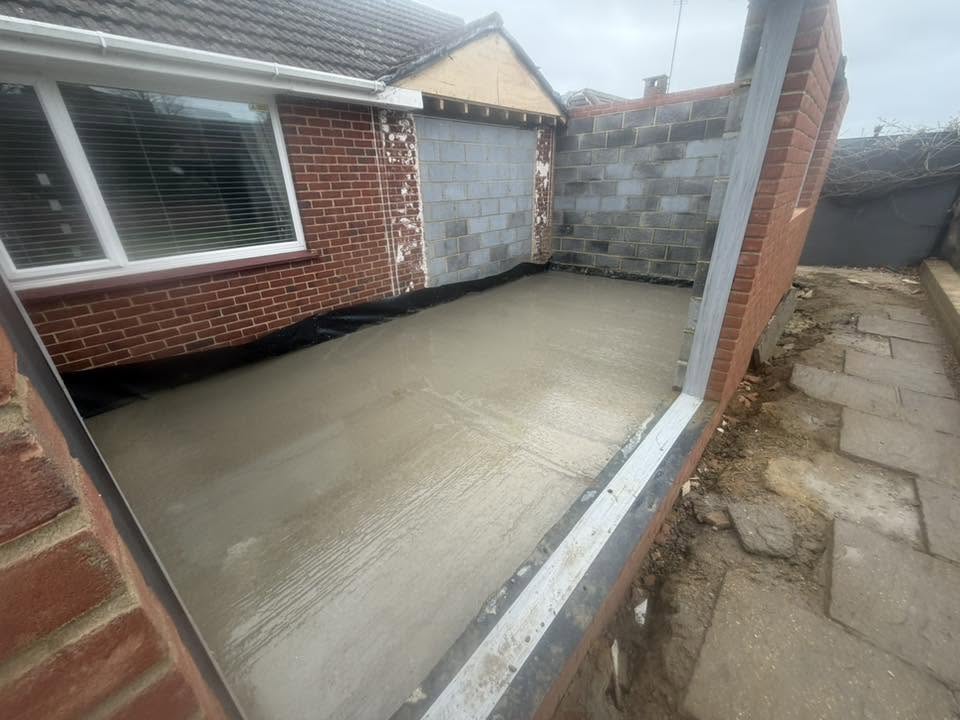
Master the technical engineering standards of luxury landscape construction in Kent: volumetric cut-and-fill, stepped footings, and SuDS controls.
The transformation of complex, sloping residential terrains into high-performance multi-tiered outdoor living spaces requires an absolute synthesis of structural civil engineering, precision groundworks, and micro-climate hydraulic design. Luxury landscape construction is fundamentally more than a cosmetic surface layout; it is a heavy engineering phase that alters the topography, manages dynamic lateral soil thrusts, and controls subsurface water pathways.
Across premium properties in the South East, building grand multi-level terraces, flush-threshold walkways, and floating stone staircases over variable grades requires a comprehensive risk-management strategy. Failing to mathematically calculate slope stability angles, implement structural base layers, or mitigate regional clay movements will lead to retaining wall failures, cracked paving plates, and saturated lawns.
This comprehensive technical manual details the volumetric earthworks, ground stabilization methods, and structural interfaces required to execute elite luxury landscape construction kent transformations.
1. Topographical Engineering: Volumetric Cut-and-Fill across Multi-Tiered Horizons
Altering the natural grade profile of a sloping site requires an advanced approach to earthmoving operations. Landscape architects and master builders must calculate a precise volumetric balance between cut zones (where earth is removed) and fill zones (where earth is deposited to raise levels).
The Mechanics of Mass Topographical Modification
When a hillside is cut away to form a flat terrace plate, the natural internal friction angle of the soil mass is broken. Left unsupported, the upper soil slopes will experience catastrophic shear failures, resulting in landslides that push downward against the lower living spaces.
+-----------------------------------------------------------------------+
|                    TOPOGRAPHICAL VOLUMETRIC STEP BALANCE              |
+-----------------------------------------------------------------------+
|                                                                       |
|   [ HILLSIDE CUT ZONE ] ======> [ PROCESSED AGGREGATE SCREENING ]     |
|                                                ||                     |
|                                                v                      |
|   [ REINFORCED LOWER LEVEL ] <=== [ CONTROLLED 150mm LIFT FILL RUNS ] |
|   - Retained by Gravity Mass       - Compacted to Maximum Dry Density |
|   - Bypasses Active Failure Wedge  - Formulated for Load Stability    |
|                                                                       |
+-----------------------------------------------------------------------+
To stabilize these multi-level cuts, the landscape design must incorporate a sequence of heavy gravity mass structures or cantilevered retaining partitions. The soil excavated from the upper cut zones must be systematically sorted.
Organic topsoils are screened and set aside for future soft-landscaping beds, while the structural sub-surface soils are treated and deployed to build the lower fill platforms. This on-site material reuse eliminates massive muck-away logistics costs and ensures the new terraced footprints are built over a structurally dense, engineered earth cushion.
2. Subgrade Mechanics and Volumetric Stabilization across regional Clays
The long-term structural integrity of a luxury landscape project depends entirely on the mechanical performance of the underlying ground subgrade. If the subgrade soil yields or shifts under shifting environmental loads, the finished paving surfaces above will immediately fracture and drift out of alignment.
Taming High-Plasticity Wealden and London Clay Sheets
Main landscape contractors across Kent continuously interface with volatile geological strata, specifically the heavy over-consolidated Wealden and London clay formations. Clay soils carry high plasticity characteristics; they act like a geological sponge, expanding aggressively during wet winter saturation cycles and shrinking into deep, open fissures during dry summer months.
To decouple premium stone pavements from this volatile ground movement, the raw subgrade soil bed must be stripped back until a stable earth layer is reached. The excavation footprint is lined with a heavy-duty, needle-punched non-woven geotextile segregation membrane.
This fabric sheet acts as an absolute physical barrier that blocks the soft underlying clay from tracking upward into the clean aggregate foundation layers while permitting the free downward migration of groundwater.
3. Rigid Step-Footings and Reinforced Concrete Retaining Connections
Where multi-tiered grade changes require steps and level transitions, the vertical structures must be anchored to independent concrete foundations designed to neutralize tipping forces and prevent differential settlement.
Engineering Stepped Foundation Systems
Installing a single, flat continuous foundation base across a sloped terrain is highly inefficient. It requires deep excavations and massive volumes of waste concrete fill. Instead, the foundation layout must deploy a system of stepped concrete footings.
Each step transition must be precisely calibrated: the vertical rise of any individual step must never exceed the total physical thickness of the concrete base slab itself, and the horizontal run between steps must extend a minimum distance equal to twice the step height.
High-tensile steel reinforcement bar grids must run continuously across these step profiles, with custom-bent rebar corners overlapping by a minimum of forty times the bar diameter to securely tie the structural base plates together.
Structural ComponentDimensional Metric TargetMaterial SpecificationEngineering PurposeFoundation Step RiseMaximum 200mm per individual liftC35 High-Density ConcretePrevents localized shear crackingFoundation Step RunMinimum 400mm horizontal spanSteel Mesh ReinforcedUniform load distributionGranular Sub-BaseMinimum 150mm compacted depthMOT Type 1 AggregatesUnyielding foundation cushionDrainage Backfill CoreMinimum 300mm wide column40mm Angular Clean StoneEliminates hydrostatic load
4. Hydraulic Civil Engineering: Surface Fall Lines and SuDS-Compliant Attenuation
Every high-end landscape project must function as an active water-management network. Because premium patios and hardscape features are entirely non-porous, one hundred percent of the rainwater hitting these surfaces turns into immediate surface water sheets that must be controlled to safeguard primary residential structures.
Calibrating Multidirectional Fall Paths
Standing water sheets across a premium porcelain patio look highly unprofessional and present severe slip hazards. To enforce free-flowing surface drainage, all hardscape platforms must be constructed with a continuous, precise drainage fall gradient. The surface must tilt at a minimum slope profile of one in eighty—equal to twelve point five millimeters of vertical drop for every one meter of horizontal distance.
+-----------------------------------------------------------------------+
|                    CROSS-SECTION SUDS INFRASTRUCTURE MATRIX           |
+-----------------------------------------------------------------------+
|                                                                       |
|   [ PORCELAIN TERRACE ] ===> [ 1:80 SLOPED RUNOFF ] ===> [ SLOT DRAIN]|
|                                                                ||     |
|                                                                v      |
|   [ GEOTEXTILE WRAPPED INFILTRATION CELL ] <====================      |
|   - Low Greenfield Discharge Release Pace                             |
|   - Prevents Hydrostatic Surcharging Across Lawn Subgrades            |
|                                                                       |
+-----------------------------------------------------------------------+
This drainage fall must always be oriented to direct surface water sheets completely away from house walls, structural extensions, and neighboring boundaries. Where the terrace plates sit flush with interior room spaces, the transition line must incorporate high-capacity linear slot drainage channels parallel to the door frame, routing water down into the site's main subterranean drainage infrastructure.
Implementing Sustainable Drainage Systems (SuDS)
To clear national planning policies and prevent local flooding, surface water must be managed within the property boundary using Sustainable Drainage Systems (SuDS). Runoff fluid captured by slot drains and surface gullies is channeled down into subterranean attenuation crate cells buried beneath the lower lawn footprints.
These highly porous plastic crate cells temporarily store peak rainwater volumes during heavy storm events, acting as an underground retention tank. The system releases this stored water at a controlled greenfield runoff pace, letting the water filter slowly back into the natural ground table. This protects the lower-level lawns from waterlogging and prevents the soil base from softening under adjacent structural walls.
5. Material Handshakes: Coordinating Porcelain Slabbing, Masonry, and Lawns
The defining characteristic of elite, high-value landscape construction is the accuracy and structural permanence of the connection points where disparate materials meet.
The Porcelain Paving and Mortar Bond Interface
When laying large-format porcelain slabs across external terraces, utilizing traditional sand and cement methods will result in late-stage failure. Porcelain features an ultra-low water absorption profile, meaning it cannot absorb moisture or form a natural bond with a standard mortar base.
To achieve an unbreakable adhesion interface, every porcelain unit must have a specialized polymer-modified styrene-butadiene rubber (SBR) slurry primer coat applied across its entire rear face immediately before being set down onto a full-contact, four-to-one sharp sand and cement mortar bed.
This chemical barrier anchors the luxury porcelain slabbing kent modules permanently to the base plate, preventing the tiles from lifting or rocking under shifting winter frost conditions.
Isolating Facing Masonry from Organic Soil Masses
Where a raised garden tier or turf zone sits directly behind a finished brick wall, the masonry must be fully isolated from the soil mass. Raw garden soils hold high moisture tables and contain dissolved sulfates from organic fertilizers.
If these chemical ions penetrate standard mortar lines, they react with the cement paste to form expansive mineral crystals that split the joints apart, compromising the home's primary structural brickwork kent paths.
+-----------------------------------------------------------------------+
|                    STRUCTURAL BRICKWORK RETAINING ISOLATION           |
+-----------------------------------------------------------------------+
|                                                                       |
|   [ ORGANIC SOIL/TURF BED ]   |G|D|   [ STRUCTURAL BRICKWORK STEM ]   |
|   - High Moisture Load        |E|I|   - Breathable Mortar Joints      |
|   - Active Nitrates/Sulfates  |O|M|   - Fully Protected Rear Face     |
|   ==========================> |T|P|   <============================   |
|                               |E|L|   - Free-Draining Surface Face    |
|                               |X|E|                                   |
|                                                                       |
+-----------------------------------------------------------------------+
To preserve the masonry, the rear face of the wall must be coated with an absolute elastomeric waterproofing membrane and protected by a dimpled high-density polyethylene sheet.
This moisture barrier channels groundwater downward into perforated heel collection pipes while protecting the structural brickwork from chemical erosion, matching the performance targets enforced across premium historic brickwork repointing kent projects.
6. Comprehensive Operational Phased Lifecycle for Luxury Landscape Construction
To ensure that every volumetric cut, stepped concrete footing, and SuDS attenuation cell interfaces cleanly without error, project management teams must enforce a strict, phased construction timeline.
Phase 1: Site Topographical Mapping, GPR Scanning, and Plan Checks
Before any heavy earthmoving equipment enters the property boundary, the site's grade parameters and subsurface utilities must be verified.
- Topographical Laser Mapping: Execute an exhaustive multi-axis laser scan across the sloping terrain to calculate the exact volumetric cut-and-fill balances required for every terraced tier.
- Subsurface GPR Scanning: Survey the entire excavation footprint utilizing dual-frequency Ground Penetrating Radar (GPR) to map all buried utility lines, power conduits, and drainage networks, establishing clear mechanical exclusion zones.
- Engineering Print Validation: Verify that all reinforcement steel rebar schedules and concrete retaining wall design prints have cleared formal Building Control plan checks.
Phase 2: Bulk Earth Excavations, Subgrade Treatment, and Shoring Setup
This phase manages the mass physical manipulation of the landscape terrain and stabilizes the core sub-surface levels.
- Bulk Grade Extractions: Deploy tracked excavators to strip away organic topsoils and execute bulk grade cuts, building safe side-slope batters or setting up mechanical shoring shields to prevent embankment failures.
- Geotextile Membrane Layout: Lay out the high-strength, non-woven geotextile segregation sheets across the leveled clay subgrade beds, overlapping all seams by a minimum of three hundred millimeters to isolate the earth.
- Aggregate Sub-Base Compaction: Deposit the clean MOT Type 1 granular aggregate in controlled seventy-five-millimeter layers, using heavy vibrating rollers to compact the stone matrix into an unyielding platform.
Phase 3: Stepped Footing Pours, Retention Assemblies, and Drainage Integration
The structural core construction phase where foundations are cast and active water-management paths are sealed behind the walls.
- Formwork Steel Construction: Assemble the continuous high-tensile steel rebar grids inside robust timber shuttering frames, using precision-bent corners to span across the stepped footing profile lines.
- Casting the Concrete Bases: Pour high-density structural concrete into the step formwork tracks in continuous streams, utilizing internal mechanical poker vibrators to extract all entrapped air voids.
- Drainage Core Integration: Position the perforated twin-wall heel drainage pipes along the cured footing plates, build out the forty-millimeter angular aggregate column, and encapsulate the entire gravel structure inside its protective geotextile sleeve.
Phase 4: Stem Construction, Material Handshakes, and Handover Protection Protocols
The final technical phase where the landscape surfaces are laid, jointed, and protected for formal handover.
- Superstructure Core Assembly: Build out the vertical retaining walls using engineering bricks or high-density concrete blocks, or construct the Galfan-coated wire mesh gabion matrices at a strict backward batter inclination.
- Porcelain Surface Installations: Apply the polymer-modified SBR slurry bonding primer to the rear face of the porcelain units and bed them onto full-contact mortar bases, maintaining uniform joint tracks with plastic spacers.
- Grouting and Surface Handover Protection: Pack the open joints completely with high-density polymer grouts, wash away all surface residues, and encase the pristine stone surfaces inside thick impact-protection mats until final handover.