Expert brickwork, driveways, patios, landscaping and extensions across Canterbury and the CT postcodes. Marshall Brickwork & Construction — 15+ years, 5-star rated, free quotes.
Canterbury is unlike anywhere else in Kent. The cathedral city is home to one of the most varied and historically dense residential environments in the entire county — Roman-period street patterns overlaid with medieval buildings, Georgian and Victorian terraces running out through the inner suburbs, Edwardian semis in the streets beyond the old city walls, interwar housing throughout Barham, Bridge, and Bekesbourne, and decades of later development spreading outward through Sturry, Chartham, Harbledown, and the villages of the Stour valley. Every era of that building history creates its own construction and maintenance requirements. And every Canterbury homeowner who needs outdoor construction work done properly faces the same challenge: finding a contractor who understands the full range of what their specific property needs.
That is where Marshall Brickwork & Construction comes in.
Based in Rochester and operating across the full county of Kent and into Greater London, Marshall brings 15 years of outdoor construction expertise directly to Canterbury homeowners. Whether the project is a new block paving driveway on a modern detached property in Littlebourne, repointing the lime mortar joints on a Victorian terrace in St Dunstan's, a complete garden transformation with porcelain patio and artificial grass in Whitstable, a garden wall and fencing installation in Herne Bay, or a single-storey rear extension in Sturry — Marshall's team has the skills, the materials knowledge, and the local awareness to deliver the result that Canterbury properties demand.
This guide covers everything the Canterbury homeowner needs to know about the full range of outdoor construction and landscaping work Marshall offers across the CT postcode area: what each service involves, why the specific characteristics of Canterbury's housing and soils matter to the specification, the towns and villages in the area Marshall regularly serves, why this family-run company is a different proposition to the price-focused operators who dominate trade directories, and how to get a project started with a team you can genuinely trust.
Canterbury's Housing Stock: Why Local Knowledge Matters
Canterbury sits on chalk and greensand geology across much of its central and northern extent, with alluvial soils in the Stour valley flood plain and heavier clay becoming more prevalent as you move south toward the North Downs and east toward Barham and the Elham valley. This geological variation directly affects what correct groundworks specification looks like for driveways, patios, and garden walls built across the CT postcode area.
Chalk-dominant sites drain quickly but can be susceptible to vertical movement where water dissolves calcium carbonate in the chalk matrix over long timescales — important context for foundation depth on extensions and garden wall construction. The alluvial soils of the Stour valley require careful assessment for drainage and bearing capacity, particularly for any project within the Environment Agency flood risk zones that cover parts of the city centre and Sturry corridor. The heavier clay subsoils in the southern CT postcodes behave in the same way as the Wealden clay that makes groundworks specification so important in the Maidstone and Tonbridge areas — seasonal shrink-swell cycles that undermine any surface built on an inadequate sub-base.
Canterbury's building heritage creates its own set of demands. The city contains an extraordinary density of Listed Buildings — the highest concentration outside London in the South East — and a network of Conservation Areas that covers not just the historic core but extends into the Victorian suburbs and many of the surrounding villages. In these areas, any external construction work that alters the character of the building or its setting requires careful thought. Repointing work on pre-1930s properties within Conservation Areas must use the correct lime mortar specification. New driveways, garden walls, and hard landscaping must be designed with the visual character of the area in mind. Materials must be sympathetic.
Marshall's team understands these demands from direct experience. This is not generic knowledge — it is the product of working on period properties across Kent for fifteen years and understanding that the gap between what a building needs and what a careless contractor delivers is precisely what causes the most expensive problems.
Driveways in Canterbury: The Right Surface for Every Property Type
A new driveway is one of the most visible and most value-adding investments a Canterbury homeowner can make. The front of the property is the first thing visitors and prospective buyers see — and a well-built, well-specified driveway communicates the quality of everything behind it. Canterbury's housing diversity means the right driveway surface varies enormously from one property to the next. What looks perfect on a modern detached property in Blean would be entirely wrong for a Victorian terrace in the St Dunstan's Conservation Area.
Marshall's driveway installation service covers every major surface type in demand across the CT postcodes, and the choice of surface always begins with an honest assessment of what is right for the specific property and planning context — not what is easiest for the installer or generates the highest margin.
Block paving remains the most popular driveway surface across Canterbury's residential market. The combination of design flexibility — herringbone, basket weave, stretcher bond, decorative borders — with genuine durability and the ability to repair individual blocks without replacing the whole surface makes it the right choice for a wide range of property types. On Canterbury chalk soils, a block paving driveway requires a correctly specified and compacted Type 1 MOT sub-base to manage the drainage requirements and provide stable bearing for vehicle loads. On the heavier soils of the southern CT postcodes, sub-base depth must be calibrated for the clay content and the drainage conditions of the specific site. Getting this calculation right before excavation begins is the difference between a driveway that stays flat for twenty years and one that begins to show differential settlement within three.
Resin-bound driveways have become the choice of Canterbury homeowners who want a smooth, seamless, SUDS-compliant surface with a contemporary finish and no loose aggregate. The range of aggregate colours and stone types available — from warm golden gravel blends to cooler charcoal and slate tones — makes it possible to create a surface that complements the property's character rather than fighting it. For Canterbury properties in or near Conservation Areas, this matters: a resin-bound surface in a natural aggregate that references the local building palette can satisfy both the homeowner's desire for a modern surface and the planning authority's requirement for visual sensitivity. Resin-bound is also the most permeable of the major driveway surfaces, which means that for properties in areas of surface water sensitivity — particularly relevant near the Stour valley floor — it is the specification that avoids planning complications around impermeable surfacing of front gardens.
For the range of Canterbury's newer housing stock — detached and semi-detached properties from the 1970s through to recent development in areas like Sturry, Blean, Hersden, and Chartham Hatch — porcelain slab driveways have become an increasingly sought-after premium option. Large-format porcelain in concrete grey, light stone, or textured finishes delivers a precision, architectural quality that block paving and resin cannot match, and its near-zero maintenance requirement appeals to homeowners who want a premium result without ongoing commitment. The installation demands for porcelain are the highest of any surface type: it must be laid on a full mortar bed over a concrete base, with fully bonded coverage and flexible joint compound rather than ordinary pointing. A porcelain driveway installed by a contractor who treats it like block paving — spot-bedded, under-specified base — will develop hollow slabs and cracked joints within months. Marshall's expertise in porcelain means the correct specification is applied as standard, not an optional upgrade.
For homeowners interested in understanding how different driveway surfaces compare in depth, the block paving vs resin bound guide for Kent sets out the honest differences in performance, maintenance, and suitability for different site conditions. The complete driveway construction guide for Kent covers every aspect of what correct installation looks like across all surface types.
Patios and Outdoor Living Spaces in Canterbury
Canterbury's climate — warmer and drier than much of the rest of Kent, sheltered by the North Downs from the prevailing westerlies, with genuine long dry spells through June, July, and August — makes the outdoor living space one of the most used parts of any Canterbury property during the warmer months. A well-built patio transforms the way a garden is used: it becomes a dining area, a social space, an extension of the kitchen when bifold doors open the house outward, a place where the property's value is genuinely reflected in the quality of what has been built.
Marshall's patio construction service covers every material in current demand across the Canterbury area and applies the correct specification for each one. The materials most commonly specified for Canterbury patios are Indian sandstone, large-format porcelain, limestone, and granite, with concrete paving and brick paving as alternatives for properties where a more traditional or period-sympathetic aesthetic is required.
Indian sandstone in the warm buff and brown tones — Raj Green, Fossil Mint, Camel Dust, Autumn Brown — is the most popular natural stone across Canterbury's residential market. Its character suits the majority of property types across the CT postcodes, from contemporary detached houses to Victorian and Edwardian properties where natural stone complements the building material rather than clashing with it. The critical installation requirements are consistent regardless of the material: full mortar bed adhesion on every slab, pre-sealed or primed backs before laying to ensure bonding on dense natural stone, correctly specified pointing compound, and a sub-base designed for the soil conditions at the specific site. A sandstone patio spot-bedded on four mortar dabs instead of a full bed will hollow and crack within two winters. A sandstone patio correctly installed on a full bed over an adequate sub-base will outlast the original surface of the house.
Large-format porcelain has become the premium patio specification across Canterbury's more recently built and more recently renovated residential stock. The appeal is genuine: porcelain is frost-resistant to the depths that Kent winters deliver, genuinely non-slip when correctly specified to R11 rating, immune to staining, and requires no sealing or specialist maintenance beyond periodic washing. For Canterbury homeowners who want a patio that looks immaculate in year fifteen the same as year one, porcelain is the specification. The installation demands are more stringent than natural stone: no voids are permissible beneath the slab, the base must be concrete or an equivalent rigid substrate, and the joint compound must be a flexible polymer rather than conventional sand and cement. These requirements are not compromises — they are the reason porcelain delivers the performance it promises.
For the patio material decision in full detail, the definitive patio construction guide for Kent covers every major surface with honest technical assessment. The porcelain versus Indian sandstone comparison guide is the most thorough publicly available comparison of the two most popular premium options for 2026. And the complete patio cost guide for Kent provides honest installed pricing for every material type without the vagueness that makes most cost guides useless.
Canterbury patios regularly incorporate additional elements that Marshall builds as part of the same coordinated project: garden steps connecting terrace levels, raised brick planter beds defining the patio boundary, outdoor kitchen bases and bespoke BBQ structures, pergola and gazebo bases, and feature walls. These elements are brickwork and masonry tasks — which means the same team that builds the patio also builds the surrounding landscape features, maintaining consistent quality and a coherent design language throughout.
Brickwork and Repointing in Canterbury
Canterbury's extraordinary density of historic and period properties creates a consistent and substantial demand for expert brickwork and repointing across the CT postcodes. This is not generic maintenance work. Canterbury's Victorian and Edwardian stock — in St Dunstan's, St Stephen's, Wincheap, Nunnery Fields, and the streets running out through Sturry Road and New Dover Road — was built with lime mortar. The specific mix, strength, and application method appropriate for repointing these buildings is determined by the age of the property, the type and hardness of the original brick, and the degree of exposure to which the particular wall face is subjected.
The consequence of getting this wrong in Canterbury is not cosmetic — it is structural. Applying a general-purpose cement mortar to a Victorian Canterbury terrace causes the mortar to harden beyond the compressive strength of the soft handmade brick. When the building moves — and all buildings move, seasonally and over time — the rigid cement joint cannot flex. The stress goes instead into the brick face. The face spalls. The damage is permanent without replacing the affected bricks. In a Conservation Area — and much of Canterbury's inner residential stock sits within or adjacent to Conservation Areas — this kind of damage attracts attention from the local planning authority, not just from the building surveyor.
Marshall's bricklayers specify mortar for repointing jobs based on an assessment of the building: its age, its original construction, its exposure conditions, and the strength of the brick. For pre-1930s Canterbury properties, this almost always means a Natural Hydraulic Lime mortar — NHL 2 or NHL 3.5 depending on the exposure — applied at the correct raking depth of at least 15 to 20mm over properly prepared, dampened joints. The result lasts 25 to 40 years and leaves the building better protected than before work started. The complete repointing guide for Kent is the most thorough resource available on this subject for Kent homeowners and covers every aspect of the job — from recognising when repointing is needed to understanding lime versus cement mortar, from chimney repointing to the questions that reveal whether a bricklayer actually knows their trade.
Beyond repointing, Marshall's brickwork service across Canterbury covers garden wall construction and repair, chimney pointing and flaunching, brick replacement on spalled or damaged facades, decorative brickwork for raised planters and feature walls, retaining wall construction for sloped gardens, and structural brickwork for home extensions. For homeowners dealing with cracking, spalling, efflorescence, or structural movement in their brickwork, the brick repair guide for Kent covers every failure mode with the diagnostic honesty that most contractors avoid.
Canterbury's listed building stock is the most demanding environment for brickwork specification in the county. English Heritage guidance on mortar specification for Listed Buildings is unambiguous, and the consequences of incorrect work on a Listed structure extend well beyond building damage to enforcement action. Marshall's team has the experience and knowledge to work on Listed Buildings correctly — an assessment made on the basis of material evidence, not assumption.
Landscaping and Garden Transformations Across Canterbury
Canterbury gardens vary enormously in their conditions and their potential. The city-centre terrace has a compact rear courtyard that wants to be transformed into a low-maintenance outdoor room. The Edwardian semi in the outer suburbs has a long back garden with heavy clay soil and a large ornamental tree that casts shade across most of the lawn. The modern detached property in Chartham has a blank-canvas rear garden of reasonable size waiting to become something genuinely usable. The rural CT4 or CT6 property has extensive grounds with the potential for complete landscape design.
Marshall's landscaping service operates across all of these scenarios, delivering both individual landscaping elements and complete garden transformations as single coordinated projects. The landscaping work Marshall delivers in Canterbury covers artificial grass installation, raised bed and planter construction, garden wall and boundary work, slabbed steps, decking bases, garden room bases, planted border design and installation, turfing, and the integration of hard and soft landscaping into a coherent finished outdoor environment.
Artificial grass is the most requested individual landscaping element across Canterbury's residential gardens in 2026, and for reasons that Canterbury's specific conditions make particularly compelling. The city's chalk-dominant soils drain well on elevated sites, but the gardens of Canterbury's substantial Victorian terrace stock — north-facing rear plots, shaded by high walls and neighbouring buildings — present exactly the conditions in which natural grass struggles most. A north-facing Canterbury back garden in winter is a waterlogged, compacted, permanently muddy surface that no amount of seeding and aeration fully resolves. Artificial grass installed to the correct specification — properly excavated, geotextile membrane laid, Type 1 MOT sub-base compacted with deliberate drainage fall, premium turf with high stitch rate, silica sand infill — eliminates this problem entirely and delivers a surface that looks as good on a grey November morning as it does on a sunny July afternoon.
The complete artificial grass guide for Kent covers every aspect of the product, the installation, the drainage requirements for Kent's soil conditions, and what to ask before appointing any installer. For Canterbury homeowners planning a full garden transformation — artificial grass combined with a new patio, raised planters, fencing, and garden steps — the complete landscaping guide for Kent sets out the full scope of what Marshall delivers across the county.
Garden Fencing in Canterbury
Fencing is one of the most consistently requested services across Canterbury's residential areas, both as a standalone project and as part of a broader garden transformation. Canterbury's gardens — particularly in the denser inner suburbs and the Victorian terrace streets — rely heavily on fencing for both privacy from neighbouring properties and definition of the garden space. The quality and longevity of fencing depends almost entirely on post installation: the depth of the post hole, the quality of the concrete backfill, and the type of post used.
Marshall's fencing service covers the full range of residential fencing types across the Canterbury area. Closeboard feather edge fencing in standard heights provides the maximum privacy and durability for most residential applications. Slatted contemporary fencing with horizontal or vertical spacing suits modern properties and contemporary garden designs. Acoustic fencing is increasingly specified by Canterbury homeowners near the A2/M2 corridor, the ring road, and the rail line, where noise reduction is a genuine quality-of-life benefit rather than a cosmetic consideration.
The complete garden fencing guide for Kent covers types, installation standards, planning rules, post specification, and the most common failure modes that make cheap fencing jobs expensive over a five-year horizon. For Canterbury homeowners particularly, the Conservation Area considerations around boundary structures are worth understanding before any fencing project begins — in some cases, permitted development rights for fencing within Conservation Areas are more restricted than for non-designated areas.
Home Extensions and New Builds in Canterbury
Canterbury's property market presents a compelling financial case for home extensions. The city's position as a university city and major heritage destination means strong, consistent property demand — and a well-executed extension adds both living space and market value in one of the more reliably performing property markets in the South East. Set against the stamp duty, agent fees, and disruption costs of moving, a single-storey rear extension or loft conversion typically represents significantly better value.
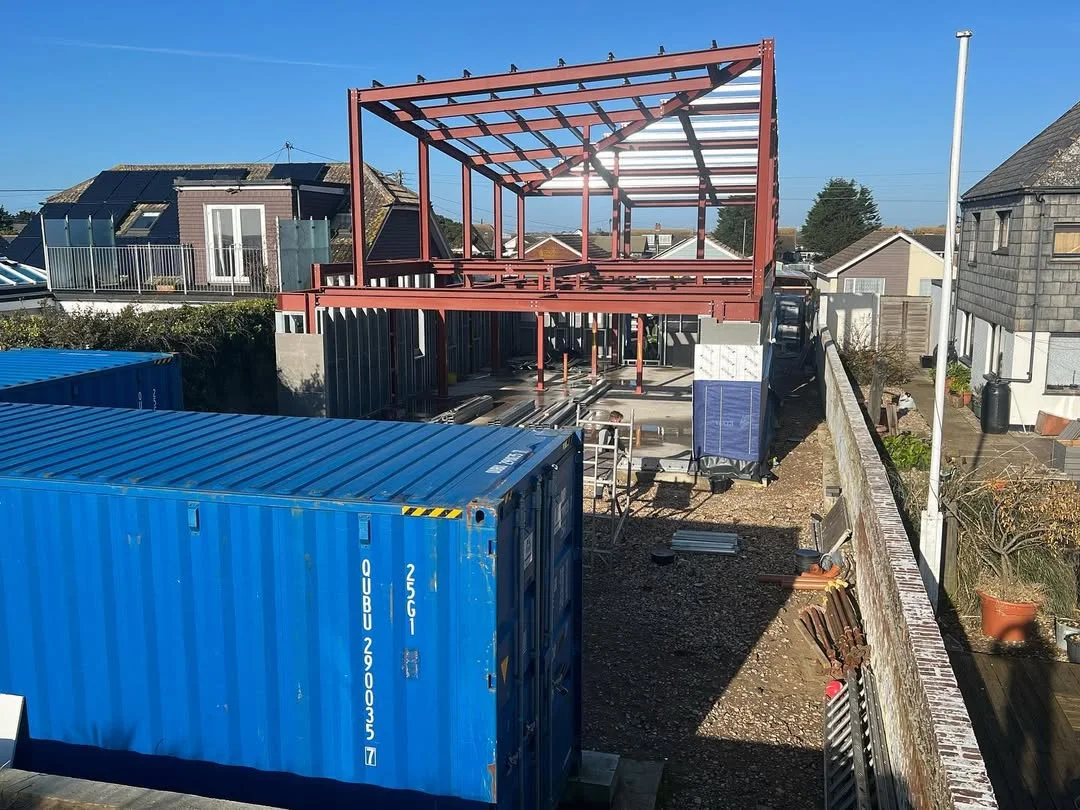
Marshall Brickwork & Construction's extensions and new builds service covers the full project scope for Canterbury properties: groundworks and foundations to the correct depth for the site's soil conditions, structural brickwork including cavity wall construction tied correctly to the existing building, roof construction, insulation to current Building Regulations Part L standards, and the full weathertight shell ready for internal trades. Canterbury's planning environment adds considerations that require experience to navigate: Conservation Area requirements, the proximity of the historic core and its setting policies, the prevalence of Listed Buildings in the CT1 and CT2 postcodes, and the party wall obligations that apply where extensions are built near shared boundaries in the densely developed inner suburbs.
The complete home extensions guide for Kent covers every extension type relevant to Canterbury's housing stock — single-storey rear extensions under Permitted Development, double-storey extensions requiring planning permission, side return and wrap-around extensions, kitchen extensions, and garage conversions — with detailed coverage of the planning rules, the groundworks specification, and the structural brickwork requirements that determine whether an extension performs correctly for its full life.
Groundworks in Canterbury: The Foundation That Everything Else Depends On
Every outdoor construction project that Marshall builds in Canterbury begins with groundworks — excavation, sub-base installation, drainage, and foundation specification appropriate for the site conditions. The groundworks are the invisible part of every finished project. They are also the part that determines whether the visible part still looks right in year ten, or whether it has begun to fail in the ways that cheap or incorrectly specified construction always eventually does.
Canterbury's geological variation across the CT postcodes means that groundworks specification cannot be standardised. Chalk-dominant sites in the CT1 and CT2 postcodes drain quickly and provide a different bearing platform from the alluvial soils in the Stour valley flood plain or the heavier clay subsoils in the southern CT3 and CT4 postcodes. Marshall's groundworks team assesses the site conditions before specifying sub-base depth, compaction methodology, drainage arrangements, and foundation depth for each project individually. This is not a premium extra — it is standard practice that every professional outdoor construction company should follow and that too few of Marshall's competitors actually do.
Marshall's groundworks capability covers drainage installation and connection for kitchen extensions and patio water management, soakaway construction for surface water management on sites where direct connection to the drainage system is not possible, foundation excavation and concrete strip construction for garden walls and extension footings, and the preparation and formation of concrete bases for garden rooms, outbuildings, and hard standing areas.
Where Marshall Serves Across the Canterbury and CT Postcode Area
Marshall Brickwork & Construction works throughout the Canterbury district and across the full CT postcode range as part of its regular Kent coverage. The areas the team serves most regularly across this part of the county include:
Canterbury city itself — CT1 and CT2 — where the combination of historic and period housing creates the most complex and most demanding brickwork and repointing environment in this part of Kent. The Conservation Area requirements, the density of Listed Buildings, and the lime mortar demands of the Victorian and Edwardian stock make experience and correct specification essential for any construction or maintenance work in these postcodes.
The outer Canterbury suburbs and rural villages accessible from the ring road — CT3, CT4, and the village postcodes of Barham, Bridge, Bishopsbourne, Patrixbourne, and the North Downs villages south of the city — where the housing ranges from period cottages and farmhouses requiring the most careful traditional lime mortar specification to modern detached properties where contemporary driveway and landscaping specifications are most commonly requested.
Whitstable and the CT5 postcode — the coastal town whose popularity has driven significant residential investment and demand for outdoor transformation projects. Whitstable's combination of Victorian seaside terrace stock and contemporary renovation makes it one of the most varied and interesting construction environments in the CT postcode area. The coastal exposure means that brickwork specification for repointing and new construction must account for more aggressive weathering conditions than inland sites.
Herne Bay and the CT6 postcode — a substantial residential coastal town with a wide range of housing types from Victorian and Edwardian seafront terraces to postwar semis and more recent development. The demand for driveways, patios, and garden transformations across Herne Bay's residential streets is strong and consistent throughout the year.
Faversham and the ME13 postcode, straddling the border between the Canterbury district and Swale, is also within Marshall's regular coverage area — a historic market town with a significant concentration of period housing requiring the same lime mortar expertise that the team applies throughout Kent.
Beyond these areas, Marshall works throughout the wider CT postcode range on the right project — Thanet (CT7–CT12), Folkestone and the CT18–CT21 postcodes, and the rural areas of East Kent across CT13–CT16. Contact the team with your location and project description to discuss availability and arrange a site visit.
Why Canterbury Homeowners Should Choose Marshall Over the Alternatives
The Canterbury construction and landscaping market has no shortage of operators — from large firms with Checkatrade profiles and aggressive marketing to individual tradespeople working from a single van. Marshall Brickwork & Construction sits in a specific position within this market: a company large enough to handle the full project scope without subcontracting to unknown parties, small enough to remain genuinely personal and accountable, and experienced enough to specify every element of every job correctly rather than applying a generic template regardless of site conditions.
The factors that make Marshall the right choice for Canterbury homeowners are consistent with why homeowners across Rochester and Medway, Maidstone, and Sittingbourne have chosen them for hundreds of projects over fifteen years. Those factors are: correct mortar specification for period properties, site-specific groundworks design rather than a standard template, in-house delivery of the complete project scope without reliance on subcontractors, transparent and itemised written quotes, staged payment plans that protect the client throughout the project, and a comprehensive workmanship guarantee that is honoured rather than contested.
The competition research for Canterbury confirms what is true across the Kent construction market more broadly: the companies that dominate trade directory listings in Canterbury are predominantly specialists — driveway-only companies, paving specialists, separate bricklaying firms — who can do one thing well but cannot coordinate the complete project that most homeowners actually want. When a Canterbury homeowner wants a new driveway at the front, a new patio at the back, the garden wall repointed, new fencing installed, and the rear garden transformed, they are facing the prospect of finding, vetting, scheduling, and managing four or five separate contractors — each with their own timelines, their own standards, and their own definition of what "done" looks like.
Marshall delivers all of those elements as a single project with a single point of contact, a single written quote, a single timeline, and a single guarantee. The coordination overhead that would otherwise sit with the homeowner sits instead with Marshall's team. The result is a finished outdoor environment delivered on time and to the agreed specification — not a series of separate jobs that never quite connect into a coherent whole.
View the completed projects portfolio to see the full range and quality of what Marshall delivers across Kent — from individual driveway installations to complete property transformations. The work speaks before any other argument needs to be made.
Getting Started: How Canterbury Homeowners Work With Marshall Brickwork & Construction
The process of getting a project started with Marshall Brickwork & Construction begins with a free consultation — a site visit at a time that suits the homeowner, where a member of the team walks through the project in person, assesses the site conditions specific to the Canterbury location, gives honest advice about materials and specification, and discusses budget and timeline without pressure.
The written quote that follows the consultation is itemised — materials specified by type, sub-base depth stated, scope of works clearly defined, staged payment terms set out. Canterbury homeowners in Conservation Areas will receive advice at this stage on any planning or Listed Building considerations that apply to their specific project. Flexible staged payment plans are available for larger projects, meaning the homeowner retains financial control throughout the build rather than committing the full project value upfront.
The build is carried out by Marshall's own team throughout — no works are transferred to subcontractors without the homeowner's knowledge. Site cleanliness is treated as a professional obligation. Communication is proactive: milestones are reported when reached, and anything unexpected on site is discussed honestly with the homeowner rather than worked around quietly. The completion walkthrough confirms every element of the specification has been delivered before the final payment stage is reached.
The comprehensive workmanship guarantee takes effect from completion. This is not a token assurance — it is the mechanism through which Marshall's family-run values make the relationship between client and contractor genuinely different from the transactional model that most of the construction market operates on.
For Canterbury homeowners who want to understand the full service range before getting in touch, the services page covers every offering in the current portfolio. The blog provides in-depth technical coverage of every major service — from the complete outdoor construction guide for Kent that covers every service category in a single resource, to the dedicated guides on driveways, patios, repointing, brick repair, extensions, fencing, landscaping, and artificial grass — giving Canterbury homeowners the knowledge to make fully informed decisions before any money changes hands.
To get started, call 07724 730872, email info@mbconstruction.group, or use the contact page to request a free, no-obligation site visit and quote. The team responds to all Canterbury enquiries promptly — typically within 24 hours — and site visits across the CT postcode area can usually be arranged within the week. There is no pressure, no obligation, and no charge for the consultation.
Marshall Brickwork & Construction. 14 Poplar Road, Rochester, ME2 2NR. Serving Canterbury, Whitstable, Herne Bay, Faversham, and across the full CT postcode area as part of Kent-wide outdoor construction coverage since 2009.
Frequently Asked Questions: Outdoor Construction in Canterbury
Do I need planning permission for a new driveway in Canterbury?
For most Canterbury homeowners, a new driveway does not require planning permission provided the surface is permeable — resin-bound, block paving with open joints, or gravel — or if surface water is directed to a lawn or border rather than the highway. However, Canterbury is subject to a higher than average density of Conservation Area and Article 4 Direction coverage, which can remove permitted development rights that would otherwise apply. Canterbury City Council's planning portal is the definitive source, and Marshall will advise on the position for your specific property during the initial consultation.
Does Canterbury's Conservation Area status affect patio and garden work?
Within Canterbury's Conservation Areas, planning permission is required for certain types of development that would otherwise be permitted under national Permitted Development rules. For most garden patio and landscaping work entirely within the curtilage and not affecting the building's external appearance, permitted development rights still apply. For works that involve demolition of existing structures, new boundary walls above certain heights, or changes to the building's external appearance, Conservation Area Consent or planning permission may be needed. Marshall advises on these requirements as part of the standard consultation process.
Is lime mortar repointing more expensive than standard cement repointing in Canterbury?
Yes. Lime mortar materials are more expensive than general-purpose cement mortar, and the application technique — thinner coats, correct curing conditions, specialist joint preparation — requires more skilled labour time. The premium reflects genuine additional material and skill costs. For any Canterbury property built before approximately 1930, lime mortar repointing is not a premium option but the only correct option. Using cement mortar on these buildings causes irreversible brick damage that is far more expensive to put right than the difference in repointing specification.
How long does outdoor construction typically take across Canterbury projects?
A standard block paving driveway of 30 to 50 square metres takes three to five working days from excavation to completion. A medium-sized patio installation takes four to seven days depending on material and garden access. A full garden transformation — artificial grass, new patio, fencing, raised planters — typically takes two to three weeks as a coordinated single project. Repointing a typical Canterbury Victorian terrace front elevation takes five to seven working days. A single-storey rear extension from groundworks start to weathertight shell takes eight to fourteen weeks depending on size and structural complexity. Marshall provides realistic timelines during the quoting process and builds genuine contingency into all project programmes.
Can Marshall work in Canterbury's historic areas and on Listed Buildings?
Yes. Marshall's bricklayers have experience working on Listed Buildings and in Conservation Areas across Kent, including in Canterbury's historic inner city. Work on Listed Buildings requires Listed Building Consent in most cases, and the mortar specification must follow English Heritage guidance on lime mortar use for historic masonry. Marshall specifies and applies materials in compliance with these requirements — something that cannot be said of every contractor operating in the Canterbury area.
How does the Canterbury consultation and quoting process work?
The consultation is a free site visit where a Marshall team member assesses the project, discusses the homeowner's requirements, and gives honest technical advice about what the site conditions and planning context demand. The written quote that follows is itemised and specific — it states the scope, the materials, the sub-base specification, the timeline, and the staged payment terms. Canterbury homeowners do not receive a ballpark figure over the phone and a single-page quote after a five-minute site visit. They receive a document that gives them the information they need to make an informed decision — and a team they can hold accountable to it.
Marshall Brickwork & Construction: Canterbury's Outdoor Construction Specialists
Whether you are searching for bricklayers in Canterbury, a driveway installer near you in CT1 or CT2, a landscaping company for a full garden transformation in Whitstable, repointing specialists for a Victorian property in Herne Bay, patio builders in Canterbury, fencing installation across the CT postcodes, or a construction company with the full capability to deliver a home extension from groundworks to finished shell — Marshall Brickwork & Construction is the name to call.
Fifteen years of completed projects across Kent. Five-star rated across every platform. A family-run team based in Rochester that treats every Canterbury property like their own. A comprehensive guarantee on every piece of work they deliver. And the full-service capability to coordinate every element of your outdoor project as a single seamless programme rather than a sequence of separate contractor relationships.
Get in touch today for a free, no-obligation consultation and quote. 07724 730872. info@mbconstruction.group. 14 Poplar Road, Rochester, ME2 2NR.