
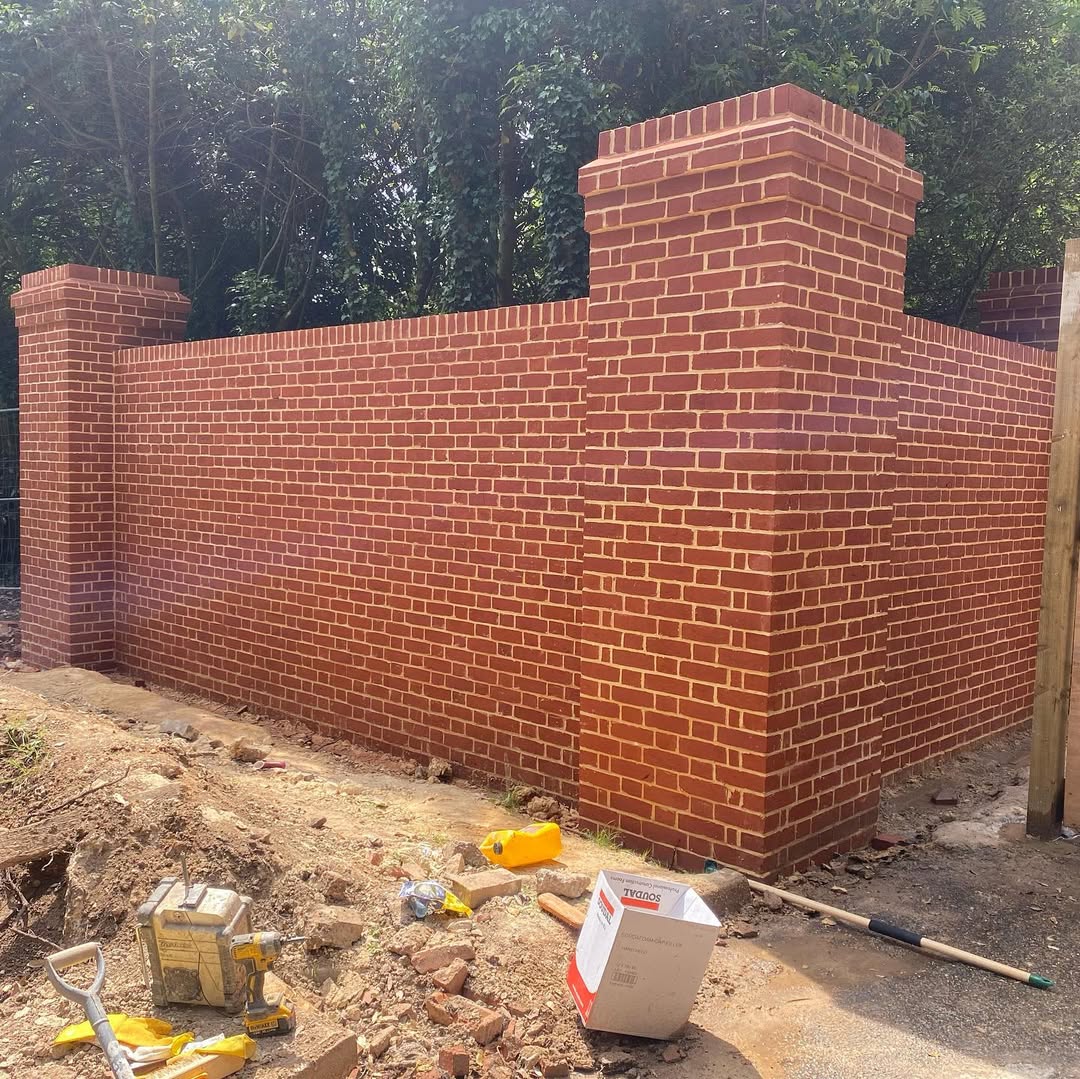
Brick repair in Kent is one of the most misunderstood and most frequently mishandled areas of residential construction. Whether you're dealing with crumbling mortar joints, spalling brick faces, efflorescence, structural cracks, or chimney deterioration, the difference between a repair that lasts decades and one that makes things worse comes down to two things: correct diagnosis and correct mortar specification. This comprehensive guide covers every type of brick damage common to Kent properties, explains exactly what quality repair work involves, breaks down realistic costs, and gives homeowners the knowledge to choose a contractor who genuinely knows their trade — and avoid the ones who don't.
If you've noticed cracks appearing in a wall, mortar crumbling between joints, or bricks that are starting to flake and break at the surface, you're already asking the right question: what do I do about this, and who do I trust to do it properly?
Brick repair in Kent is one of those jobs where the gap between good work and poor work is enormous — and where the consequences of getting it wrong range from wasted money to genuinely serious structural problems. This guide gives you everything you need to understand the issue, assess the damage, know what quality repair work actually involves, and make a confident decision about who to call.
Why Kent Brickwork Needs Particular Attention
Kent's built environment is dominated by brick. From the Victorian terraces of Rochester and Chatham to the Edwardian semis of Maidstone and the older properties scattered across the Weald and the Medway towns, the county has one of the most varied and historically significant stocks of brick buildings in England.
That variety is part of what makes brick repair in Kent more demanding than many homeowners expect. The bricks in a 150-year-old terrace in Sittingbourne are fundamentally different from those in a 1970s suburban extension. They're softer, more porous, and designed to work with a completely different type of mortar. What's appropriate for one is actively damaging to the other.
Kent's climate adds to the challenge. Wet winters, coastal wind exposure in areas like Thanet and Folkestone, and the freeze-thaw cycling that every British winter brings — these are the forces that accelerate deterioration in brickwork that isn't correctly maintained and repaired. Water gets in through failing mortar joints or cracked bricks. It freezes. It expands. Slowly, sometimes quickly, it starts doing damage that compounds with every passing year.
Understanding the specific issues affecting your property — and addressing them with the right materials and technique — is what professional brickwork in Kent is fundamentally about.
The Six Most Common Types of Brick Damage in Kent Properties
Before you can fix a problem properly, you need to understand what you're actually looking at. Here are the six types of brick damage that Kent homeowners encounter most frequently.
1. Mortar Erosion and Joint Failure
This is the most common form of brickwork deterioration, and it's the one most homeowners notice first. The mortar joints between bricks — the recessed lines of pointing — start to crack, crumble, or recede. In severe cases, whole sections of mortar pull away from the brick faces entirely, leaving gaps that allow water directly into the wall structure.
The cause is almost always age and weather exposure. Mortar is a sacrificial element — it's designed to degrade before the bricks do, acting as the pressure-relief valve for movement, moisture, and thermal cycling in the wall. When it's done its job, it needs renewing. The key is using the right replacement mortar for the specific brickwork — more on that below.
2. Spalling Bricks
Spalling is where the face of a brick starts to flake, chip, or break away, exposing the softer inner core. It looks like the surface of the brick has crumbled or been chipped. In the early stages it's primarily cosmetic; left untreated, it becomes structural as the brick loses integrity and moisture penetrates the exposed core.
The cause is almost always water. Water gets into the brick — either through failing mortar joints or through the brick itself if it's been sealed with a non-breathable coating — and when temperatures drop below freezing, that water expands. The internal pressure forces the brick face off. One hard winter following a wet autumn can take a wall from minor spalling to urgent repair territory.
What makes spalling particularly frustrating is that one of the most common causes is previous repair work done with the wrong mortar. When hard Portland cement mortar is used on soft Victorian or Edwardian bricks, the mortar is stronger than the brick. Movement and freeze-thaw pressure that should be absorbed by the mortar joint instead has nowhere to go — so the brick face fails. This is the single most damaging mistake in residential brickwork repair, and it's surprisingly common.
3. Efflorescence
Efflorescence is the white, powdery or chalky deposit that appears on the surface of brickwork, usually more visible in damp or wet conditions. It looks like the wall is growing salt deposits — because that's exactly what it is. Water moving through the masonry dissolves naturally occurring salts in the brick or mortar and carries them to the surface, where they're deposited as the water evaporates.
Efflorescence itself isn't directly structural, but it's an important signal: water is moving through your masonry. The source could be failing mortar joints, a blocked or leaking gutter overhead, inadequate drainage at the base of the wall, or a failed damp-proof course. Treating the efflorescence without identifying and addressing the water source will mean it returns repeatedly.
4. Structural Cracks
Not all cracks are equal. Hairline cracks in the mortar joints are usually movement cracks — the result of normal thermal expansion and contraction — and are addressed by repointing. Stair-step cracks that follow the mortar joints in a stepped diagonal pattern across an elevation indicate differential settlement or structural movement, and require investigation before any repair work can begin. Horizontal cracks in older walls can indicate wall tie failure — where the steel ties linking the two skins of a cavity wall have corroded and failed.
The diagnosis of structural cracks is not something to guess at. What looks like a minor surface crack can be the visible expression of significant movement that needs understanding before it's treated. A qualified brickwork specialist with genuine structural knowledge — not just laying experience — is what you need here.
5. Loose or Displaced Bricks
When individual bricks become loose, shift, or protrude from the line of the wall, the mortar bed beneath them has failed. This can happen through water erosion, impact damage, or root pressure from nearby vegetation. Loose bricks are both a structural concern and a safety risk — they can fall, especially at height.
Repairing loose bricks properly means removing them, preparing the mortar bed correctly, and relaying with the appropriate mortar and a good bond. Colour and texture matching to the surrounding brickwork is part of a quality repair job.
6. Chimney Damage
Chimneys are the most exposed brickwork on any property — subject to wind from all directions, rain from above, and the chemical effects of flue gases from below. Failing mortar in chimney stacks is almost universal in properties over forty years old. Left unaddressed, water penetration into chimney stacks causes interior damp on chimney breasts, can lead to leaning stacks, and creates the conditions for carbon monoxide and combustion gas problems in properties with active fires or boilers.
Chimney repair requires working at height and involves specific considerations around flashing, lead work, and the condition of the flaunching (the mortar cap that seals around the chimney pots). It's specialist work that needs a specialist contractor.
The Critical Role of Mortar Specification
Here's the thing that most homeowners don't know, and that many contractors either don't know or choose to ignore because it's easier to use what's cheap and available.
The mortar you use in brick repair determines whether the repair helps or harms.
Mortar must always be softer and more permeable than the bricks it bonds. This isn't a preference — it's the engineering principle on which masonry construction is based. When a brick wall moves (through thermal expansion, settlement, or freeze-thaw cycling), the mortar joint is designed to absorb that movement. When moisture needs to leave the wall, it does so through the mortar joint — the breathable weak link — rather than through the brick face.
Modern Portland cement mortars are strong. Very strong. On modern, dense, hard-fired bricks, that strength is appropriate. The bricks and the mortar are matched, and the system works as designed.
Victorian and Edwardian bricks — which make up the majority of period housing stock across Kent — are soft. They were designed to work with lime mortars that are weaker than the brick. When you repoint these walls with hard cement mortar, you break the system. The mortar is now stronger than the brick. Movement and moisture have nowhere to go through the joint, so they go through the brick instead. Spalling accelerates. Structural problems develop. The repair that was supposed to protect the wall ends up destroying it faster than doing nothing would have.
This is not a minor technical detail. It is the most important decision in any brick repair in Kent project involving a pre-1920 property.
The correct specification for repointing period brickwork is a lime-based mortar — typically a hydraulic lime or a lime putty mix, depending on the exposure and the strength required. The exact specification depends on the age and type of the bricks, the location of the wall (sheltered versus exposed), and the condition of the surrounding masonry. Getting it right requires experience, knowledge, and the willingness to do the additional preparation that lime mortars require.
Marshall Brickwork & Construction specifies mortar correctly on every project — period brickwork and modern alike. It's one of the most consequential things they do, and one of the least visible until it goes wrong.
What Quality Brick Repair Work Actually Involves
Understanding the process helps you evaluate quotes and contractors more effectively. Here's what a professional brick repair in Kent job should involve at each stage.
Diagnosis First
A proper brick repair job starts with understanding what caused the damage before deciding how to fix it. Is the crack structural or movement-related? Is there an active water source — a leaking gutter, a failed flashing, a blocked drain — that's driving the deterioration? Are the bricks themselves failing, or is it purely a mortar issue?
Treating symptoms without understanding causes produces repairs that fail in the same place, for the same reason, on the same timeline. The diagnostic conversation at the start of the project is where you should judge the expertise of the contractor you're considering. Does their explanation of the problem make sense? Are they investigating the cause, or just quoting to fix what they can see?
Repointing: The Process Done Properly
For mortar renewal, the process should follow this sequence:
Joint preparation. Old mortar is removed to a minimum depth of 15-20mm using a combination of angle grinder (for the bulk of the material) and hand tools for the final clean-out. This is careful work — going too aggressive with mechanical tools damages the brick arises (the edges), which are critical both to the wall's visual appearance and its weather resistance. Once those edges are chipped and broken, they can't be restored.
Cleaning. Dust and debris are cleared from the open joints. The brickwork is dampened to prevent the bricks from drawing moisture out of the new mortar too quickly and causing it to dry too fast and bond poorly.
Mortar application. New mortar is applied in the joint, consolidated, and allowed to begin setting before the joint profile is finished. For lime mortars this requires more patience than cement — lime sets more slowly and needs protection from direct sun and frost while it cures.
Profile finishing. The joint is finished to match the profile of the original pointing — flush, weatherstruck, recessed, or tooled depending on what the original work shows. Consistency of profile across the whole elevation is the mark of skilled work.
Colour matching. The final colour of the pointing should blend with the surrounding existing mortar. Marshall's team tests on a small area before committing to a full elevation, adjusting the mix if the initial trial doesn't match well enough. An obviously patchy repoint — where new bright pointing contrasts sharply with aged surroundings — is the signature of someone who didn't take this step seriously enough.
Brick Replacement
Where individual bricks have failed beyond repair — through severe spalling, physical damage, or decay — they need replacing. The replacement bricks need to match the originals as closely as possible in size, colour, texture, and porosity. For period properties, this often means sourcing from reclamation yards — salvaged bricks from similar-era properties that will weather and blend convincingly over time.
The new bricks are laid on a properly prepared mortar bed, in the correct bond, and pointed to match. Done well, a brick replacement is effectively invisible from any normal viewing distance.
When to Act: Don't Wait Until It's Worse
One of the most consistent pieces of advice from anyone who's worked in brickwork repair for years: the cost of fixing problems goes up significantly the longer you leave them. The mathematics is simple and unforgiving.
A repointing job that costs £500-£800 on a front elevation today will cost two or three times that if left until the mortar is so far gone that water has been penetrating the wall for years and brick damage has followed. The few bricks that are currently spalling slightly will become many bricks requiring replacement if another two winters pass without intervention.
The time to act is when you first notice deterioration — not when it becomes impossible to ignore.
Signs that you should be having a conversation with Marshall Brickwork & Construction now rather than later:
- Mortar joints that look recessed, crumbly, or gappy on any external wall
- Any spalling — brick surfaces that appear rough, flaked, or pitted
- Efflorescence appearing on external elevations, especially after rain
- Interior damp patches on chimney breasts or external walls during wet weather
- Any cracking, however minor, that wasn't there a year ago
- Loose or protruding bricks anywhere on the structure
An annual walk-around your property in autumn — before the worst of the winter weather — is the most cost-effective property maintenance habit you can develop.
Understanding Brick Repair Costs in Kent
Costs for brick repair in Kent vary depending on the type of work, the scale of the project, the access required, and the materials specified. These are rough reference points:
Repointing typically runs from £20 to £50 per square metre depending on the mortar type (lime work requires more labour), the condition of the existing joints, and access. A typical front elevation repoint on a two-storey terraced house might be in the range of £800-£2,000.
Individual brick replacement costs depend on the brick sourcing and the number of bricks involved. Expect £50-£150 per brick for a properly matched, properly laid replacement including mortar preparation and pointing.
Chimney repairs vary enormously with access requirements and the extent of damage. Minor repointing and flaunching repairs might be £300-£600; a full chimney stack rebuild can run to several thousand.
Structural crack investigation and repair is highly variable and depends on diagnosis. Never accept a quote for structural crack repair without a proper site assessment — the right repair depends entirely on understanding the cause.
What these numbers don't capture is the long-term cost differential between work done properly and work done cheaply. A repoint done with the wrong mortar on a period property creates brick damage that may cost three to five times the original job to fix. The specification matters more than the headline price.
Marshall's quotes are transparent, itemised, and reflect the full scope of what the job actually requires. There are no vague line items designed to allow cost expansion later. If the work is complex, the complexity is explained before you commit.
Why Marshall Brickwork & Construction for Brick Repair in Kent
Marshall Brothers Construction has been delivering brickwork services across Kent for over 15 years — not as a side service, but as the core of what the company does. Brickwork is in the name, and it's the discipline that defines the team's craft identity.
The professional brickwork and repointing services Marshall delivers cover the full range of brick repair work: mortar renewal and repointing on period and modern properties, individual brick replacement, structural crack assessment and repair, chimney work, and full brickwork restoration on historic and conservation-area properties.
Every project starts with a proper site visit and a diagnostic conversation. The specification — including mortar type — is discussed and documented in the quote. The team uses correct lime mortars for period brickwork as standard practice, not as an upgrade or a specialist option. The work is guaranteed, the team is reachable, and the business's reputation depends on every job being done properly.
For anyone across Kent looking for genuinely trustworthy brick repair work, the starting point is a conversation. Marshall's team is available on 07724 730872, by email at info@mbconstruction.group, or through the contact page. Free site visits, no-obligation quotes, transparent pricing.
Beyond brickwork, the same team covers the full range of outdoor construction and property improvement — driveways and groundworks, patios and slabbing, landscaping, fencing, extensions, and bathroom tiling services — which means that if your brick repair project sits alongside other work you've been thinking about, you're dealing with a single team rather than coordinating multiple contractors.
Frequently Asked Questions About Brick Repair in Kent
How do I know if my brickwork needs repointing or full repair? If the mortar joints look visually recessed or crumbly, repointing is the likely solution. If bricks themselves are cracking, spalling, or loose, the scope is broader. A site visit from a qualified contractor will tell you clearly what's needed.
Can I repoint brickwork myself? Minor, small-scale repointing is technically possible as a DIY project — but the mortar specification question makes it risky without proper knowledge. Using the wrong mix on period brickwork creates problems that are expensive to fix. For anything beyond a couple of square metres in a non-critical location, professional work is the right choice.
How long does repointing last? Quality repointing, with correct mortar specification and proper joint preparation, should last 25-40 years or more on a sheltered elevation, and somewhat less on highly exposed positions like chimney stacks or coastal-facing walls. Poor repointing with incorrect mortar may start failing within 5-10 years.
Does brick repair require planning permission? Most brick repair and repointing work is considered maintenance and doesn't require planning permission. In conservation areas or on listed buildings, there are restrictions on the materials and methods that can be used — lime mortars are typically required, and any significant alteration to the appearance of the building needs approval. Marshall's team knows the local planning picture and will advise where restrictions apply.
What's the difference between repointing and tuckpointing? Repointing means renewing the mortar joints — removing old mortar and replacing it with new. Tuckpointing is a decorative technique that uses two different coloured mortars to create the visual impression of very fine, precise joints — historically used to make cheaper brickwork look like more expensive gauged brickwork. Most domestic repair work in Kent is repointing, not tuckpointing.
Final Thoughts: Getting Brick Repair Right
The brickwork in your home has been doing its job, quietly and reliably, possibly for a very long time. Maintaining it properly — with timely repairs, correct specification, and professional workmanship — keeps it performing for generations more.
Brick repair in Kent done well is an investment in the structural integrity, the weathertightness, and the long-term value of your property. Done badly, it's an expense that generates further expenses.
Marshall Brickwork & Construction is the team that gets it right. 15 years. 500+ completed projects. A craft built on genuine knowledge and the refusal to cut corners where the spec matters.
When your brickwork needs attention — whether that's a small patch of repointing or a full restoration project — the first step is a conversation. Call 07724 730872 or visit mbconstruction.group/contact/ to arrange a free site visit and quote.
Marshall Brickwork & Construction Ltd | Rochester, Kent | mbconstruction.group | 07724 730872